


















Rwanda has built a reputation as a major exporter of valuable minerals like gold, coltan, cassiterite, and tungsten—critical materials for the global technology, jewelry, and aerospace industries. However, the reality behind this booming trade is far more complex and troubling. Despite having limited natural reserves, Rwanda’s official mineral export figures far exceed what it could realistically produce. The reason? A highly organized smuggling operation that siphons minerals from the resource-rich Democratic Republic of the Congo (DRC).
In eastern Congo, where some of the world’s most valuable mineral deposits are found, armed groups rule with violence and exploitation. Instead of these resources benefiting local communities, they fuel conflict, finance warlords, and deepen instability. With the complicity of Rwandan government agencies, military officials, and private companies, these minerals are smuggled across the border, rebranded as Rwandan, and fed into global supply chains. By the time they reach consumers, their true origins have been erased.
How Rwanda Profits from the DRC’s Mineral Resources
Step 1: Armed Groups Control Mining in the DRC
In the eastern provinces of the DRC—North Kivu, South Kivu, and Ituri— armed groups dominate key mining zones. These include the notorious M23 rebel group, the FDLR (Democratic Forces for the Liberation of Rwanda), and various Mai-Mai militias. Their control over these areas allows them to exploit the region’s vast mineral wealth while subjecting local populations to unimaginable suffering.
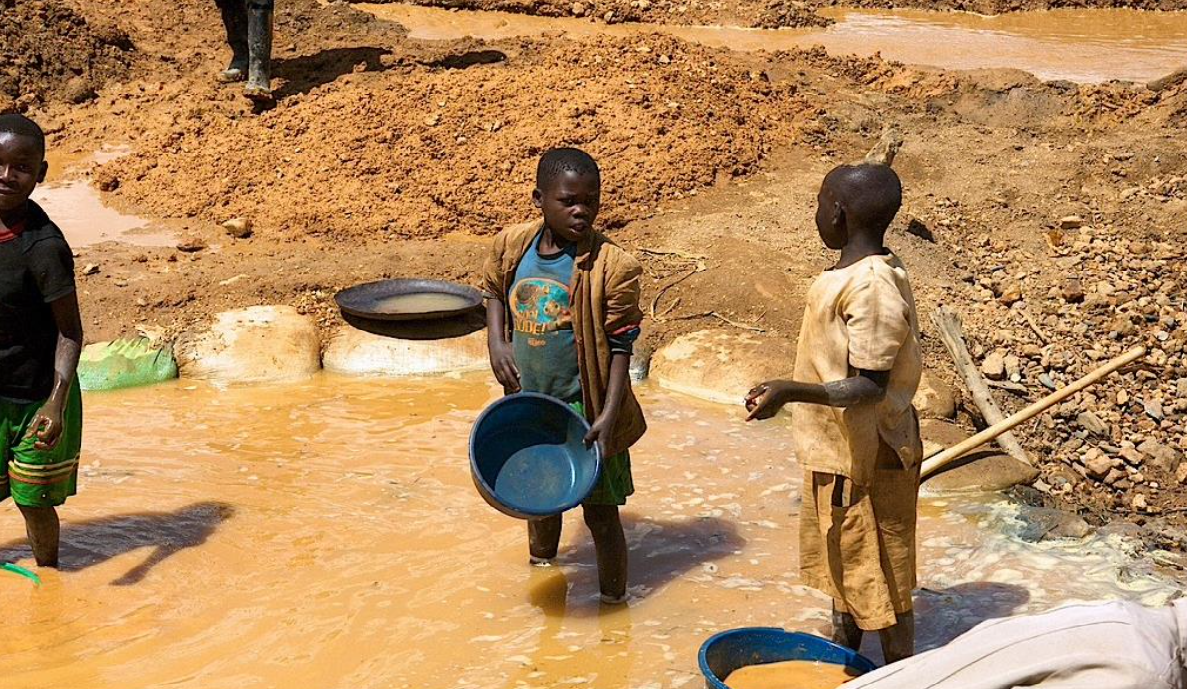
Civilians, including children, are forced to work under brutal and dangerous conditions.
Armed groups impose illegal taxes on miners and traders, using the revenue to purchase weapons and fund their operations. Violence and displacement are routine as different factions battle for control over lucrative mining sites.
With the minerals extracted, the next step is getting them into Rwanda—a process that relies on well-established smuggling routes.
Step 2: Smuggling Routes into Rwanda
Once mined, these conflict minerals are transported across the border using covert yet highly organized smuggling networks. Some of the key routes include:
Goma–Gisenyi Route: Minerals from North Kivu enter Rwanda via Gisenyi. Bukavu–Cyangugu Route: Minerals from South Kivu are funneled through Cyangugu.
Ngororero District – Rukaragata: A critical transit hub in Rwanda where minerals are stored before being transported to Kigali.
These smuggling operations are not run by small-time criminals. They are protected and facilitated by the Rwanda Defence Forces (RDF) and high- ranking government officials, ensuring the smooth and undetected passage of these illicit minerals.
Step 3: Laundering the Minerals in Rwanda
Once inside Rwanda, these minerals undergo a process of “legalization,” designed to erase any trace of their true origins. This is done through:
PowerM Ltd Rwanda, a company based in Ngororero (Rukaragata), owned by an English investor, Ray Power, plays a crucial role in disguising the true origin of these minerals.
Rwanda Mines, Petroleum and Gas Board (RMB) Tagging System: Each month, an RMB Tag Manager, operating through the district, visits mining sites to “tag” production before transportation to Kigali. This tagging process provides fraudulent certification, falsely identifying smuggled minerals as Rwandan- origin, thus enabling their entry into international markets.
By the time they leave Rwanda, these stolen resources have been fully integrated into the legal global market, making it almost impossible for international buyers to trace their true origins.
Irrefutable Evidence of Rwanda’s Involvement in Illicit Mineral Trade
Despite Rwanda’s repeated denials, overwhelming evidence confirms its deep involvement in smuggling minerals from the Democratic Republic of the Congo (DRC). Multiple reports from the UN Group of Experts have directly linked Rwanda’s military and economic elite to the M23 rebel group, which controls key mining zones in Eastern Congo. Investigations have traced the movement of conflict minerals from Congolese mines into Rwanda, exposing large-scale smuggling networks.
Suspicious export data further reinforces these findings. In one year alone, Rwanda reported exporting 2,500 tons of coltan, despite having minimal known domestic reserves. This discrepancy suggests that the country’s mineral exports are largely dependent on illicit supplies from the DRC.
Insider testimonies provide additional confirmation. Former M23 rebels have admitted that Rwandan government officials actively coordinate the transport and laundering of smuggled minerals. Captured smugglers in the DRC have also disclosed their collaboration with Rwandan businesses and military personnel to facilitate illegal exports. Furthermore, Rwandan companies involved in mineral trade have repeatedly been exposed for handling illicit Congolese resources, further proving the country’s role in this exploitation.