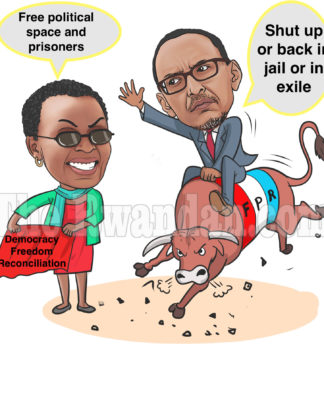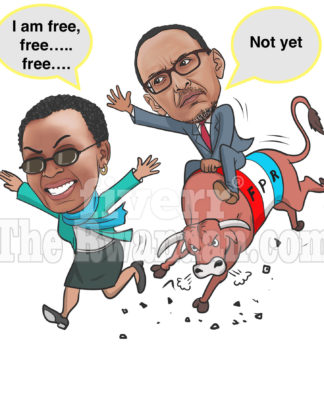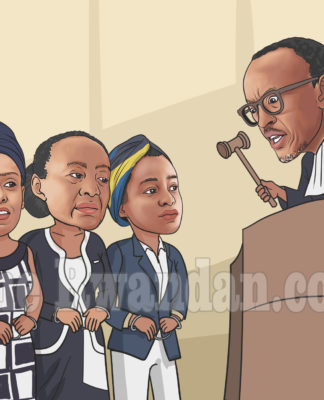




















On Tuesday, July 15, 2025, prominent Rwandan opposition leader Victoire Ingabire appeared before the Kicukiro Primary Court in Kigali to contest her pre-trial detention. She faces six criminal charges, including allegedly plotting to overthrow the government and forming an illegal armed group.
Ingabire, who heads the unregistered opposition party DALFA-Umurinzi, was arrested last month after the High Council of the Judiciary ordered further investigation into testimonies provided by nine individuals accused in a related case. Prosecutors claim Ingabire was at the center of a seditious plan, citing connections with the previously arrested group said to have participated in political training sessions in 2021.
Dressed in a long, patterned traditional dress, Ingabire appeared in court alongside her lawyer, Gatera Gashabana. Before proceedings began, she raised objections, arguing she had not been given full legal rights, particularly the right to be represented by a lawyer of her choosing. She noted her preference to be defended by a Kenyan lawyer, who was absent from court after being denied authorization by the Rwandan Bar Association. According to Moïse Nkundabarashi, the head of the Rwandan Bar, the application was rejected due to reciprocity issues, as the Kenyan Bar does not accept Rwandan lawyers.
The prosecution listed six charges against Ingabire, including forming and belonging to a criminal group, inciting public unrest, and planning to topple the current government. Many of these accusations mirror those previously leveled against the nine alleged DALFA-Umurinzi members, who were arrested in 2021 after attending political workshops reportedly aimed at confronting authoritarianism through nonviolent means. Prosecutors argue that Ingabire was the ideological leader behind these sessions due to her position at the head of the party.
The prosecution’s main witness, Boniface Nzabandora, played a central role in the case. He claimed he had initially been invited to participate in the workshops but later distanced himself after learning of what he said were “harmful intentions” against the state. Nzabandora reportedly recorded the sessions, and those audio clips now form the core of the evidence against the accused.
Ingabire, however, has categorically denied all charges. She told the court that she had already been questioned about the same allegations in 2021 and that prosecutors had found no grounds for a case at the time. She contended that her current prosecution was prompted by political pressure exerted by the High Council of the Judiciary, not by new or credible evidence.
Regarding Nzabandora, Ingabire admitted he had once lived and worked closely with her but claimed she later dismissed him after learning that he had been approached by state security agents to report on her activities. Her lawyer, Gashabana, also dismissed the credibility of the witness, describing him as disgruntled and untrustworthy following his dismissal from Ingabire’s staff.
The defense further challenged the legality of the charges, noting that some alleged offenses—such as organizing unauthorized demonstrations—had supposedly occurred years ago and should be considered time-barred under Rwandan law. They argued that the statute of limitations had expired, yet Ingabire was still being prosecuted four years after the alleged events.
The court session, unusually long for a preliminary detention hearing, lasted over five hours and concluded with unresolved arguments. The presiding judge informed both parties that they would have the opportunity to fully present their cases during the substantive phase of the trial.
A ruling on Ingabire’s pre-trial detention is expected on July 18, 2025.