















Eastern Democratic Republic of the Congo (DRC) has once again become the epicentre of a complex and escalating conflict. At the heart of the crisis is the M23 rebel group, now operating under a broader coalition known as the Congo River Alliance (AFC in French), which has seized major urban centres including Goma and Bukavu. Behind this military resurgence is Rwanda, whose role has evolved from covert support to direct involvement, reshaping the region’s geopolitical landscape.
A new UN report submitted in May 2025 by the Group of Experts on the DRC paints a damning picture: one of coordinated military aggression, foreign occupation, political subversion, and resource exploitation. The findings suggest the conflict has outgrown the confines of Congolese internal affairs and now constitutes a regional crisis driven by long-term strategy and economic interest.
A Shadow Government in Eastern DRC
The report outlines how the M23, now deeply intertwined with the AFC and backed by the Rwandan Defence Forces (RDF), has not only seized territory but also established a parallel administration. This includes the appointment of governors, mayors, police chiefs, customs officers, and intelligence agents across vast stretches of North and South Kivu. In Bukavu and Goma, rebel authorities began collecting taxes, managing border crossings, and establishing their own banking systems.
The local population has borne the brunt of this imposed regime. Reports of arbitrary arrests, enforced disappearances, torture, and extrajudicial executions abound. Civilians suspected of sympathising with the Congolese government or local civil society organisations have been targeted. The AFC has also conducted ideological indoctrination of recruits, attempting to cement political loyalty to the cause.
Kigali’s Guiding Hand
The report asserts that Rwanda’s role in the conflict is far from peripheral. RDF officers, including figures closely associated with former Rwandan Defence Minister James Kabarebe, have been embedded within the M23/AFC structure, directing operations and logistics. Kabarebe, currently State Minister for Regional Integration, is accused of being the key architect behind Rwanda’s strategy in Congo.
Among the most serious allegations is that Rwanda has supplied the M23/AFC with sophisticated weaponry, including man-portable air defence systems (MANPADS), armed drones, GPS jamming devices, and heavy artillery. These capabilities allowed the rebels to launch swift, coordinated offensives with devastating effect. The fall of Goma in late January 2025, followed by Bukavu shortly thereafter, marked a turning point in the conflict.
Militarised Expansion and Mineral Exploitation
In addition to its political aims, the report makes clear that economic motives are central to the conflict. The AFC/RDF axis has taken control of several mining zones, particularly in Walikale and Masisi, which are rich in coltan, gold, cassiterite, and rare earth minerals. From there, minerals are illicitly extracted, smuggled into Rwanda, mixed with domestic production, and exported under false documentation.
This mineral laundering operation not only undermines international due diligence mechanisms like the OECD Guidelines and the Dodd-Frank Act but also finances the continuation of conflict. The UN report warns that these illicit networks could expand unless serious sanctions and oversight mechanisms are enforced.
Uganda’s Dubious Role
While Rwanda’s involvement is extensively documented, the report also raises concerns about Uganda’s growing presence in northeastern Congo. Officially deployed under the guise of fighting ADF insurgents and securing infrastructure projects, Ugandan troops have occupied key zones near Lubero and Bunagana. These areas now serve as buffer zones that effectively shield M23/AFC advances from Congolese military counterattacks.
Adding to the suspicion is the public stance of Uganda’s military leadership. General Muhoozi Kainerugaba, son of President Yoweri Museveni and commander of the Uganda People’s Defence Forces (UPDF), has openly praised Paul Kagame and his leadership in the region, raising questions about the real objectives of Ugandan involvement.
Congolese Military Paralysis and the Collapse of MONUSCO Mandate
The response of the Congolese armed forces (FARDC) has been characterised by fragmentation, logistical breakdowns, and desertions. Government forces have relied on informal alliances with local militias, including the Wazalendo and remnants of the FDLR, to resist the rebel advance. However, such coalitions have often proven unstable or counterproductive.
Meanwhile, the UN peacekeeping mission MONUSCO has found itself under siege. The report confirms that MONUSCO positions were targeted by precision weapons, including drones and guided missiles, resulting in casualties among peacekeepers. The mission’s mandate and mobility have been severely restricted, leaving vast areas unmonitored and exposed.
A Blueprint for Permanent Occupation?
Perhaps the most chilling aspect of the UN report is its suggestion that Rwanda and the M23/AFC may not be pursuing a temporary military campaign but rather laying the groundwork for long-term political control. Plans to repatriate Congolese Tutsi refugees from Rwanda, reconfigure local governance, and implement Rwandan-style administrative systems indicate ambitions that extend beyond battlefield gains.
The report explicitly states that these developments could amount to “acts of aggression and unlawful occupation” under international law. If proven, this would place Rwanda in direct violation of multiple UN resolutions and the sovereignty of the DRC.
International Response: Too Little, Too Late?
Despite the seriousness of the allegations, international response remains tepid. The United States and European Union have issued cautious statements condemning the violence but have not imposed coordinated sanctions on high-ranking Rwandan officials. Regional peace initiatives brokered by Angola and Qatar have so far failed to halt hostilities.
Meanwhile, the humanitarian situation continues to deteriorate. Over 2 million people have been displaced since the beginning of 2025. Several hospitals have been bombed or looted, schools have been shut down, and access to food and clean water is scarce in rebel-held areas.
A Region on the Brink
The findings of the May 2025 UN report mark a decisive shift in how the M23 rebellion and Rwanda’s role in Congo should be understood. What began as a local insurgency has morphed into a multi-layered occupation backed by a foreign government, with all the hallmarks of a proxy war for resources and influence.
As the conflict intensifies, the question is no longer whether Rwanda is involved—it is how far Kigali intends to go, and whether the world is willing to act before eastern Congo becomes permanently lost to foreign control.





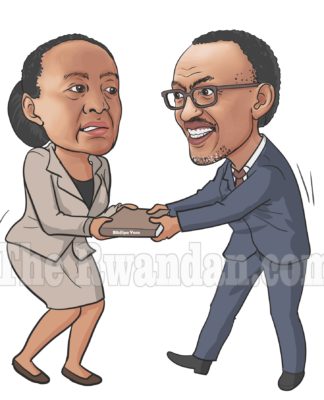





 has once again become the epicentre of a complex and escalating conflict.)