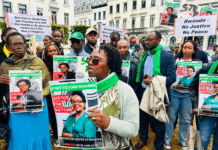






















Brussels, Saturday 21 June 2025 – At the conclusion of a landmark conference held in the Belgian capital on World Refugee Day, participants of the General Conference on the Question of Rwandan Refugees issued a powerful final declaration. This document directly addresses international institutions, African states, human rights organisations, and global public opinion. It delivers a series of sharp observations and urgent demands on behalf of over one million Rwandans living in protracted exile—many without legal status or effective protection.
From the outset, the declaration condemns the persistent invisibility of Rwandan refugees. While the UN High Commissioner for Refugees (UNHCR) officially estimates their number at around 250,000, the conference participants assert that this figure is drastically underestimated. They highlight the hundreds of thousands of Rwandans who have been forced to adopt other nationalities, or live undocumented—especially in the Democratic Republic of Congo (DRC), often under false identities and in legal limbo. Many are voiceless, unprotected, and deprived of representation.
A key concern is the arbitrary revocation of refugee status, accelerated by the controversial 2013 cessation clause, which the declaration argues is in breach of the 1951 Refugee Convention and its 1967 Protocol. The UNHCR, accused of aligning too closely with the Rwandan government’s demands, is said to have failed in its duty to protect. Furthermore, the declaration draws attention to acts of cross-border violence committed by Rwandan intelligence services: assassinations, disappearances, and intimidation—even in countries that are supposed to offer refuge.
According to the signatories, Rwandan refugees have been treated as bargaining chips in regional diplomacy, excluded from peacebuilding processes in the Great Lakes. Their absence from these negotiations, they argue, fundamentally undermines the prospects for sustainable peace.
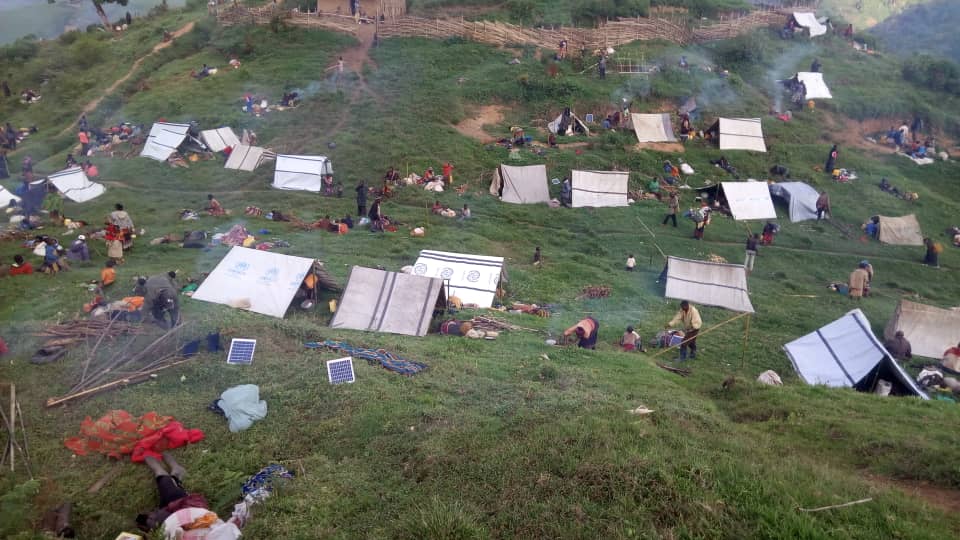
The humanitarian conditions in which many refugees live—particularly in eastern DRC—are described as appalling: extreme poverty, chronic insecurity, social exclusion, and no access to education or healthcare. Entire generations of young Rwandans are growing up without a legal identity, future, or sense of belonging.
In response, the declaration outlines several urgent demands:
1.Immediate restoration of refugee status for all Rwandans in involuntary exile and full reversal of cessation measures.
2.Direct inclusion of refugees in ongoing peace processes, specifically:
•The Nairobi/Luanda process, led by the SADC and East African Community (EAC);
•The Washington process, led by the United States;
•The Doha process, mediated by Qatar.
The declaration also calls for the creation of an official dialogue channel between refugee representatives and the Rwandan government, with the goal of preparing conditions for a voluntary, dignified, and safe return. This return, they stress, must be based on concrete and credible reforms in justice, security, political participation, and institutional governance.
The signatories firmly reject all forced repatriations, particularly those occurring in conflict zones such as eastern DRC. These transfers, often conducted without free and informed consent, violate international law—including Article 49 of the Fourth Geneva Convention—and are classified as war crimes.
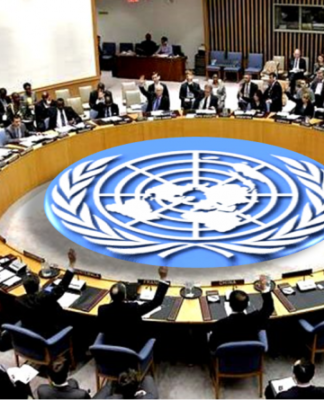
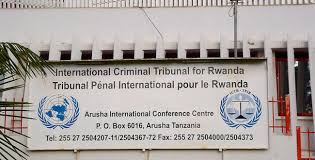
They call on the UNHCR to unequivocally condemn these practices, ensure that all returns are strictly voluntary, and avoid any complicity, direct or indirect. The declaration further urges the United Nations, the International Criminal Court, and states committed to upholding international law to act immediately to investigate, hold perpetrators accountable, and protect the lives and rights of Rwandan refugees.
Recognising the failures or complacency of certain institutions, the declaration encourages refugees to strengthen their self-organisation. It recommends:
•The formation of local coordination committees in each camp or host community;
•The creation of national consultation platforms in key countries such as DRC, Uganda, Malawi, Mozambique, Zambia, Burundi, Cameroon, France, Belgium, the UK, Canada, and the United States.
These structures should serve as a backbone for:
•Defending fundamental refugee rights;
•Sharing information on living conditions;
•Engaging with international stakeholders;
•Preparing the groundwork for return and reintegration.
The declaration endorses the movement All For Rwanda as a model for structured, inclusive, and peaceful political action. It also acknowledges the role of other supporting organisations, including:
– SOS Réfugiés
– Victoire Foundation for Peace
– Jambo ASBL
– International Women’s Network for Democracy and Peace
The signatories of the declaration are:
– Dr Etienne MUTABAZI
– Dr Emmanuel MWISENEZA
– Dr Vincent BIZIMANA
– Mr Norman Ishimwe SINAMENYE
– Ms Gloria UWISHEMA
– Mr Placide KAYUMBA
– Ms Kami RUNYINYA
– Mr Chaste GAHUNDE
– Mr Eustache HABUMUREMYI
In their closing statement, the participants proclaim that “the time of silence, invisibility, and resignation is over.” They appeal to the international community, legal institutions, and regional actors to support a comprehensive and inclusive political solution—one that finally addresses the root causes of exile and recognises Rwandan refugees as legitimate political stakeholders.
They extend a hand to the government in Kigali, inviting it to engage in honest dialogue under international guarantees, to lay the foundations for a voluntary and secure return of its citizens in exile.
According to the signatories, this day marks a turning point. A moment of collective resolve. A declaration of dignity and political awakening. And a message to the world: no Rwandan refugee shall be left behind.