















Brussels – April 15, 2025: A new investigation by the NGO Global Witness has raised serious questions about the European Union’s responsibility in the ongoing conflict in eastern Democratic Republic of Congo. The report reveals that Traxys, a Luxembourg-based commodities trader, bought large quantities of coltan officially exported from Rwanda in 2024—yet much of it is believed to have originated in Rubaya, a mining area in North Kivu under the control of the M23 armed group. This trade, disguised through official export channels, is now suspected of indirectly funding a brutal conflict that has displaced hundreds of thousands and deepened the humanitarian crisis in the region.
According to customs data obtained by Global Witness, Traxys imported 280 tonnes of coltan from Rwanda in 2024. However, two Congolese coltan smugglers interviewed by the organization claimed that the material had in fact been mined in Rubaya, where the M23 has established military and administrative control. One source explained that the rebel group levies a 15% tax on every load of coltan passing through its territory. This mineral, once refined into tantalum, is a vital component in smartphones, electric vehicles, and other technologies central to the global energy transition.
Traxys’s primary Rwandan supplier was African Panther Resources Limited, whose exports reportedly surged in 2024—surpassing the total volumes exported over the previous four years combined. This increase coincided with the M23’s military advances across eastern Congo, including their seizure of key routes around Goma and Bukavu. According to United Nations experts, coltan from Rubaya is regularly smuggled into Rwanda and laundered into legitimate supply chains, making its way into European and global markets under the label of “conflict-free” minerals.
Rubaya’s mines are believed to produce about 15% of the world’s tantalum, generating approximately $800,000 in monthly revenues. These profits are fueling the M23’s war efforts and strengthening its territorial grip. Since April 2024, the rebel movement has not only taxed the local mining operations but also taken control of key export chains. The UN and multiple Western governments have acknowledged Rwanda’s support for the M23, although Kigali denies any direct involvement.
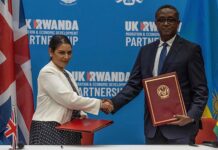
The Global Witness report notes that European inaction has helped sustain this illicit trade. Despite mounting evidence, diplomatic resistance—particularly from Luxembourg, where Traxys is headquartered—has delayed sanctions against Rwandan officials linked to the conflict. In February 2024, the European Commission signed a strategic partnership with Rwanda on access to critical raw materials, including coltan. Ironically, this partnership coincided with the peak of Rwanda’s suspected involvement in resource exploitation in Congo.
By early 2025, pressure began to build. The European Parliament condemned the lack of response to the crisis in eastern Congo, and EU foreign affairs commissioner Kadri Kallas promised to review the bloc’s partnership with Kigali. A €900 million investment package planned under the EU’s Global Gateway initiative is now under scrutiny.
Alex Kopp, senior campaigner at Global Witness, urged the EU to “freeze all development aid to Rwanda until its troops withdraw from the DRC and its support for M23 is fully dismantled.” The NGO is calling for targeted sanctions against Rwandan military leaders and for full transparency in European mineral supply chains. The report also highlights the European market’s failure to enforce its own due diligence laws, despite years of promises to eliminate conflict minerals.
In response, Traxys denies any wrongdoing and maintains that its tantalum is sourced entirely from certified Rwandan suppliers. The company says it applies strict due diligence, including on-site audits and mineral composition tests. It claims that the ore it buys shows a tantalum-niobium ratio typical of Rwandan deposits. But independent geologists cited in the report dispute this method, noting that ore compositions vary widely even within Rwanda, making such testing unreliable.
Traxys also relies on the ITSCI traceability system, a scheme once promoted by donors and industry players, but widely discredited since 2022 as a mechanism for laundering conflict minerals. Both Traxys and African Panther Resources are members of the ITSCI system. According to Global Witness, up to 90% of tantalum exported from Rwanda during the early years of the system came from ores smuggled out of Congo.
Given the gravity of the findings, Global Witness is calling for immediate EU action: a suspension of mineral trade partnerships with Rwanda, a freeze on development aid, sanctions on implicated individuals and companies, and public disclosure of all sourcing and supply chain data. The organization warns that failure to act risks undermining the EU’s credibility in its stated commitment to human rights, peace, and ethical trade.
This scandal has exposed deep contradictions in Europe’s global agenda. While championing clean technology and responsible sourcing, the EU appears to have overlooked the cost borne by communities in conflict zones like eastern Congo. As demand for critical minerals grows, so too does the responsibility to ensure that the path to a green future does not run through blood-soaked hills.