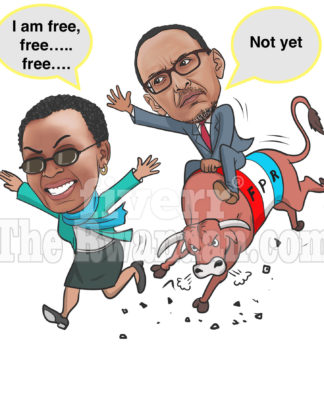


















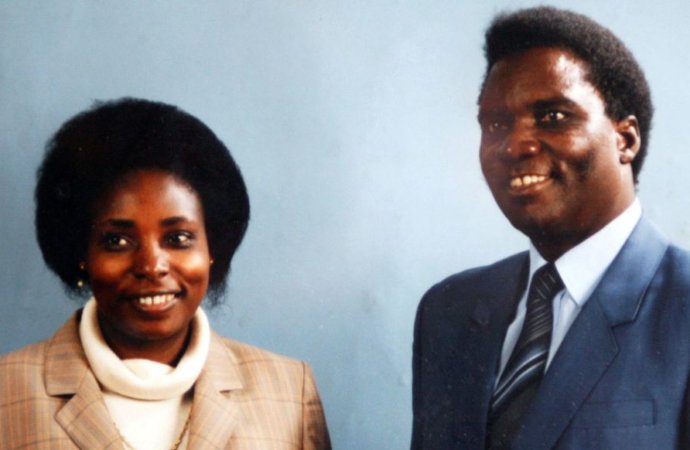
On March 18, 2025, the French National Anti-Terrorism Prosecutor’s Office filed a request to indict Agathe Habyarimana, widow of former Rwandan President Juvénal Habyarimana, who was assassinated on April 6, 1994, in an attack that triggered the Rwandan genocide. This judicial revival, after years of stalled proceedings, raises a fundamental question: why such relentless pursuit of an 82-year-old woman, while numerous proven war criminals, particularly from Paul Kagame’s Rwandan Patriotic Front (RPF), continue to evade justice?
For over fifteen years, Agathe Habyarimana has been a prime target of organizations aligned with the Kigali regime, such as the Collectif des Parties Civiles pour le Rwanda (CPCR), which has made her case a major issue. Yet, the accusations against her remain vague and mostly based on unproven claims of “incitement” to genocide. In 2016, the French judiciary placed her under the status of assisted witness, implicitly acknowledging the lack of sufficient evidence for an indictment.
Why, then, has this procedure suddenly been revived in 2025? All signs indicate that this judicial push is not driven by legal necessity but by a political agenda dictated by Kigali and its allies in France. Paris’s growing alignment with Paul Kagame’s regime is evident, and this case appears to serve Rwandan government interests rather than impartial and fair justice.
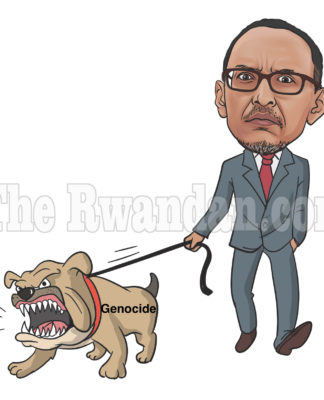
While the French judiciary is remarkably zealous in prosecuting Agathe Habyarimana, it remains conspicuously silent on RPF crimes, despite extensive documentation by NGOs, experts, and even United Nations reports. For over thirty years, Paul Kagame and his regime have been accused of orchestrating mass killings against Hutu populations before, during, and after the 1994 genocide.
The attack on Juvénal Habyarimana’s plane, which served as the catalyst for the massacres, has never been the subject of a serious judicial investigation, despite compelling evidence pointing to the RPF’s responsibility. Likewise, war crimes committed by Rwandan forces in the Democratic Republic of the Congo remain unpunished. Why does France refuse to investigate these proven crimes while relentlessly pursuing Hutu figures on the basis of dubious accusations?
One of the greatest compromises of the French judiciary concerns the investigation into the April 6, 1994, attack on the Rwandan presidential plane, which killed Rwandan President Juvénal Habyarimana and Burundian President Cyprien Ntaryamira. This terrorist act, which led to the collapse of the Rwandan state and opened the door to genocide, should have been rigorously and impartially investigated. Yet, this inquiry was gradually abandoned, sacrificed on the altar of diplomatic and geopolitical interests. Under pressure from Kigali and the political calculations of Paris, the French judiciary has given up on prosecuting the perpetrators of this attack, even though multiple independent investigations have identified them as RPF operatives.
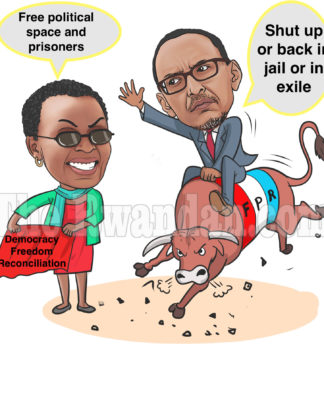
The Agathe Habyarimana case illustrates how the Rwandan genocide is being politically and diplomatically manipulated. By systematically criminalizing former affiliates of the Habyarimana regime, certain circles in France are reinforcing the official narrative imposed by Kigali, where any opposition to Paul Kagame is equated with an attempt to rehabilitate génocidaires.
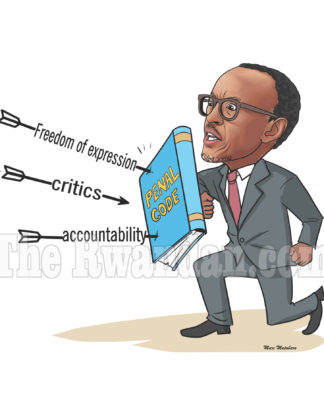
This strategy not only silences criticism of the Rwandan regime but also diverts attention from crimes committed by the RPF. By playing along, France is complicit in a two-tiered justice system and the distortion of history.
The relentless judicial pursuit of Agathe Habyarimana is not about justice but a politically motivated operation dictated by Kigali and carried out by certain French circles influenced by the Rwandan regime. While the French judiciary mobilizes against an 82-year-old woman based on questionable accusations, it remains passive in the face of RPF crimes and the complete impunity enjoyed by Paul Kagame.
It is urgent for France to reclaim its judicial independence and stop allowing itself to be used in a political witch hunt aimed at silencing all opposition to Kigali and preventing the emergence of a balanced truth about Rwanda’s history.