

















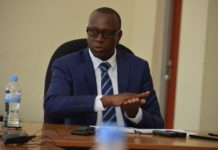



 Tensions continue to rise around the case of Victoire Ingabire Umuhoza, Rwandan opposition leader and president of the DALFA-Umurinzi party. On Tuesday, 8 July 2025, she appeared before the Primary Court of Kagarama, located in the Kicukiro district, for a hearing concerning her request for provisional release. The session took place under tight security, with heavily armed personnel escorting her back to her detention site at a RIB (Rwanda Investigation Bureau) station.
 Sources confirm that Ingabire was brought to court very early in the morning, well before 7 a.m., though the hearing officially began around 10:30 a.m. Accompanied by her lawyer, Me Gatera Gashabana, she raised two key concerns: her inability to be represented by a Kenyan lawyer of her choosing—whose authorisation from the Rwandan Bar Association is still pending—and the fact that she has not yet been granted full access to her case file.
 Me Gashabana emphasised that choosing one’s legal counsel is a fundamental right, noting that he is already representing nine other members of DALFA who face similar charges, making it difficult for him to dedicate sufficient time to her individual defence. He appealed to the court to urge the Bar to authorise the Kenyan lawyer, referencing Rwanda’s membership in the East African Community and the associated principle of cross-border professional cooperation.
The prosecution rejected the defence’s claims, asserting that the hearing on provisional detention should focus strictly on the legal grounds for continued custody—such as risk of flight or tampering with evidence—and not on the defendant’s preferred choice of counsel. The court acknowledged that it has no authority over decisions made by the Bar Association but postponed the hearing to 15 July 2025 “to avoid undue delays that could harm the pursuit of justice.”
In court, Me Gashabana also denounced the conditions in which he is preparing Ingabire’s defence. He stated that each time he visits her, RIB agents confiscate his laptop and phone, severely hampering their ability to prepare the case.
The charges brought against Victoire Ingabire are severe. She is accused of attempting to overthrow the government and of forming an armed criminal group—allegations similar to those faced by several of her party members currently on trial.
Her detention follows a recent decision by the High Council of the Judiciary ordering prosecutors to reopen investigations against her, citing dissatisfaction with her explanations regarding ties to party members previously accused of threatening state security.
According to multiple credible sources within the security services and the Office of the Prosecutor, other individuals are now being sought as alleged accomplices or key witnesses. While the identities of these individuals have not been officially disclosed, the sources indicate that they are close to Ingabire and that some of them entered Rwanda from abroad shortly after her arrest.
A source familiar with the case told us that these persons may have been in contact with Ingabire or involved in the dissemination of allegedly subversive messages. Intelligence officials are said to be examining electronic communications between Kigali and several foreign cities for further evidence.
A senior RIB official, who spoke on condition of anonymity, mentioned that someone by the name of “Umuhoza” or “Uwumuhoza” is among those actively sought by investigators, although no further details were given about this individual’s identity or alleged role in the case.
 In Belgium, support for Ingabire continues to grow. On Sunday, 6 July, dozens of Rwandans gathered at Place du Luxembourg in Brussels, in front of the European Parliament, demanding her release and denouncing political repression in Rwanda. The peaceful protest, led by members of the Rwandan diaspora, called international attention to the plight of political prisoners in the country.
 That same Tuesday, the monthly sit-in took place outside the Rwandan embassy in Brussels, despite the embassy being closed since earlier this year—following Kigali’s decision to sever diplomatic ties with Belgium. Protesters held up placards and chanted slogans against “the dictatorship of Paul Kagame and the ruling FPR-Inkotanyi party,” demanding not only the release of Victoire Ingabire but also of other opposition figures they say are unjustly detained.
 As the next court date approaches, the legal future of Victoire Ingabire remains uncertain. What is certain, however, is that her arrest has rekindled political mobilisation both within Rwanda and abroad, at a time when civic freedoms appear increasingly under threat.








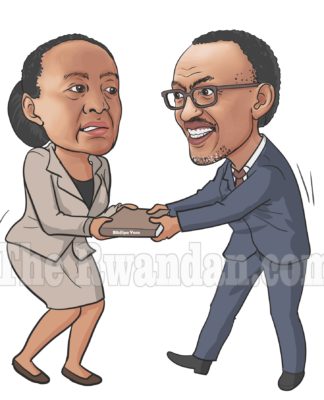





 station.)