















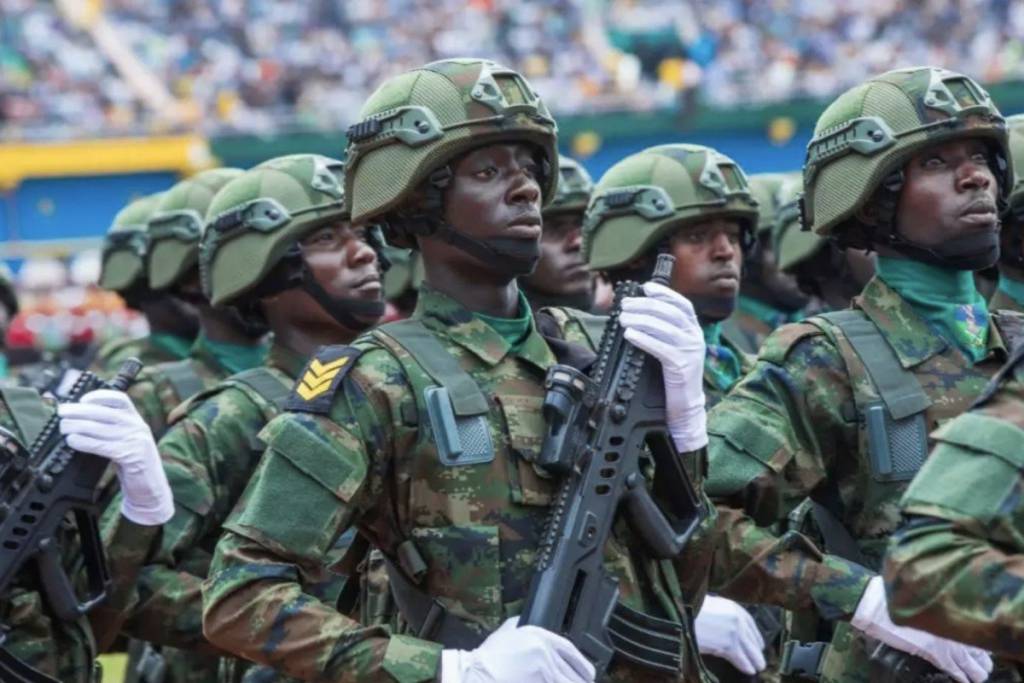
The United States has imposed sweeping sanctions on the Rwanda Defence Force and four of its most senior commanders, accusing Kigali of directly backing the March 23 Movement in eastern Democratic Republic of the Congo.
In a sharply worded statement released on 2 March 2026, the U.S. Treasury’s Office of Foreign Assets Control said Rwanda’s military was “actively supporting, training, and fighting alongside” M23, a group already sanctioned by both Washington and the United Nations for human rights abuses and its role in mass displacement across eastern Congo.
The move represents one of the most direct and consequential measures taken by Washington against Kigali in recent years, and places Rwanda’s top military leadership under international financial restrictions.
Direct accusation against Kigali
According to the U.S. Treasury, M23’s recent territorial advances, including the seizure of Goma and Bukavu and the temporary capture of Uvira, “would not have been possible” without the active support and complicity of the RDF.
Washington alleges that thousands of Rwandan troops are deployed across eastern Congo, providing operational support, advanced weaponry and training to M23 fighters. The equipment reportedly includes GPS jamming systems, air defence assets and drones, significantly raising the sophistication of the rebel campaign.
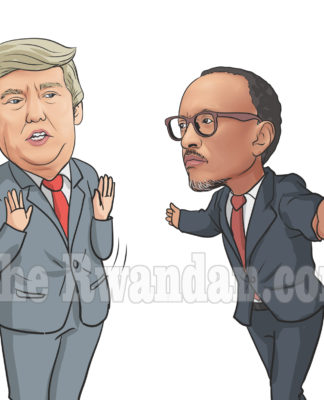
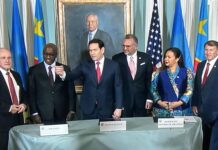
The sanctions come only days after former U.S. President Donald Trump hosted Congolese President Félix Tshisekedi and Rwandan President Paul Kagame for the signing of the so-called Washington Accords, presented as a framework for peace and regional stability.
Yet almost immediately after the ceremony, M23 launched a new offensive and captured Uvira, a strategic city near the Burundi border. Although the group later withdrew, its continued presence in the area, combined with alleged Rwandan backing, has heightened fears of a broader regional conflict.
Named commanders sanctioned
The U.S. sanctions target not only the RDF as an institution but also four senior figures:
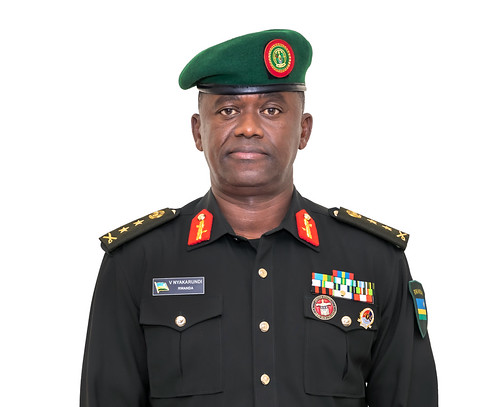
- Vincent Nyakarundi, Army Chief of Staff
- Ruki Karusisi, commander of the 5th Infantry Division
- Mubarakh Muganga, Chief of Defence Staff
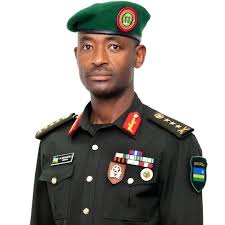
- Stanislas Gashugi, Special Operations Force Commander
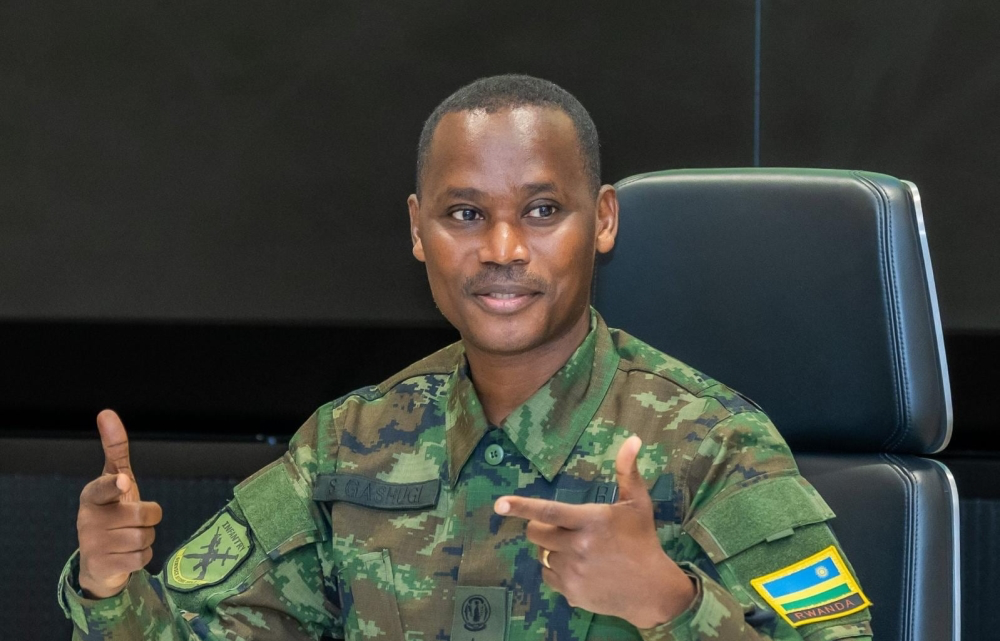
All have been designated under Executive Order 13413, which addresses threats to the peace and stability of the Democratic Republic of the Congo.
Under U.S. law, any property or financial interests these individuals hold in the United States are now frozen. U.S. persons and institutions are prohibited from engaging in transactions with them. Foreign banks and companies that continue dealings with designated individuals risk secondary exposure.
Human rights abuses and mineral interests
Washington’s statement directly links Rwanda’s military support to alleged abuses committed by M23, including extrajudicial killings, arbitrary arrests and torture. It also accuses Kigali of gaining access to mineral-rich territories in eastern Congo as part of the arrangement.
The mineral dimension is central. Eastern Congo contains vast deposits of coltan, tantalum and other strategic resources essential to global technology supply chains. Control over these sites has long been intertwined with armed conflict.
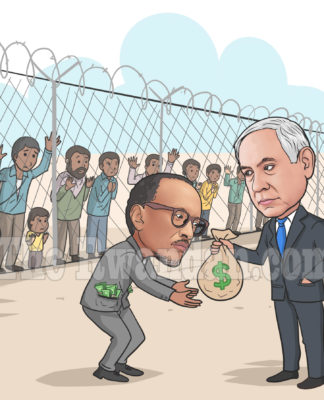
The U.S. Treasury alleges that Rwanda has effectively traded military backing for economic access, a charge Kigali has repeatedly denied in the past. For years, the Rwandan government has insisted its involvement in eastern Congo is defensive and aimed at countering hostile armed groups. The new sanctions, however, signal that Washington now views those explanations as insufficient.
A diplomatic rupture
The sanctions place President Kagame’s government in an increasingly precarious diplomatic position. Rwanda has cultivated a reputation in Western capitals as a security partner and development success story. Yet this action suggests that patience in Washington may be wearing thin.
By explicitly stating that M23’s offensives would not have been possible without RDF support, the United States has moved beyond cautious language. It is no longer speaking in terms of “concern” or “allegations”, but of direct responsibility.
The broader implication is clear: the Washington Accords, barely signed, are already under strain. If the United States believes Kigali has violated their spirit or substance, the political cost for Rwanda could rise well beyond financial sanctions.
Pressure on Kigali and M23
For M23, already under UN and U.S. sanctions, the message is that its campaign cannot rely indefinitely on external protection. For Kigali, the calculation becomes more complex. Continued backing of the rebellion now carries tangible international costs.
The Treasury emphasised that sanctions are intended not to punish but to change behaviour. Whether Kigali adjusts its policy, or instead hardens its stance, will determine the next phase of this escalating confrontation.
What is no longer in doubt is that Washington has publicly and formally aligned itself against Rwanda’s military leadership over the Congo conflict. That marks a serious diplomatic setback for a government long accustomed to carefully managing its Western relationships while denying direct involvement in M23’s war.