

















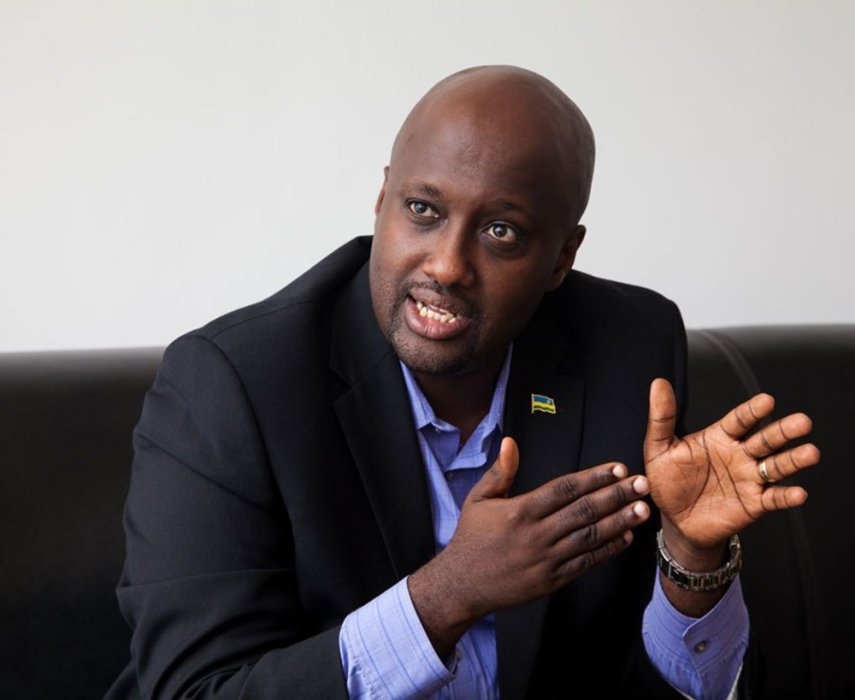
On 29 January 2026, Rwanda’s Minister of Foreign Affairs and International Cooperation, Olivier Nduhungirehe, reacted publicly on the social media platform X (formerly Twitter) to an initiative by the European Parliament concerning Victoire Ingabire Umuhoza, the country’s most prominent opposition figure currently in detention.
In a message published on his personal account, which functions in practice as a key diplomatic communication channel, he wrote:
“I would like to remind the European Parliament that it may have jurisdiction over Greenland, Aruba or New Caledonia, but it has NONE (and will NEVER have any) over the Republic of Rwanda, a country that regained its independence from European colonial rule more than 60 years ago.”
He added:
“Rwanda will never accept this arrogance and continuous interference from Members of the European Parliament, who believe they have superior moral values, to the point of disrespecting the justice system of an African country.”
Highly active on social media, Nduhungirehe is often described as Rwanda’s digital spokesperson, using X as a diplomatic battleground to counter international criticism in real time.
A reaction triggered by the European Parliament
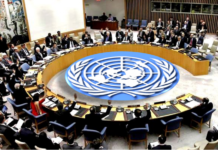
The minister’s statement came one day after a 28 January 2026 hearing at the European Parliament in Brussels, where the Subcommittee on Human Rights received Rémy Amahirwa, the son of Victoire Ingabire, as part of the follow-up to a resolution adopted in September 2024 calling for her immediate and unconditional release.
The European Parliament had also demanded the release of journalist Théoneste Nsengimana and former members of the opposition party DALFA-Umurinzi, arguing that their prosecutions were politically motivated.
A long-running political confrontation
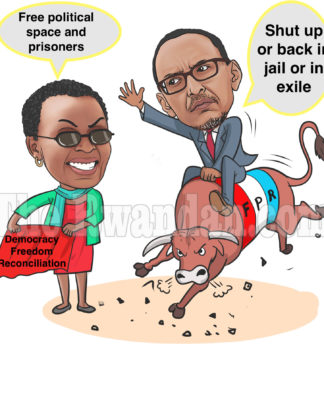
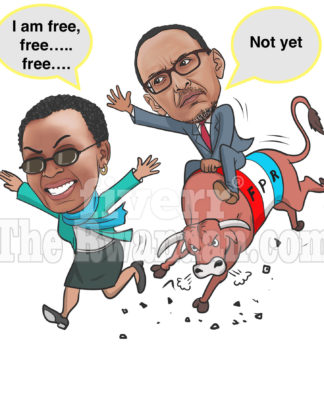
The Ingabire case reflects more than fifteen years of political confrontation with President Paul Kagame’s regime.
•January 2010: Victoire Ingabire voluntarily returned to Rwanda after years in exile in the Netherlands to contest the presidential election against Paul Kagame.
•April 2010: She was arrested and charged with terrorism-related offences and genocide ideology.
•2012: She was sentenced to eight years in prison after a trial widely criticised by international human rights organisations.
•15 September 2018: With several years of her sentence still to serve, she was released by presidential pardon granted by Kagame.
•June 2024: She was arrested again, this time accused of leading a “criminal organisation”, a charge her son describes as a rebranding of earlier allegations.
European pressure and Rwanda’s institutional pushback
On 11 September 2024, the European Parliament adopted a resolution calling for the release of Ingabire, Nsengimana and former DALFA-Umurinzi members.
On 15 September 2024, Rwanda’s Parliament rejected the resolution, denouncing it as an attack on national sovereignty.
On 21 January 2026, Rwanda’s Minister of Justice, Emmanuel Ugirashebuja, told the UN Human Rights Council in Switzerland that Rwanda’s justice system functions properly and that Ingabire’s trial would be conducted transparently. He also met Rémy Amahirwa and assured him that the judiciary was independent and professional.
Rémy Amahirwa’s testimony in Brussels
On 28 January 2026, Rémy Amahirwa told the European Parliament that his mother remains the most significant opposition figure in Rwanda and has been repeatedly targeted for her political activities.
He recalled that after her release in 2018 she remained under strict restrictions, barred from leaving the country and kept under constant surveillance. He said communication with her is extremely limited, filtered through lawyers and authorised visitors, and that she is denied basic rights in detention, including regular family contact and access to religious services.
Despite this, he said she remains mentally and spiritually strong and committed to fighting for the rule of law and genuine democracy in Rwanda.
Aruba, Greenland and New Caledonia: a calculated post-colonial narrative
By citing Greenland, Aruba and New Caledonia, Nduhungirehe deliberately invoked territories that remain linked to European states through post-colonial arrangements. Aruba is a constituent country within the Kingdom of the Netherlands, Greenland is linked to Denmark, and New Caledonia remains under French sovereignty.
By contrasting these territories with Rwanda, Kigali sought to frame European criticism as neo-colonial interference and to delegitimise external pressure over human rights concerns.
This comparison, however, is rhetorical rather than legal. The European Parliament’s criticism does not claim jurisdiction over Rwanda but refers to universal human rights obligations that Rwanda itself has accepted by ratifying international conventions.
A gap between state propaganda and popular perception
While the Rwandan government portrays Victoire Ingabire as a criminal or a security threat, her son described a different reality. During recent visits to Rwanda, he said he witnessed widespread public respect and affection for her, with strangers thanking her in shops, greeting her in the street, and hotel staff openly expressing admiration.
This contrast suggests that Ingabire retains significant social legitimacy despite years of state propaganda.
A mobilised diaspora and a politicised new generation
Since her re-arrest in 2024, the Rwandan diaspora has mobilised in Brussels, Geneva and across Europe. Demonstrations, advocacy campaigns and lobbying of international institutions have intensified.
Rémy Amahirwa himself said the situation pushed him into political engagement, refusing to wait another decade to see his mother again or allow his children to grow up without knowing her.
Social media diplomacy as political strategy
Nduhungirehe’s response on X illustrates the central role of digital diplomacy in Rwanda’s communication strategy. Social media has become a tool to shape international narratives, attack critics and project an image of uncompromising sovereignty.
By invoking sovereignty and colonial history, Kigali turns a debate on human rights into a geopolitical confrontation, while avoiding core questions about judicial independence, the criminalisation of opposition politics and political pluralism.
A test for the credibility of the rule of law
The Ingabire case goes far beyond an individual judicial file. It has become a litmus test for the credibility of Rwanda’s claims to democracy, the rule of law and national reconciliation.
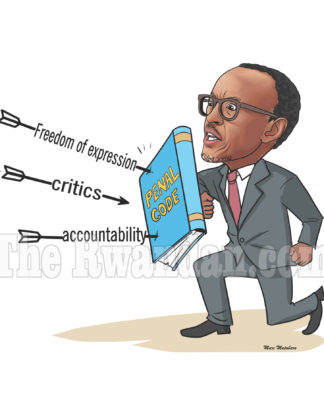
The judicialisation of political dissent, restrictions on fundamental freedoms and aggressive responses to international criticism suggest a political system where stability is maintained through control and strategic communication rather than genuine political pluralism.