














Luxembourg’s Prime Minister Luc Frieden has stated that he was not informed in advance about discussions within the EU Foreign Ministers’ Council concerning the conflict in the Democratic Republic of Congo (DRC). He made this clarification during a parliamentary session on Tuesday, responding to a question from MP Sam Tanson (The Greens). Frieden explained that such a lack of prior briefing is standard practice when no official vote is scheduled.
His remarks come after media reports suggested that Luxembourg’s Foreign Minister, Xavier Bettel, was the sole EU minister opposing sanctions against Rwanda. However, Bettel has denied this claim, stating that no formal sanctions proposal had been tabled. Instead, he argued that the EU should wait for a potential meeting between the conflicting parties before making any decisions.
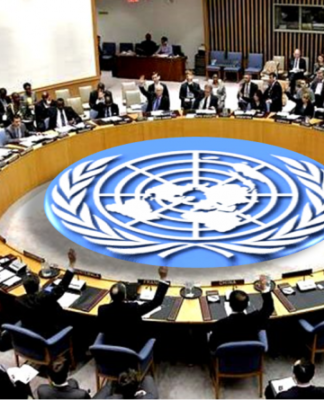
Despite Bettel’s stance, an agreement has now been reached within the EU to sanction ten individuals linked to the conflict. The list is set to be reviewed by permanent representatives of EU member states next week, with final approval expected from EU Foreign Ministers on 17 March.
At the national level, the Luxembourg Parliament adopted a motion on Tuesday, introduced by MP Sam Tanson, calling on the government to pressure Rwanda to withdraw its troops from the DRC. The motion also urges Luxembourg to support sanctions against those responsible in Rwanda and to engage diplomatically to find a resolution to the conflict.
Meanwhile, several countries have already imposed sanctions on Rwanda due to its support for the M23 rebel group in eastern DRC. The United States, the United Kingdom, Canada, and Germany have taken punitive measures, including freezing assets and restricting travel for key Rwandan officials. Additionally, Belgium had been preparing to act, but Rwanda preemptively suspended its development cooperation with Brussels to avoid an official Belgian decision.
Beyond the issue of Rwanda, Frieden advocated for ending the EU’s unanimity rule in foreign policy decisions, arguing that no single country should be able to block collective action. He proposed replacing unanimity with a “super-qualified majority” in certain areas, making it harder for a single member state to stall action. He also announced that a coalition of countries, including Luxembourg, will present proposals by summer on reforming the EU’s foreign policy decision-making process.