







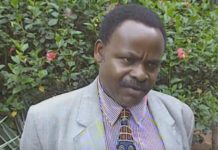

On Sunday, August 11, 2024, at the Amahoro Stadium in Kigali, Rwanda, spectators and attendees witnessed the presence of General Abdel Fattah al-Burhan from Sudan during the inauguration ceremony of President Paul Kagame. The event was marked by applause and cheers as General Burhan was introduced among the distinguished guests. This appearance came shortly after he survived two drone attacks aimed at him during a military graduation ceremony in eastern Sudan.
General Burhan serves as the transitional president of Sudan, a nation embroiled in over a year-long civil war, described as one of Africa’s most intense current conflicts. His visit to Kigali followed that of his rival, General Mohamed Hamdan Dagalo, who was also in Kigali in January of this year. General Dagalo, formerly Burhan’s deputy, leads the Rapid Support Forces (RSF), which now controls significant portions of the capital, Khartoum, and western Sudan.
Since hostilities erupted between these generals in April 2023, more than 10 million people have been displaced, prompting international efforts from the United States, the African Union, and the United Nations to mediate and seek a ceasefire. A regional political analyst notes that both sides are seeking support from other countries, especially in Africa.
In recent months, General Dagalo has been visiting neighboring countries, engaging with leaders to explain his position and the situation in Sudan, seeking their support. After his meeting with President Kagame in Kigali in January, Dagalo stated that he had explained the reasons behind the Sudanese conflict to Kagame, who “understood our vision for Sudan’s future” and expressed hope in Rwanda’s “experience and expertise” to help restore peace.
Seven months later, General Burhan’s presence in Kigali was acknowledged by the Rwandan presidency, which announced that he was received by President Kagame after attending the inauguration. Details of their discussions were not disclosed. Timothy J. Oloo, a political science lecturer in Kenya and Tanzania, told the BBC that Burhan’s visit to Kigali was a “significant opportunity” for him. Oloo highlighted that “it is rare to have 20 African heads of state in one place at the same time,” suggesting that Burhan sought support from some of these leaders and noted Kagame’s influential role in African politics.
Efforts to end the Sudanese war through negotiations have been attempted by various countries and organizations over the past months, with limited success. Following the drone attack in late July, while in a safe location, General Burhan was quoted by AFP as saying, “We will not retreat, we will not lay down arms, and we will not engage in talks.” However, under U.S. pressure, his government recently agreed to preliminary talks with Dagalo’s side, stipulating conditions that must be met before formal negotiations.
These preliminary talks were set to commence in Geneva, Switzerland, on Wednesday, August 14, with hopes of achieving a truce. While Burhan was in Kigali, his government’s delegates met with U.S. envoy Tom Periello in Jeddah, Saudi Arabia, to discuss the upcoming Geneva talks. Reports from Sudan suggest these talks in Jeddah ended without agreement.
The United States has been pushing for Burhan’s government to drop preconditions for talks with Dagalo in Geneva, but hopes for a ceasefire have diminished. It remains uncertain whether Burhan’s side will participate in Wednesday’s talks. Despite this, Periello announced his intention to head to Geneva, where RSF representatives are expected to attend. Without Burhan’s participation, the prospects for peace appear dim.
Timothy Oloo believes Burhan is primarily seeking backing from African leaders, as many view him as Sudan’s legitimate president, despite only controlling part of the country. Recent reports indicate RSF forces are advancing toward Port Sudan on the Red Sea, where Burhan’s government currently operates. This suggests a need for support and allies, which Burhan is actively seeking.
Following the 2019 revolution that ousted President Omar al-Bashir, General Burhan was appointed to lead the transitional government meant to establish civilian rule. However, in 2021, Burhan dissolved the Transitional Council he led, replacing its members in what opposition groups labeled a coup. This led to ongoing protests and unrest in the country.
In March 2023, General Mohamed Dagalo publicly criticized the 2021 coup as a “mistake” that seemed to restore the old regime’s power. Tensions between Burhan and Dagalo escalated, culminating in violent clashes on April 15, 2023, in Khartoum and other cities, with RSF forces confronting government troops.
According to Sudan’s medical union, over 40,000 people have died since the conflict began, with more than 20,000 killed in fighting, 16,000 due to lack of medical care and starvation, and others from conflict-related causes.