

















On March 3, 2025, the Rwandan government reacted strongly to Canada’s announcement of sanctions over Kigali’s involvement in the conflict in eastern Democratic Republic of Congo (DRC). In an official statement, Rwanda denounced what it called “defamation” and “false accusations” regarding human rights violations allegedly committed by its army. The government stated that it would seek clarification from Canadian authorities while accusing Ottawa of ignoring atrocities committed by the Congolese army and its allies.
According to Rwanda, the Armed Forces of the DRC (FARDC), supported by the FDLR and Wazalendo militias, have been attacking civilians, including the Banyamulenge in South Kivu. Kigali argues that Canada’s silence on these violations demonstrates unacceptable bias, encouraging Kinshasa to escalate its military operations in eastern DRC.
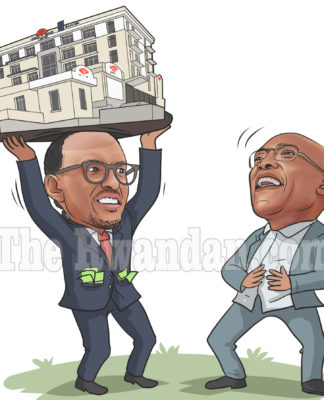
Beyond this official response, Kigali is shifting the debate by suggesting that Canada’s position is motivated by economic interests. On X, Rwandan Ambassador to the UN, Erneste Rwamucyo, accused Canada of acting to protect its vast mining interests in the DRC. He claimed that this “defamation” conveniently coincides with PDAC2025, the world’s leading mining and exploration convention, taking place from March 2 to 5 in Toronto. Rwamucyo highlighted the presence of DRC Mining Minister Kizito Pakabomba at the event, implying that Canada’s decision aligns with Kinshasa’s ambitions to control and exploit its mineral resources.
PDAC, held annually in Toronto, is a major global gathering for the mining industry, attracting over 27,000 participants from 135 countries. The event provides a platform for companies to explore investment opportunities in mineral-rich regions, particularly in the DRC, which possesses some of the world’s largest reserves of cobalt, coltan, and other critical minerals. By claiming that Canada is acting in defense of its economic interests, Kigali seeks to deflect attention from its own role in the DRC conflict.
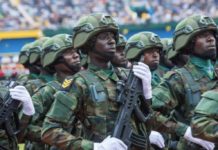
Rwanda has long been accused of backing M23, a rebel group that took control of Goma in January 2025 with the support of the Rwandan Defense Forces (RDF). While M23 claims to defend the rights of Congolese Tutsis, its true objective is to serve Kigali’s geopolitical interests by controlling mineral-rich territories. UN reports have extensively documented how minerals extracted from eastern DRC are funneled through Rwandan supply chains before being exported to global markets.
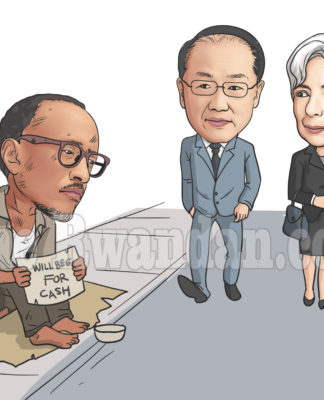
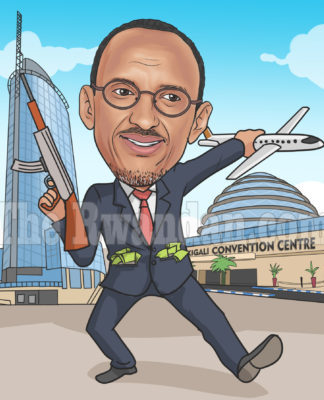
Paul Kagame’s government has worked to project an image of Rwanda as a model of economic success. However, this narrative is built on fragile foundations. The Rwandan economy remains highly dependent on international aid, and the country has accumulated significant debt to finance its development. In this context, the exploitation of Congolese resources has become a crucial element of Rwanda’s economic strategy. By supporting M23 and maintaining a military presence—direct or indirect—in eastern DRC, Rwanda ensures access to these valuable resources, which help sustain its economic model.
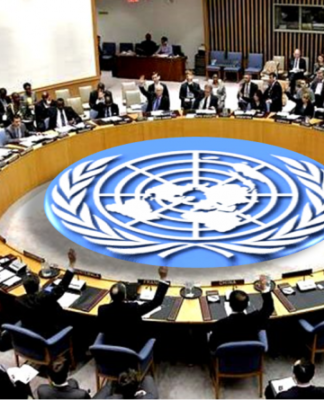
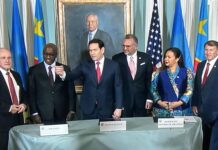
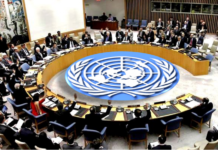
Rwanda’s strong reaction to Canada’s sanctions reflects growing concern in Kigali over increasing international pressure. Canada is not the first country to condemn Rwanda’s role in the DRC. The United States, France, and other Western nations have also expressed alarm over Rwanda’s backing of M23 and its role in exacerbating the humanitarian crisis in eastern Congo.
The Canadian government justified its sanctions by citing Rwanda’s responsibility in regional instability and human rights abuses committed by its forces and allied groups. The official statement from Global Affairs Canada condemned M23’s attacks and called on Rwanda to end its support for the rebellion. In response, Rwanda reaffirmed its commitment to protecting its national security while participating in an African-led mediation process.
However, Kigali’s diplomatic stance is increasingly unconvincing. Rwanda presents itself as a neutral actor seeking peace, yet its actions on the ground indicate a clear strategy of prolonging instability for economic and strategic gain. Accusing Canada of economic opportunism does not change the reality: Rwanda continues to use M23 as a tool to consolidate control over eastern DRC and exploit its natural wealth.
As international pressure on Kigali intensifies, the key question is whether sanctions will have any real impact on Kagame’s policies. So far, Rwanda has managed to deflect international condemnation through aggressive diplomacy and strategic alliances. But as evidence of its actions mounts and its diplomatic isolation grows, Kagame’s ability to manipulate the narrative may be reaching its limits.