









The crisis in eastern Democratic Republic of Congo has worsened with the Rwanda-backed M23 rebel group and its allies intensifying their repression against journalists, activists, and critics. A recent report by Human Rights Watch, authored by Clémentine de Montjoye, exposes a pattern of intimidation, unlawful detentions, and executions targeting those who speak out against the occupation of Goma and Bukavu. Since capturing these cities in January 2025, the M23 and the affiliated Alliance Fleuve Congo have imposed a reign of terror, suppressing independent voices and tightening their grip on power.
The Human Rights Watch report documents how M23 fighters have raided homes, issued death threats, and detained civil society leaders. Over 200 activists have sought protection since M23 launched its latest offensive, while journalists and human rights defenders have been systematically harassed or forced into hiding. The murder of singer and activist Delphin Katembo Vinywasiki, known as Delcat Idengo, is one of the most chilling examples of this brutal crackdown. On February 13, M23 fighters executed Idengo at his home, later claiming he was wearing military insignia—a justification dismissed by independent investigators.
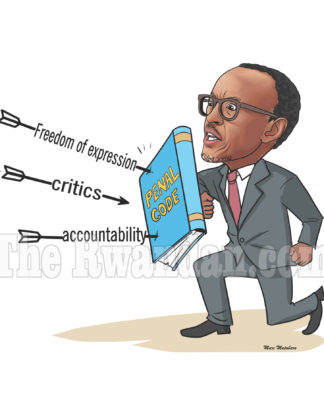
The Rwandan government’s involvement in these abuses is undeniable. Despite repeated denials by President Paul Kagame, multiple reports, including UN expert findings, confirm that Rwanda has provided military and logistical support to the M23. Human Rights Watch uncovered cases where Rwandan authorities arrested Congolese activists and handed them over to M23 intelligence in Goma, where they were detained, tortured, and interrogated for criticizing the armed group’s occupation. This aligns with Rwanda’s broader strategy of controlling the narrative and suppressing dissent, tactics Kagame’s regime has long used domestically against opposition figures and journalists.
The M23’s occupation of mineral-rich North and South Kivu has significant economic implications. Many experts believe Rwanda’s real objective in supporting M23 is to secure access to Congo’s vast reserves of coltan, cobalt, and gold, essential for global technology industries. A recent European Union report even suggested suspending its mineral trade deal with Rwanda due to Kigali’s role in human rights abuses and illegal resource exploitation. The M23 and AFC authorities have further restricted independent reporting, demanding that foreign journalists obtain Rwandan press accreditation to enter occupied areas.
Since seizing Goma, M23 forces have engaged in widespread human rights abuses, including summary executions, torture, and mass arrests of suspected government sympathizers. Witnesses reported that M23 fighters have gone door-to-door in Goma and Bukavu, detaining individuals accused of working with the Congolese government. The case of activist Didace Jimmy Butsitsi Nchimiyimana, who was taken into M23 custody in Goma in early March and has since disappeared, raises serious concerns over enforced disappearances under rebel control.
The repression of civil society in eastern Congo follows a well-established pattern of intimidation and violence that the M23 has employed in previous conflicts. The group has long used threats and executions to silence dissent and restrict information flow. In February, Reporters Without Borders reported that at least 25 radio stations in North Kivu had shut down due to M23 threats, looting, and attacks on journalists. Activists who have fled the occupied cities have recounted stories of relentless persecution, with M23 commanders accusing them of being informants for the Congolese army.
The international response has been slow and insufficient. While the United States recently imposed sanctions on Rwandan State Minister James Kabarebe and AFC spokesperson Lawrence Kanyuka, Human Rights Watch and other organizations have called for more decisive action. The European Union and its member states have been urged to expand targeted sanctions against high-ranking Rwandan and M23 officials responsible for these atrocities. There are also growing calls for the EU to suspend its trade agreements with Rwanda, which continues to benefit from the exploitation of Congolese minerals despite its involvement in regional instability.