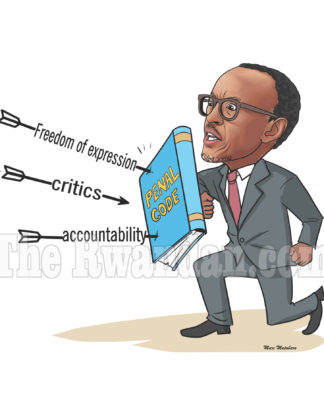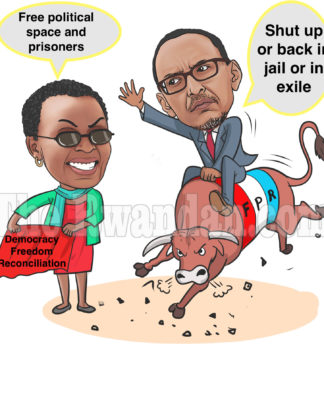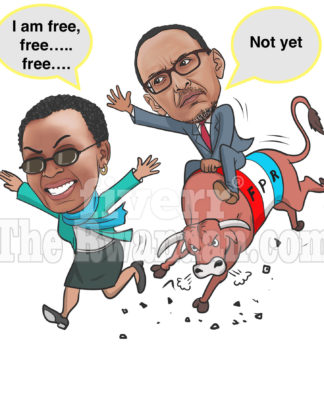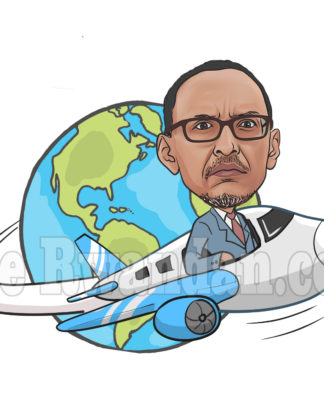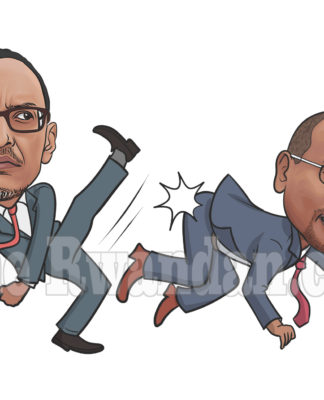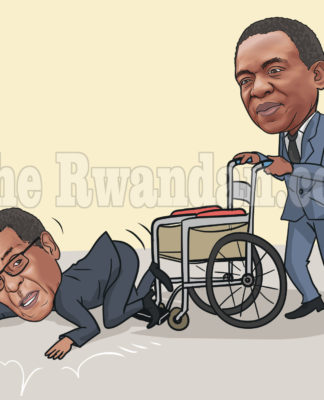















Paul Kagame, the longtime president of Rwanda, has launched an unprecedented attack on Congolese President Félix Tshisekedi, questioning his legitimacy and governance capabilities. Kagame, who has ruled Rwanda for nearly 30 years with an iron grip, has consistently won elections with over 90% of the vote—an outcome made possible by his systematic suppression of opposition figures, many of whom have been jailed, exiled, or assassinated under suspicious circumstances. His latest remarks against Tshisekedi expose not only his hypocrisy but also his desperation to shift blame as international pressure mounts on Rwanda for its role in fueling the conflict in the Democratic Republic of Congo (DRC).
In a recent interview with social media influencer Mario Nawfal, Kagame did not hold back his disdain for Tshisekedi. He mocked the Congolese leader’s past, ridiculing him with an anecdote about his time in Belgium where he allegedly worked as a pizza delivery driver. Kagame claimed that an Italian employer was shocked when he learned that Tshisekedi had become president, implying that he was unqualified to lead. However, Kagame conveniently ignored his own past. Before becoming Rwanda’s ruler, Kagame was a street boy in Kampala in the 1970s, reportedly involved in criminal activities before joining the Ugandan military. He later played a key role in the Rwandan Patriotic Front (RPF), which overthrew the government in 1994, but his early life hardly makes him a moral authority on someone else’s qualifications for leadership. The irony of a man with such a controversial background publicly judging another leader’s past is striking.
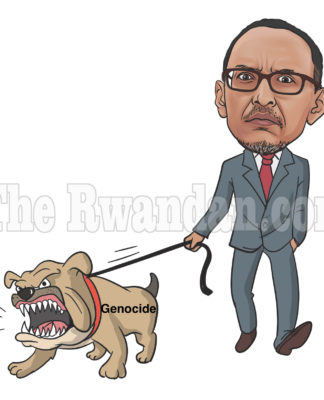
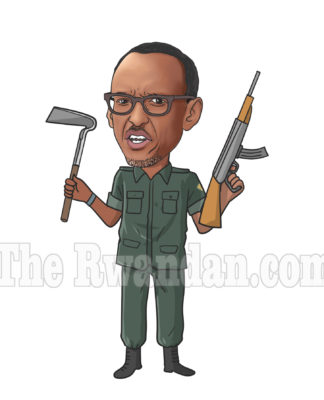
Kagame’s attack on Tshisekedi did not stop at personal insults. He went further, accusing him of harboring a genocidal ideology against Congolese Tutsis. This claim follows a long-established pattern where Kagame attempts to justify Rwanda’s interference in the DRC by portraying any resistance to Rwandan-backed groups as ethnic persecution. For decades, Kigali has used this narrative to rationalize its military interventions in the region, despite overwhelming evidence that Rwanda has been the primary aggressor. United Nations reports have consistently documented Rwanda’s support for the M23 rebel group, which has been accused of committing atrocities in eastern Congo. Yet, Kagame continues to deny any involvement, blaming Kinshasa for the ongoing instability.
During the interview, Kagame portrayed himself as a leader who seeks peace while shifting all responsibility for the crisis onto Tshisekedi. He claimed that the Congolese president is unreliable and impossible to negotiate with, stating that Tshisekedi often agrees to discussions only to reverse his position afterward. This statement is a clear attempt to undermine Tshisekedi’s credibility on the international stage and paint him as the sole obstacle to resolving the crisis. However, Kagame’s rhetoric is contradicted by the realities on the ground. The real obstacle to peace in the DRC is Rwanda’s direct military involvement. Experts estimate that between 12,000 and 15,000 Rwandan troops are currently operating in eastern Congo, supporting M23’s military advances. Kagame’s insistence that he seeks peace while actively fueling the conflict is a textbook example of doublespeak.
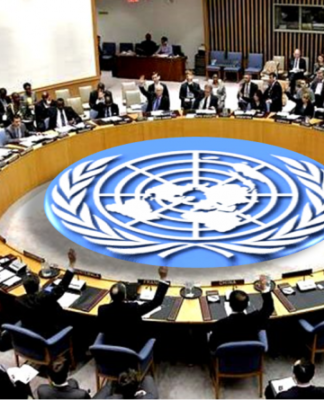
Kagame’s reliance on social media influencers like Mario Nawfal to spread his message reflects a shift in his media strategy. While Rwanda once enjoyed a largely positive image in Western media—thanks in part to Kagame’s well-funded PR campaigns—recent developments have tarnished his reputation. Countries including the United States, the United Kingdom, Canada, and Germany have imposed sanctions on Rwanda for its role in destabilizing the DRC. Even the European Union and the United Nations, though slow to act, have condemned Rwanda’s actions. Faced with increasing scrutiny, Kagame has turned to alternative media platforms to control the narrative. Nawfal, a controversial influencer, was given exclusive access to Kagame, allowing him to present his version of events without facing tough questions or being challenged on Rwanda’s role in the conflict.
One of the key points Kagame made in the interview was his insistence that Tshisekedi should negotiate with M23. According to him, there is no military solution to the conflict, and dialogue is the only path forward. However, this argument ignores the fact that M23 is not an independent Congolese rebellion but a Rwandan proxy force. The group has been repeatedly armed, trained, and financed by Kigali, and its offensives align perfectly with Rwanda’s strategic interests in the region—specifically, securing control over the DRC’s vast mineral wealth. Tshisekedi has refused to negotiate with what he calls a terrorist group, a stance that has complicated diplomatic efforts led by Angola and other regional actors. Kagame, by insisting on dialogue, is effectively demanding that Kinshasa recognize M23 as a legitimate political force rather than a foreign-backed militia.
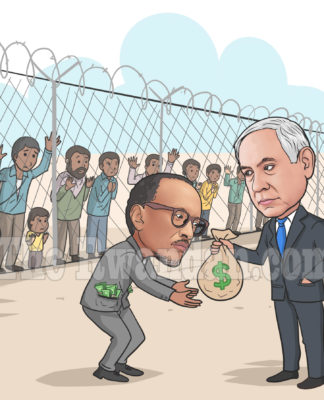
Kagame’s strategy of discrediting Tshisekedi serves multiple purposes. Firstly, it helps deflect attention from Rwanda’s own economic troubles. Despite the image of prosperity Kagame promotes, Rwanda remains heavily dependent on foreign aid, which makes up a significant portion of its national budget. The country has also accumulated substantial debt, with Kagame desperately seeking ways to sustain Rwanda’s economy. One of those ways has been the systematic looting of Congolese resources. For years, Rwanda has been accused of smuggling gold, coltan, and other valuable minerals from the DRC, using its conflict with Kinshasa as cover. Kagame’s attacks on Tshisekedi are therefore not just about politics—they are about securing continued access to Congo’s wealth.
Secondly, Kagame’s rhetoric aims to maintain his grip on power domestically. By portraying the DRC as an existential threat and presenting himself as Rwanda’s protector, he strengthens his justification for continued military engagement in Congo. This tactic is particularly useful as discontent grows within Rwanda. Despite his government’s tight control over political expression, cracks are beginning to show. Opposition figures continue to be silenced, and dissenting voices within the Rwandan elite have faced persecution or even assassination. Kagame’s need to maintain an external enemy serves as a distraction from his own authoritarian rule.
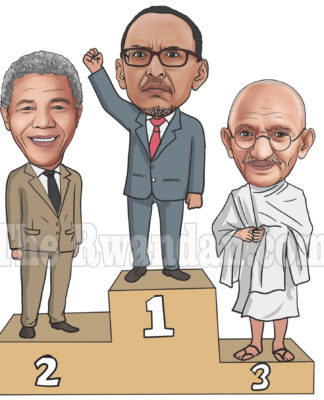
The fact that Kagame continues to rule Rwanda unchallenged, despite his long record of human rights abuses, is a testament to his ability to manipulate international perception. He has successfully branded himself as a visionary leader who transformed Rwanda after the 1994 genocide. However, his dictatorial tendencies, including his elimination of political rivals and absolute control over the country’s institutions, paint a different picture. The reality is that Kagame’s Rwanda is not the democratic success story he claims it to be—it is a police state where opposition is crushed, and dissent is met with severe punishment.