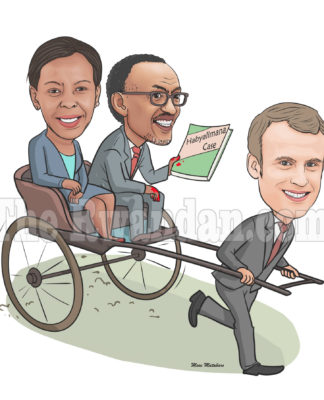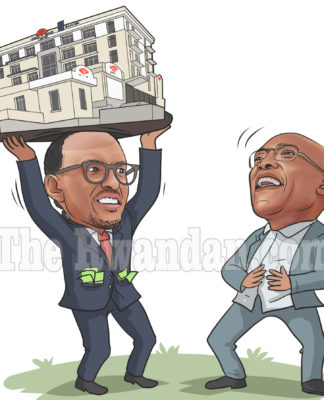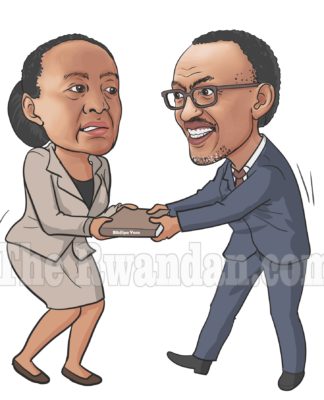











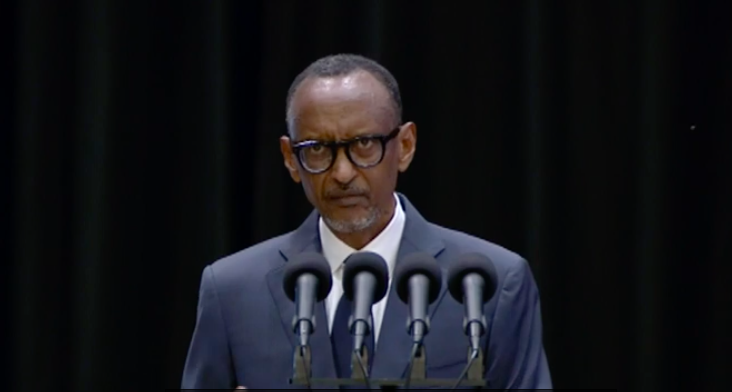
Rwandan President Paul Kagame, who has ruled his country for nearly 30 years under an increasingly authoritarian regime, recently criticized the Democratic Republic of Congo (DRC) for relying on foreign aid despite its immense natural wealth. Kagame, who has consistently been elected with over 90% of the vote after jailing opposition figures, made these remarks during an interview with social media influencer Mario Nawfal. His statements raise significant contradictions, as Rwanda itself has long been dependent on international assistance while benefiting from the illicit exploitation of Congolese minerals.
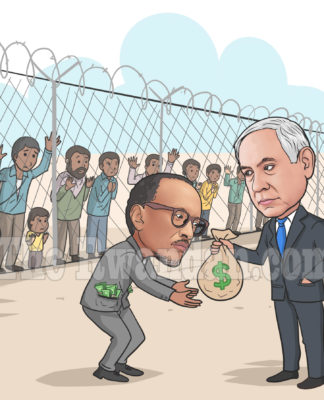
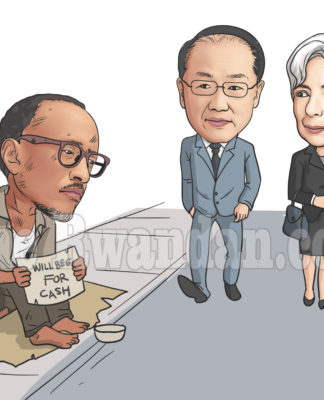
Kagame, who spent his youth in the 1970s as a street boy in Kampala, Uganda, engaged in questionable activities before rising through the ranks of the Rwandan Patriotic Front. Despite his past, he now positions himself as a moral authority to lecture Congo on governance and self-sufficiency. During the interview, he suggested that foreign aid donors use assistance as leverage to control recipient nations, implying that Rwanda has successfully moved beyond such dependency. However, this narrative ignores the reality that a significant portion of Rwanda’s budget still comes from international donors, and much of its economic success has been built on the illegal plundering of DRC’s resources.
The Rwandan president claimed that when the Rwandan Patriotic Army took control in 1994, the country’s economy was in ruins and heavily reliant on foreign aid. While this is true, he conveniently omitted the fact that Rwanda continues to receive substantial international support. According to reports from the World Bank and other financial institutions, foreign assistance still accounts for a considerable share of Rwanda’s development projects. Moreover, Kagame’s government has accumulated significant debt, contradicting his claims of financial independence.
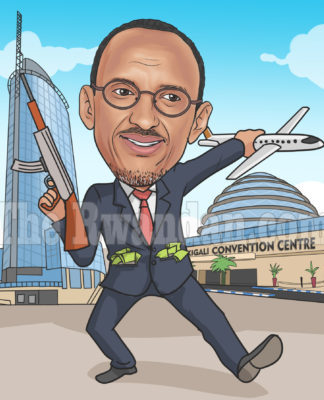
His hypocrisy becomes even more evident when he discusses the mineral wealth of Congo. He ridiculed the DRC for having vast resources but still seeking aid, failing to mention that Rwanda has been accused by multiple international reports, including UN investigations, of illegally exploiting Congolese minerals. Rwanda, a country with few natural resources of its own, has become a significant exporter of minerals such as coltan and gold—resources that are widely believed to be smuggled from eastern DRC through Kigali.
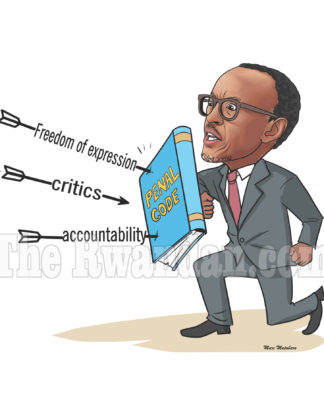
While attacking Congo’s leadership, Kagame ignored his own regime’s shortcomings. His administration has suppressed political opposition, silenced critical media, and used foreign-backed PR campaigns to maintain an image of stability and economic progress. The reality is that Rwanda’s economic model is not as self-sufficient as he portrays. A significant portion of its foreign reserves comes from exporting minerals that do not originate in Rwanda. The ongoing conflict in eastern Congo, driven largely by the M23 rebel group—a known Rwandan proxy—ensures Kigali maintains access to these valuable resources.
Kagame’s stance on foreign aid is also contradicted by his own past actions. He admitted that in the early years of his leadership, Rwanda relied heavily on international assistance and negotiated with donors to determine how funds were allocated. Yet, he now dismisses the importance of aid for Congo while conveniently benefiting from it himself. His criticism of the African Growth and Opportunity Act (AGOA) exclusion due to Rwanda’s ban on second-hand clothing imports highlights his selective outrage. When Rwanda faced economic repercussions for its trade policies, Kagame framed it as a matter of sovereignty, but when Congo struggles to assert control over its economy, he ridicules its leadership.
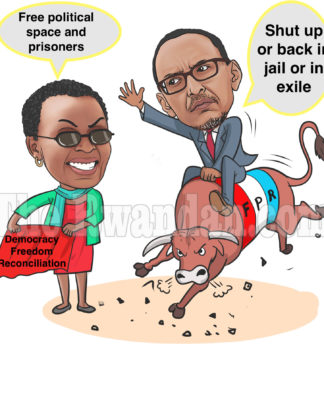
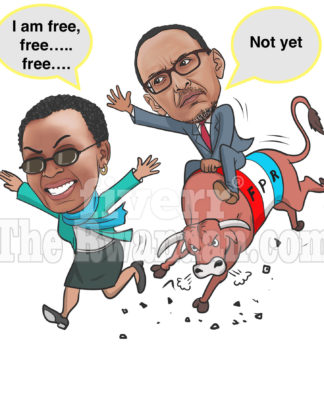
Furthermore, Kagame’s comments about Congolese President Félix Tshisekedi were laced with personal attacks, questioning his ability to govern and making derogatory references to his past employment. This comes from a leader who himself rose to power through military conquest rather than democratic legitimacy. Kagame’s rule has been marked by political repression, elimination of rivals, and a near-total absence of political competition. He has jailed or exiled nearly all credible opposition figures, ensuring his continued grip on power.
His statements regarding M23 further expose his duplicity. While claiming to support peace in eastern Congo, he insists that Kinshasa must negotiate with M23, a group that has terrorized civilians and committed numerous human rights violations. This demand aligns with Rwanda’s long-standing strategy of using armed proxies to destabilize the region while profiting from the chaos. Kagame portrays M23 as a legitimate political force seeking justice for Congolese Tutsis, yet in reality, the group serves as a tool for Rwanda’s territorial and economic ambitions in the DRC.
Kagame’s attempt to position himself as a beacon of African self-reliance is undermined by the very foundations of his regime. His government continues to depend on foreign aid, manipulate international alliances, and exploit Congo’s instability for economic gain. His criticisms of Tshisekedi and the DRC are not grounded in a genuine concern for African development but rather in his desire to deflect attention from his own regime’s complicity in the region’s ongoing crisis.