



















The assassinations of Félicien Gatabazi and Martin Bucyana, committed within twenty-four hours of each other in February 1994, remain among the most mysterious and consequential events in Rwanda’s modern history. When examined alongside the later crimes of Captain Godfrey Ntukayajyemo, known as Kiyago, a disturbing pattern emerges — one of calculated violence, judicial showmanship, and silent rehabilitation within a system that has long mastered the art of appearing lawful while protecting its own.
On the night of 21–22 February 1994, Félicien Gatabazi, Minister of Public Works and president of the Social Democratic Party (PSD), was gunned down in Kigali shortly after leaving a political meeting. The operation bore the marks of a planned commando strike. Several eyewitness accounts identified members of the Rwandan Patriotic Front (RPF) infiltrated inside the capital as the perpetrators. Lieutenant Godfrey Ntukayajyemo, alias Kiyago, was named as the main shooter. At the time he was lodging at the home of Senator Gatete Polycarpe in Kicukiro and reportedly worked in concert with Captain Hubert Kamugisha and Mahoro Amani. The mission was said to have been coordinated by Lieutenant-Colonel Karake Karenzi, then the RPF’s liaison officer to UNAMIR, acting on instructions from the RPF headquarters in Mulindi under Paul Kagame.
A female taxi driver, Emerita Mukamurenzi, was used to transport the killers to the scene. Whether deceived or coerced into assisting them, she unwittingly became part of the operation — and was later murdered herself to eliminate a potential witness. The method was chillingly systematic: infiltration, the use of civilian intermediaries, and the removal of anyone who could speak.
The next day, 22 February 1994, Martin Bucyana, president of the CDR party, was killed in Butare after leaving a political meeting. Officially, the murder was blamed on spontaneous popular anger following Gatabazi’s death. Yet multiple accounts suggest it, too, was a planned act, designed to inflame tensions and plunge the country into chaos. Within forty-eight hours, two political leaders from opposing camps were dead. Kigali erupted; demonstrations turned violent, militias filled the streets, and RPF infiltrators mingled among the crowds, deepening the confusion. These two assassinations shattered the fragile balance created by the Arusha Accords and accelerated the country’s descent into war.
Four years later, on 23 August 1998, Kiyago’s name resurfaced in another brutal crime. Then a captain in the army’s 101st Battalion, he detained two women — Mutuyimana Marthe and her daughter Mukayisenga Odette — who had come to demand the return of a family house he had illegally occupied. Assisted by Corporal John Simbaburanga and Private Innocent Munyanziza, he held the women hostage all day at his Nyamirambo residence before driving them at night to Mwendo (Butamwa), where they were hacked to death with a machete.
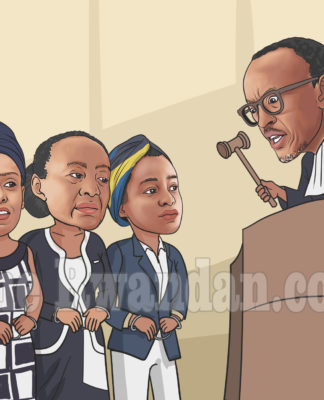
On 15 September 1998, the Kigali Military Court sentenced Kiyago and Simbaburanga to death and Munyanziza — a minor at the time — to ten years in prison. In 2006, the Supreme Court commuted the death sentences to fifteen years, citing a medical report from Kanombe Military Hospital describing Kiyago’s neurological damage from wartime head injuries. The court accepted that the condition did not remove responsibility but reduced it, acknowledging “partial mental disturbance.”
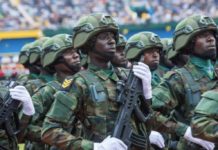
Instead of ending their military careers, the judgment marked a quiet turning point. In 2009, Kiyago was reinstated into active service and deployed to the United Nations mission in Sudan, where he served until 2011 as transport and logistics officer. His former subordinate Simbaburanga was later promoted to sergeant and, by 2025, appeared in official RDF records as part of the Rwandan contingent in Cabo Delgado, Mozambique — a “peacekeeping” mission against insurgents. Two men once convicted of murder now serving abroad as representatives of the Rwandan army’s discipline and professionalism.
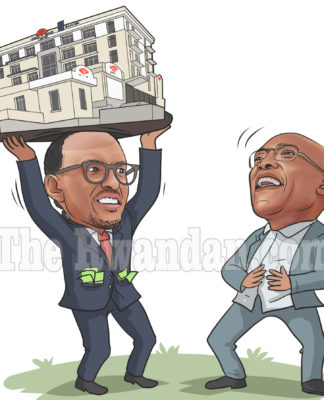
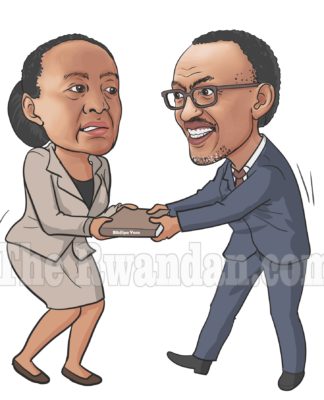
These are not isolated anomalies but symptoms of a system. In Rwanda, the military courts condemn publicly to appease critics, while the institution quietly protects and reassigns those it wishes to keep. Officers linked to political killings, disappearances, or civilian massacres have re-emerged as diplomats, commanders, or envoys in foreign operations.
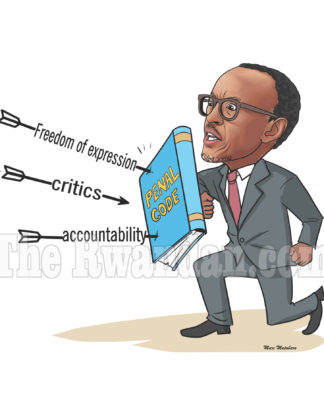
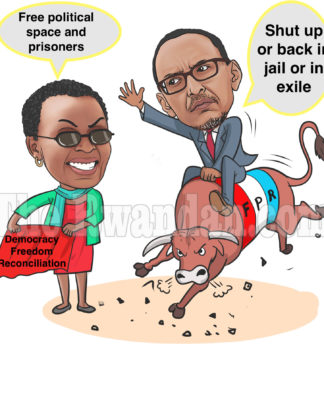
Rwanda has convinced much of the world that it is a model of order and accountability. Yet the documents, verdicts, and testimonies tell another story — one where justice serves image, not truth. From Gatabazi to Bucyana, from Butamwa to Cabo Delgado, the same names and methods reappear across the decades. Behind the façade of stability lies a state that has learned how to punish for appearance’s sake while never truly breaking the chain of impunity.