








The diplomatic crisis between Rwanda and Belgium reached a new level on March 17, 2025, when Kigali announced the immediate severance of diplomatic relations with Brussels. This decision follows European Union sanctions imposed on Rwandan military officials and M23/AFC members accused of fueling instability in the Democratic Republic of Congo.
Belgian Foreign Affairs Minister Maxime Prévot condemned what he described as a complete distortion of facts by the Rwandan government, arguing that Rwanda had deliberately chosen to isolate itself rather than engage in dialogue. He emphasized that Belgium regretted the decision, which he deemed disproportionate, and noted that Rwanda preferred to cut off communication rather than seek resolution.
He recalled that he had invited his Rwandan counterpart for discussions during his visit to Brussels the previous week, an offer that was ignored. Instead of engaging in a meaningful conversation, he argued, the Rwandan government had chosen a one-sided and biased perception of Belgium’s position. He stated that breaking diplomatic ties never helps resolve disputes.
Responding to recent statements from the Rwandan government, Prévot categorically rejected the claim that Belgium was attempting to punish or weaken Rwanda, let alone for colonial reasons. He insisted that Belgium’s foreign policy was guided solely by the principles of human rights, the rule of law, and international humanitarian law. This position, he stated, was shared by the European Union and international partners, including the G7.
Rwanda, in its statement, accused Belgium of playing a historically destructive role in fostering ethnic extremism, which it claims contributed to the 1994 genocide. Kigali further accused Belgium of undermining Rwanda on the international stage and using sanctions as a tool for political pressure.
Prévot dismissed this narrative, stating that Belgium’s stance on the 1994 genocide remained unchanged. He reaffirmed that Belgium had unequivocally condemned the genocide against the Tutsi, acknowledged its historical failures, and formally apologized for its shortcomings. He also reiterated Belgium’s commitment to prosecuting those responsible for genocide-related crimes.
The diplomatic rupture coincided with the European Union’s adoption of sanctions against high-ranking military officials and members of M23/AFC, accused of fueling the conflict in Eastern Congo and profiting from the illicit exploitation of the region’s resources. These measures were unanimously approved by EU member states.
In response to Rwanda’s expulsion of Belgian diplomats, Belgium imposed reciprocal measures, including summoning Rwanda’s chargé d’affaires in Brussels, declaring all Rwandan diplomats persona non grata, ordering them to leave within 48 hours, and terminating bilateral cooperation agreements.
Prévot stressed that these actions were intended to increase pressure on all parties to commit to a ceasefire and peace talks. He emphasized Belgium’s support for regional mediation efforts and urged all stakeholders, including the Congolese government, to address governance and security challenges.
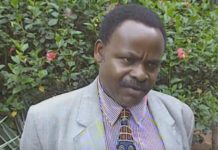
Rwandan Foreign Affairs Minister Olivier Nduhungirehe announced that the severance of ties included the immediate closure of Rwanda’s embassy in Brussels. He confirmed that all Rwandan diplomats would return to Kigali within 48 hours and stated that none of them would respond to any summons from the Belgian government.