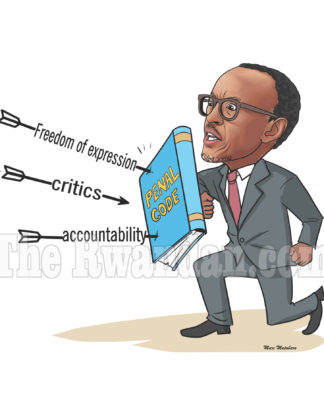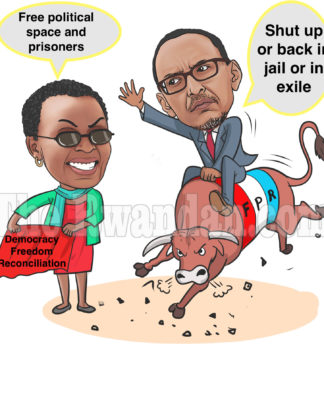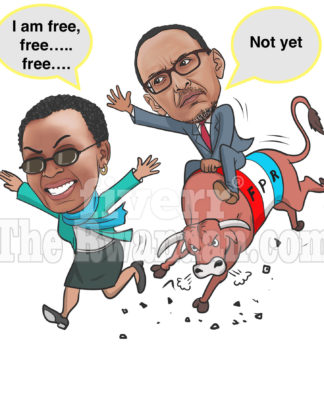




















On 14 October 2025, Rwanda’s Financial Intelligence Centre (FIC) released a list of 25 individuals accused of terrorism and terrorist financing. Officially, it was presented as a national security measure. In reality, it reads like a blacklist of the government’s most outspoken critics.
The names on the so-called “domestic sanctions list” include ex-military officers, journalists, academics, activists, and members of the Rwandan diaspora living in Africa, Europe and North America.
The pattern is familiar: when diplomacy demands moderation at home, Kigali exports repression abroad.
Timing That Speaks Volumes
The sanctions come as Rwanda seeks to leverage the Washington peace framework signed with the Democratic Republic of Congo (DRC). Kigali’s main condition for withdrawing its troops from eastern Congo is the elimination of the FDLR, a rebel group long used as the regime’s justification for regional military action.
But analysts warn that the Kagame government is using the FDLR narrative to crush all forms of opposition. “Kigali wants to turn the anti-FDLR campaign into a Western-funded purge of its exiled dissidents,” says a political observer in Brussels. “The list was rushed out to coincide with U.S. diplomatic actions — a calculated move to equate critics with terrorists before the world can question the deal.
A List Built on Sand
The 25-page FIC document, reviewed by several independent analysts, is filled with vague intelligence claims, recycled accusations, and references to decades-old trials. For most of those listed, there is no evidence of violence or financing of armed groups — only political activism, public criticism, or association with opposition platforms such as the RNC, MRCD, or FDU-Inkingi.
The RNC immediately denounced the move as “politically motivated sanctions devoid of legal or moral legitimacy.”
Ignace Rusagara, the party’s spokesperson now living in Maine, USA, argued that “the regime has hijacked the Financial Intelligence Centre, created in 2020, to criminalise dissent and intimidate exiled citizens.”
Dr Theogene Rudasingwa, a former Kagame insider turned critic, went further. In an open letter to U.S. Secretary of State Marco Rubio and FBI Director Kash Patel, he called the accusations “false, defamatory, and politically orchestrated.” He reminded U.S. authorities of credible threats to his life on American soil, linked to Rwandan intelligence operatives.
“I am not, I have never been, and I will never be a terrorist,” he wrote. “This is not counterterrorism. It is transnational repression under the cover of law.”
Financial Tools as Political Weapons
Rwanda’s Financial Intelligence Centre was established to meet international standards on anti-money-laundering and counter-terrorist-financing. Yet in the absence of an independent judiciary or parliamentary oversight, the institution has become a new tool of political control.
Listing opponents as “terror financiers” enables Kigali to pressure foreign banks, disrupt the lives of exiles, and stigmatise any organisation that dares to engage with them. “It’s a quiet form of punishment — economic suffocation instead of imprisonment,” explains a Geneva-based African diplomat. “No arrests, no trials — just frozen accounts and fear.”
Washington’s Dilemma
For Washington, the timing could hardly be worse. President Donald Trump, keen to celebrate the DRC-Rwanda peace accord as a diplomatic win following the near-success of the Israel-Hamas deal, may be reluctant to confront Kigali. A rebuke now could derail a fragile regional framework that his administration wants to brand as a signature achievement.
But silence carries a price. “If the U.S. turns a blind eye, it signals that authoritarian allies can weaponise counterterrorism laws against exiles on American soil,” warns a former U.N. expert on the Great Lakes region.
A Dangerous Precedent
The publication of the FIC list sets a troubling precedent. Several of those named are citizens or permanent residents of the United States, Canada, Belgium, or France. The document lists their home addresses and phone numbers — an unprecedented public exposure that could endanger their safety.
Human rights observers fear the move could justify arrests, bank freezes, or extradition requests in partner states that cooperate with Rwanda on counterterrorism. “This is how authoritarian regimes launder repression through international law,” says a Paris-based lawyer familiar with the cases.
Will the West Sacrifice Rwanda’s Democracy for Congo’s Peace?
The larger question now looms: will the international community sacrifice Rwanda’s democratic future for a peace deal in the Congo?
By treating the Kagame government as a pillar of regional stability, Washington and Brussels risk endorsing a policy that criminalises dissent and erases legitimate opposition under the label of “terrorism.”
“Short-term stability cannot come at the cost of long-term justice,” argues a Rwandan academic in exile. «You cannot build peace in the Great Lakes region while rewarding the very system that breeds fear and silence.»
Rwanda’s new sanctions may look technical, bureaucratic, and legal. But beneath the surface lies a brutal political message:
«Speak out, and you are a terrorist.»