




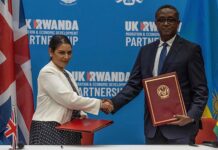
















The UK’s recent decision to impose sanctions on Rwanda in response to its support for the M23 rebellion in the Democratic Republic of Congo (DRC) has sent shockwaves through Kigali’s ruling party, the Rwandan Patriotic Front (RPF). The move, which effectively halts financial aid, is a significant blow to Rwanda’s government, long accused of fuelling instability in eastern Congo through proxy rebel groups.
In a predictable yet deeply concerning response, Rwandan networks in the UK—composed mainly of RPF supporters and operatives—have launched an aggressive campaign to undermine British officials who backed the decision. Their first target: Foreign Secretary David Lammy.
A Coordinated Attack: Lammy Accused of Corruption Without Evidence
Rwandan government supporters have mobilised within their UK diaspora communities to orchestrate a smear campaign against Lammy, alleging corruption and foreign influence. Circulating messages among themselves, they claim, without any credible evidence, that Lammy’s stance against Rwanda’s role in the DRC crisis is driven by electoral pandering to the Congolese diaspora in Tottenham or, more sinisterly, by bribes from the DRC government.
This campaign is not a spontaneous outcry by concerned individuals but a carefully planned effort designed to discredit and intimidate. The messages exchanged by RPF loyalists urge constituents to file complaints with the UK’s Parliamentary Commissioner for Standards, the Independent Parliamentary Standards Authority (IPSA), the Serious Fraud Office (SFO), and the Metropolitan Police. They have even drafted a complaint letter and provided email addresses to ensure mass participation.
A Well-Worn Strategy: The Kagame Regime’s Long Arm of Repression
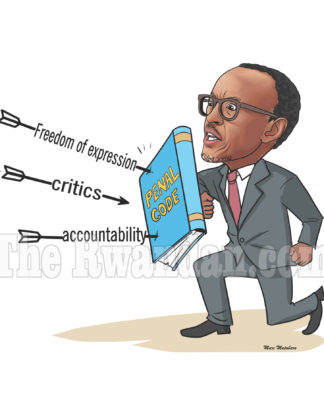
The tactics deployed against Lammy are nothing new. The Rwandan government has long relied on character assassination, false allegations, and coercion to silence critics abroad. Human rights organisations such as Human Rights Watch have extensively documented these strategies. A recent report titled Join Us or Die details how Kigali uses coercion and intimidation to control Rwandans living overseas, particularly students and asylum seekers.
For decades, the RPF has accused opponents of genocide revisionism, terrorism, or corruption whenever they challenge the regime’s actions. When no credible accusations exist, they manufacture them. The attack on Lammy is simply the latest iteration of this playbook.
UK Rwandan Students Pressured to Participate
Disturbingly, reports indicate that international students from Rwanda studying in the UK are being coerced into joining this campaign. Those who refuse face threats of having their scholarships revoked or encountering difficulties renewing their passports when they return to Rwanda for holidays. Such pressure tactics are consistent with previous accounts of how the Rwandan government maintains control over its diaspora through fear and retribution.
The UK is No Stranger to Rwanda’s Covert Operations
Britain has seen first-hand how far Rwanda is willing to go to silence critics. In 2011, MI6 foiled an assassination plot against Rwandan dissidents living in London, orchestrated by Rwandan intelligence operatives. The UK government has since remained aware of Kigali’s methods, but this latest effort marks a new level of audacity—targeting not just critics within the diaspora but a senior British politician.
The Bigger Picture: Why Rwanda is Lashing Out
The UK’s decision to impose sanctions is a rare moment of international accountability for Rwanda, whose military interventions in the DRC have been an open secret for decades. With these sanctions, the UK has sent a strong message: aiding and abetting rebel groups that terrorise civilians will not be tolerated.
Instead of addressing these serious allegations and changing course, the Rwandan regime has chosen its usual path—diverting attention, fabricating allegations, and attempting to intimidate foreign officials.
The UK Must Remain Vigilant
The UK government must be fully aware that these intimidation tactics are an extension of Rwanda’s broader strategy of suppressing dissent. If left unchallenged, this campaign could embolden the Rwandan regime to escalate its threats against British officials who stand against its human rights abuses.
It is crucial that the UK government and law enforcement agencies remain vigilant against such foreign interference, ensuring that British politicians, regardless of their stance on Rwanda, are not subjected to smear campaigns and intimidation tactics orchestrated by a foreign regime.