














By René Mugenzi
For over a decade, the Democratic Republic of the Congo (DRC) has suffered at the hands of armed rebel groups, with the March 23 Movement (M23) being one of the most notorious. The United Nations (UN) and several international institutions have produced reports detailing Rwanda’s involvement in fueling these conflicts, yet time and again, these findings have led to no significant consequences. Instead of holding Rwanda accountable, the cycle repeats itself: reports are published, condemnations are issued, but no decisive action is taken. As a result, Rwanda continues its interventions in the DRC with complete impunity, emboldened by the absence of sanctions.
Since 2010, numerous reports have documented Rwanda’s support for the M23 and other armed groups operating in eastern DRC. Each of these reports presented an opportunity to intervene and halt the destabilization of the region, yet international inaction has effectively granted Rwanda a blank cheque to continue. The UN’s 2010 “Mapping Report” meticulously documented grave human rights violations in the DRC between 1993 and 2003, implicating Rwandan forces in mass atrocities. Despite strong recommendations for justice, no international action followed. Subsequent reports from the UN Group of Experts continued to provide evidence of Rwanda’s direct military support for the M23, including arms deliveries, logistical support, and the involvement of senior Rwandan military officials in the chain of command.
The 2012 report identified high-ranking Rwandan military officials as key facilitators of M23 operations, yet no sanctions were imposed. In 2013, evidence of Rwandan troops crossing into the DRC to assist the M23 did not lead to meaningful international measures. In 2014, the UN revealed attempts to rearm M23 fighters despite their supposed defeat. Beyond verbal condemnations, these findings were ignored. The 2015 and 2016 reports highlighted Rwanda’s financial exploitation of the conflict, with smuggled gold and coltan fueling further instability. Even as reports from 2017 to 2019 demonstrated Rwanda’s continued support for armed factions and illicit trade, no action was taken.
In 2020, UN reports continued to provide clear evidence that Rwanda was supplying logistical and military support to rebel groups. The 2021 report implicated Rwanda in the illegal export of gold mined in the DRC, allowing criminal networks to thrive while millions of people continued to suffer. The 2022 report was among the most damning, revealing that the Rwandan Defence Forces had actively participated in attacks against the Congolese army while supplying advanced military equipment to the M23.
The 2024 report further reinforced these conclusions, highlighting an even stronger Rwandan military presence in the DRC. It revealed that 3,000 to 4,000 Rwandan soldiers were deployed on Congolese territory, actively supporting M23 operations. The report also detailed the direct involvement of Rwandan forces in targeted attacks against the Armed Forces of the DRC (FARDC), as well as their strategic control over resource-rich areas. Additionally, it exposed the use of drones and sophisticated weaponry supplied by Rwanda to bolster M23’s offensive capabilities. These damning new findings were once again met with mere statements of condemnation from the international community, but no concrete action was taken to halt Rwanda’s involvement in this conflict.
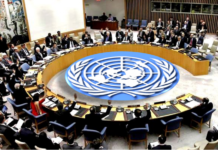
In recent months, the M23 has intensified its attacks in eastern DRC, seizing several cities in North and South Kivu, including Goma and Bukavu. The UN estimates that the recent clashes have resulted in nearly 3,000 deaths. Reports confirm that Rwandan forces are providing direct support, yet once again, the international response remains limited to expressions of concern and diplomatic condemnations without punitive measures. The European Union, the UN, and the Southern African Development Community (SADC) have all issued statements denouncing Rwanda’s actions, but no real consequences have followed. Some European Parliament members have proposed suspending financial aid to Rwanda until it ceases its support for armed groups, but implementation remains uncertain. Meanwhile, violence continues, civilians suffer, and Rwanda acts with impunity.
Each of these reports since 2010 represented an opportunity to hold Rwanda accountable. Had international institutions taken decisive measures—such as economic sanctions, travel bans on implicated officials, or legal prosecutions—Rwanda’s ability to support the M23 would have been severely constrained. Instead, inaction has reinforced Rwanda’s confidence that it can continue its interventions without consequences. The pattern is clear: a report exposes Rwanda’s involvement, international bodies issue condemnations, but without enforcement mechanisms, Rwanda resumes its activities unhindered. The absence of accountability has effectively granted Rwanda a license to fuel conflicts, destabilize the DRC, and cause immense human suffering.
To break this cycle, the international community must move from words to action. This includes imposing targeted sanctions on Rwandan officials involved in supporting the M23, launching independent investigations into alleged war crimes, and reassessing diplomatic and economic relations with Rwanda. The DRC has endured decades of war and suffering, and Rwanda’s role in perpetuating this conflict is well-documented. Yet, each report exposing these actions has been followed by inaction, allowing Rwanda to continue unchallenged. The failure of the international community to enforce consequences has emboldened Rwanda and prolonged the suffering of millions. It is time to end this cycle of impunity and take decisive action before another report is written, another condemnation is issued, and another massacre occurs in the DRC.