


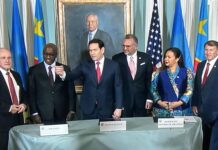













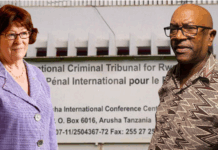






In April 2025, a major diplomatic milestone was reached in Washington, D.C., as the Democratic Republic of the Congo (DRC) and Rwanda signed a Declaration of Principles—a foundational step toward resolving one of Africa’s most entrenched and violent regional conflicts. Facilitated by U.S. Secretary of State Marco Rubio, this agreement is seen as the framework for a broader peace accord expected to be finalized in the coming months.
Building on this momentum, U.S. Senior Advisor for Africa, Massad Boulos, announced this week that constructive discussions were held with both President Félix Tshisekedi and President Paul Kagame. A first draft of the peace agreement has now been shared with both parties, and the United States will continue working closely with each side to refine and iterate the text toward consensus. “Resolving long-standing differences is hard work,” said Boulos, “but we are committed to seeing this through.”
A final peace summit, expected to take place this summer in Washington, could represent a historic turning point—if the parties can navigate the deeply rooted political, military, and economic complexities that have derailed previous efforts.
Rwanda’s Regional Strategy: From the Legacy of Genocide to Resource-based Power
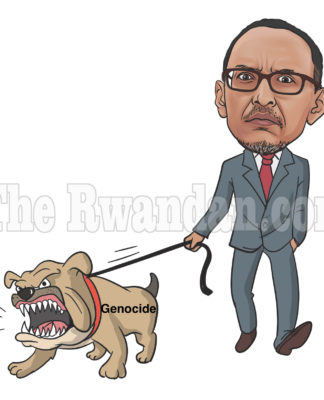
Following the 1994 genocide against the Tutsi, Rwanda’s security strategy evolved significantly. The flight of génocidaires to eastern Zaire (now the DRC) created what Kigali perceived as an existential threat, prompting the country to adopt a more assertive regional posture. During the First Congo War (1996-1997), Rwandan interventions, initially seen as necessary counterinsurgency operations, quickly morphed into sustained military engagements aimed not only at neutralizing threats but also at securing economic and geopolitical leverage (UN Security Council, 2001).
Rwanda’s influence extended rapidly through its support for Congolese rebel groups, initially the AFDL under Laurent-Désiré Kabila and later the RCD during the Second Congo War. This model—using non-state armed groups to assert influence—became a hallmark of Rwanda’s regional strategy (UN Security Council, 2003). This support was not merely military; it was logistical, political, and, crucially, economic.
By the early 2000s, UN investigators had documented Rwanda’s involvement in the systematic exploitation of Congolese minerals, including coltan, gold, and cassiterite, through networks controlled by Rwandan troops and their allied militias (UN Security Council, 2001; 2003). These minerals entered global supply chains, often under opaque labeling practices. Even after the formal withdrawal of troops, the model persisted through groups such as the CNDP and later the M23, allowing Rwanda to maintain influence without direct occupation (UN Security Council, 2024).
A 2024 UN experts’ report identified “direct military involvement by Rwanda with M23 fighters,” citing photographic and satellite evidence of Rwandan forces operating in North Kivu, providing weapons and logistical support on the ground (UN Security Council, 2024). Kigali consistently denies these allegations, yet the persistent presence of well-armed and disciplined rebel groups near its border continues to fuel suspicions.
Domestically, Rwanda has positioned itself as a model of post-conflict success: stable, technologically advanced, and open for business. However, the economic sector that supports its rapid development—particularly its mineral exports—has often been linked to informal or illicit trade routes originating from eastern Congo (Amnesty International, 2016; Global Witness, 2017). Reports have highlighted the discrepancy between Rwanda’s declared mining production and the volumes it exports, suggesting a reliance on Congolese sources. As Global Witness points out, “this discrepancy reveals a systematic trafficking of minerals that continues to fuel the conflict on the other side of the border” (Global Witness, 2017).
This evolution, from direct intervention to control through intermediaries and resource extraction, has enabled Rwanda to exert influence far beyond its geopolitical means. Yet, it has also entrenched the conflict dynamics in eastern Congo, where local populations bear the brunt of rebel activities supported by foreign powers, forced displacements, and the looting of resources.
The Specter of Past Peace Accords: Analyzing Failures and Pitfalls in the DRC Peace Process
While the current peace talks in Washington continue, those familiar with the history of peace negotiations in the Democratic Republic of the Congo (DRC) see alarming similarities with past attempts. From the Lusaka Ceasefire Agreement (1999) to the Sun City Agreement (2002) and the Nairobi Communiqué (2007), previous efforts to end the conflict have shown that well-intentioned accords often fail due to a combination of elite-level negotiations, lack of local involvement, and failure to address the root causes of the conflict.
The 1999 Lusaka Agreement, signed amidst the Second Congo War, was hailed as a major breakthrough. It brought together six regional states and various armed factions, calling for a ceasefire and the deployment of a UN peacekeeping mission. However, the agreement faltered due to non-compliance by signatories. Proxy warfare and divergent national interests undermined the process, with Prunier (2009) noting that the agreement “was more of a framework for negotiation than a definitive end to the conflict.”
Similarly, the 2002 Sun City Agreement aimed to establish a power-sharing government in the DRC. While it was designed to end the war by creating a transitional government, it excluded key actors, such as the CNDP and Rwanda-supported factions. This exclusion and the inability to integrate local realities led to fragile peace, which ultimately deepened fragmentation and instability (International Crisis Group, 2003).
The 2007 Nairobi Communiqué, signed between the DRC and Rwanda, aimed to resolve the issue of the FDLR (Democratic Forces for the Liberation of Rwanda) militia in the DRC and called for joint military operations. While it led to moments of cooperation, such as the Umoja Wetu operation in 2009, the agreement failed to resolve deeper tensions fueling militia activity. As Stearns (2012) observes, these accords “tend to address the symptoms rather than the underlying causes of insecurity.”
These past accords share several common flaws. First, they focused too much on reaching a political consensus among elites without providing effective implementation mechanisms at the local level. Second, the lack of clear timelines and binding measures created gaps in enforcement. Finally, the economic causes of the conflict, particularly the illegal exploitation of minerals, were largely ignored.
As the current peace process unfolds in Washington, concerns remain that it may fall into the same traps as its predecessors. While regional cooperation and state sovereignty are emphasized in official rhetoric, the absence of binding mechanisms and genuine engagement with local populations raises doubts. As a civil society leader from South Kivu summarized, “They are negotiating above our heads. It’s us who will live with the consequences.”
In summary, past peace efforts in the DRC have been hindered by a tendency to prioritize political agreements among elites while neglecting the underlying and systemic causes of the conflict. Without significant local involvement and enforceable mechanisms, the latest diplomatic initiative in Washington risks becoming just another chapter of failure in the pursuit of lasting stability for the region.
Military Imbalance and Alliances: The Rwanda-DRC Conflict
The ongoing conflict in the Democratic Republic of Congo (DRC) is deeply rooted in a complex web of military imbalance, shifting alliances, and regional power struggles. A central factor in this dynamic is the disparity in military capabilities between Rwanda and the DRC, particularly in the volatile eastern regions of the country.
Recent reports suggest that between 3,000 and 4,000 Rwandan soldiers are operating in eastern DRC alongside the M23 rebel group, intensifying tensions between the two countries. The M23, which has been active in the region for several years, is widely suspected of receiving substantial military support from Rwanda, including weapons, training, and logistical assistance. This support has significantly strengthened the group’s position and contributed to the region’s instability. Despite repeated calls from the DRC government for foreign forces to withdraw, the continued, alleged involvement of Rwanda highlights the complex regional power dynamics and the strategic interests at play, complicating the path toward peace (International Crisis Group, 2023).
The military imbalance between Rwanda and the DRC is further compounded by the varying degrees of international support each nation receives. Despite having a smaller military, Rwanda has exerted considerable influence in the region through strategic alliances and discreet backing of rebel groups. In contrast, the DRC, although larger and rich in natural resources, struggles with internal political fragmentation, weak military infrastructure, and a lack of cohesive regional alliances. This imbalance has led to a protracted and uneven conflict, with the DRC in a vulnerable position, unable to adequately defend its sovereignty or effectively counter foreign military interventions (Human Rights Watch, 2021).
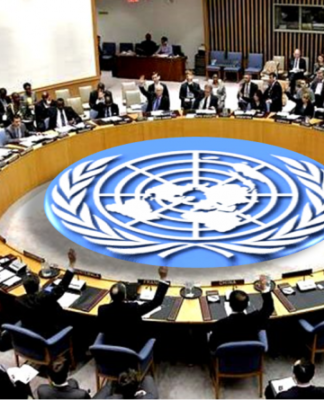
Rwanda’s continued presence in the region fuels accusations of foreign interference, undermining the sovereignty of the DRC. This issue has become a significant point of contention in international forums, as neighboring countries and global powers wrestle with the implications of Rwanda’s involvement. In response to these concerns, the United Nations Security Council adopted Resolution 2773 in 2024, explicitly demanding that Rwanda cease its support for the M23 and withdraw its forces from the DRC immediately. This resolution underscores the international community’s commitment to clarifying the situation and safeguarding the sovereignty of the DRC amid escalating regional tensions.
The international response to the crisis has been mixed, with calls for strengthened diplomatic engagement and more stringent sanctions against those fueling the conflict. However, these efforts have often been undermined by competing geopolitical interests and the complexity of local allegiances, making a peaceful resolution all the more elusive
Conclusion: Toward a New Model of Peace?
The Washington-led peace initiative presents an opportunity to address some of the key challenges in the Great Lakes region, but for it to succeed, it must go beyond superficial agreements and prioritize the needs of local communities. A successful peace process must address the root causes of the conflict, including the exploitation of resources and the role of external actors. This requires genuine accountability mechanisms, local participation, and a commitment to dismantling the political economy of war.
For lasting peace to take hold in the DRC and Rwanda, the international community must recognize the interconnectedness of security, economic interests, and sovereignty. Only by addressing these intertwined factors can the region begin to move toward sustainable peace. Without such a comprehensive approach, the peace talks risk becoming another in a long series of failed efforts to resolve one of Africa’s most protracted conflicts.
About the Author













 and Rwanda signed a Declaration of Principles—a foundational step toward resolving one of Africa’s most entrenched and violent regional conflicts. Facilitated by U.S. Secretary of State Marco Rubio, this agreement is seen as the framework for a broader peace accord expected to be finalized in the coming months.)