













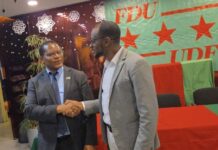



On April 23, 2025, two coordinated but geographically distinct declarations were signed between the Democratic Republic of Congo (DRC) and the rebel coalition known as the Alliance Fleuve Congo/Movement of March 23 (AFC/M23). One was signed in Kinshasa, the other in Goma, both expressing a mutual commitment to a ceasefire and a dialogue aimed at addressing the roots of the ongoing conflict in eastern Congo. Facilitated by the State of Qatar, this new round of peace talks appears to offer a path toward de-escalation after years of deadly confrontation.
Yet a key question remains unresolved: is the AFC/M23 genuinely independent in its decision-making, or does Kigali continue to orchestrate its moves behind the scenes?
The dual declarations reaffirmed commitments to cease hostilities, reject hate speech, and initiate a comprehensive dialogue. Signatories on the Congolese side included Papy Mbudi Kangundu, while Laurence Kanyuka represented the AFC/M23 in Goma. However, while the language emphasized mutual understanding and sovereignty, the political reality may be more opaque.
The M23, rebranded in part as the AFC, has long been accused of operating under the influence—or direct command—of the Rwandan government. Numerous UN reports and regional observers have documented logistical, financial, and military support from Kigali to the M23 since its inception. Although Rwanda denies these allegations, its strategic interest in eastern Congo remains undeniable, particularly in resource-rich areas such as North Kivu.
The current initiative, despite its diplomatic packaging, may reflect a more subtle mode of Rwandan engagement. Kigali’s visible absence from the declarations may be calculated, allowing it to support negotiations indirectly while avoiding international scrutiny or additional sanctions.
Belgium’s Deputy Prime Minister and Foreign Affairs Minister Maxime Prévot publicly welcomed the agreement, describing it as a “crucial step” toward ending violence. He announced his intention to visit the region, lending political weight to Qatar’s mediation. Yet the statement notably avoided addressing the regional dynamics driving the conflict, including Rwanda’s alleged role.
Despite the optimistic tone of the declarations, the peace talks in Doha have encountered significant obstacles. According to a Reuters report, both the DRC and M23 delegations departed Qatar after more than a week of discussions, expressing frustration over the slow progress. Sources from both sides indicated that disagreements over confidence-building measures, such as the release of prisoners accused of links to Rwanda and M23, nearly derailed the talks. Although Qatar managed to pressure the two sides into releasing a joint statement agreeing to continue working on a truce, the future of the negotiations remains uncertain.
If the AFC/M23 negotiates without true independence, the risk is clear: any agreement may be only temporary, contingent on Rwanda’s shifting interests. Such an arrangement could collapse if Kigali calculates that conflict serves its regional leverage better than diplomacy. Conversely, if Rwanda has indeed recalibrated its strategy toward less direct involvement, this moment may mark a turning point—but only if its influence recedes in practice, not just in rhetoric.
As the parties prepare for further negotiations, attention must turn not only to the technical content of ceasefire agreements but also to who truly controls the levers of power within the AFC/M23. Without transparency on this point, efforts at peace may once again prove to be smokescreens for a deeper geopolitical contest.