












Kisangani, Walikale, Luanda, Doha – Behind the carefully worded communiqués praising de-escalation and dialogue, a much more volatile reality is unfolding in eastern Democratic Republic of Congo (DRC). While M23 rebels publicly announce a “repositioning” of their forces in Walikale, with diplomatic support from Kigali and Doha, the operation is widely viewed as a tactical maneuver orchestrated by Rwanda. Simultaneously, Uganda—under the direction of General Muhoozi Kainerugaba—is advancing militarily and politically, now openly signaling interest in the strategic city of Kisangani. As the situation escalates, Angola has officially withdrawn from its role as mediator, frustrated by the lack of genuine progress and mounting external interference.
Walikale: Real Withdrawal or Strategic Redistribution?
On March 23, 2025, the Rwandan government praised M23’s announcement of its “repositioning” of forces from Walikale, portraying it as a goodwill gesture aligned with ongoing peace efforts. Qatar followed suit, applauding what it called a “significant positive step” toward stability. However, reports from Walikale suggest otherwise: the M23 is not leaving—it is redeploying. Armed elements remain present in Walikale center, particularly near administrative buildings, while others have moved toward Mubi, Ntoto, and Itebero, forming a web of control around key areas.
Local civil society actors confirm that M23 units are still patrolling the town, contradicting the narrative of a disengagement. This maneuver, as many regional observers agree, is not an autonomous move but one directly ordered from Kigali. For months now, M23’s operations have been aligned with Rwandan strategic objectives, confirming that the group operates as a proxy of the Rwandan military establishment.
Muhoozi’s Threat: “Take Kisangani or We Will”
Ugandan General Muhoozi Kainerugaba, son of President Yoweri Museveni and increasingly vocal on regional security matters, has added further fuel to the fire. In a series of cryptic but provocative posts on X (formerly Twitter), Muhoozi suggested that if M23 does not act quickly to take Kisangani, the UPDF (Uganda People’s Defence Force) will do it instead. He added that Uganda would not oppose an M23 move on Kisangani, signaling a dangerous shift in tone from a key regional power.
These declarations have caused alarm in Kinshasa and among diplomatic circles, as Kisangani remains a critical economic and symbolic city in northeastern DRC. Muhoozi’s statements are widely interpreted as a warning: Uganda is ready to expand its military footprint if it feels sidelined in the current diplomatic architecture.
Uganda Marginalized from Talks, Yet Untouched by Pressure
Uganda’s growing assertiveness is, in part, a response to its perceived exclusion from current negotiations. Unlike Rwanda—which faces mounting international condemnation for its involvement in the eastern Congo conflict—Uganda has largely escaped public criticism or sanctions, despite its own military operations in Ituri and alleged support for non-state actors. This double standard is not lost on Kampala, where officials reportedly view the Nairobi and Luanda processes as skewed and ineffective.
Uganda has continued operations against the CODECO militia in Ituri, but its ambitions go far beyond counterinsurgency. The Muhoozi doctrine—fusing nationalist rhetoric, military projection, and regional ambition—suggests a broader strategic objective: to assert Uganda as a decisive player in Congo’s eastern dynamics, with or without international approval.
Angola Exits Mediation Role After Diplomatic Breakdown
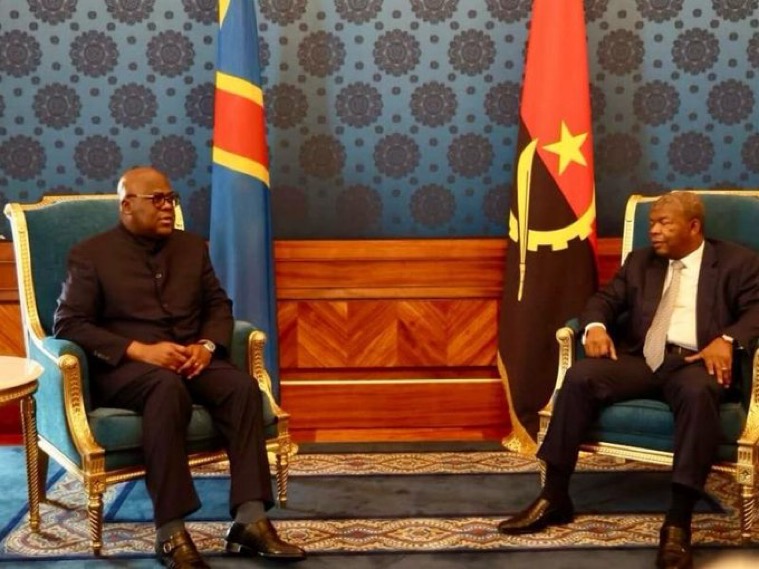
Meanwhile, Angola has officially withdrawn from its role as mediator between Rwanda and the DRC, citing repeated obstructions and a lack of political will. After hosting several rounds of ministerial talks and securing initial commitments—namely Rwanda’s pledge to pull its troops back from Congolese territory and the DRC’s promise to act against FDLR elements—Luanda had scheduled a summit for December 15, 2024. But the summit collapsed due to Rwanda’s absence.
Further efforts to convene direct talks between Kinshasa and M23 in Luanda on March 18, 2025, were abruptly canceled due to what Angola calls “external and non-African interferences.” Angola’s presidency issued a sharp statement announcing the country’s withdrawal from the process, citing its desire to focus on continental priorities such as infrastructure, trade, health, and reparative justice for Africans and Afro-descendants.
A Simmering Conflict, Dressed as De-escalation
The current diplomatic choreography—repositioning announcements, rhetorical commitments, and carefully staged statements—masks a much more dangerous reality. M23, still directed by Kigali, retains control over key areas in North Kivu. Uganda, now openly interested in Kisangani, is flexing its military muscles while remaining shielded from global scrutiny. Rwanda, by contrast, is increasingly isolated diplomatically.
With Angola stepping back, the African Union must urgently identify a new mediator. But with regional blocs like the EAC and SADC divided, and Uganda signaling an increasingly independent path, the prospects for a coherent peace process are dimming.








 Therwandan
