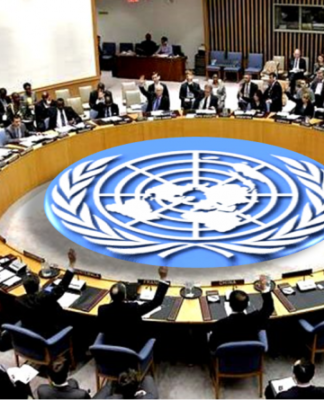














The Democratic Republic of Congo (DRC) is grappling with a complex crisis characterized by armed conflicts, foreign interventions, and systematic exploitation of its natural resources. A recent United Nations report, published in December 2024, sheds light on the central role played by the Rwandan Defense Forces (RDF) in supporting the March 23 Movement (M23), a rebel group responsible for significant territorial gains in the North Kivu and Ituri provinces. This support, combined with the M23’s exploitation of mineral resources, intensifies regional tensions and worsens an already dire humanitarian situation.
The report demonstrates the active and sustained involvement of the RDF in the military operations of the M23. Each rebel unit benefits from direct supervision by Rwandan special forces, enabling strategic operations and military superiority on the ground. This assistance includes the provision of sophisticated weapons, such as Spike-guided missiles and GPS jamming systems, which give the M23 a decisive edge over the Armed Forces of the DRC (FARDC). With this support, the M23 has made spectacular advances, increasing the territory under its control by 30% between April and November 2024. Strategic areas like Walikale and Masisi, rich in natural resources, have fallen under its domination, strengthening its influence over the regional economy.
The exploitation of the Rubaya mine, one of the largest coltan reserves in the world, has become a cornerstone of the M23’s financing. The group controls the entire supply chain, from extraction to commerce, and the transportation of minerals into Rwanda. Every month, approximately 120 tons of coltan are transported from Rubaya, generating at least $800,000 in revenue for the M23. This illegal trade also benefits the Rwandan economy, where the minerals are integrated into international supply chains in violation of ethical sourcing standards. The report also documents the imposition of high taxes on miners and local economic operators, as well as the use of forced labor to sustain operations. These practices illustrate the M23’s systematic control over Rubaya and its exploitation of natural resources as a lever for economic domination.
The M23, backed by the RDF, pursues a strategy of territorial expansion and parallel governance in the areas it conquers. Its goal extends beyond temporary military gains to consolidating long-term influence over resource-rich provinces. The group has intensified its recruitment efforts, often forcibly enlisting minors into its ranks. Since September 2024, over 3,000 recruits have been trained, not only for military activities but also to administer areas under rebel control. These training programs, combined with strategic alliances with other armed groups such as ZAÏRE in Ituri, enhance the M23’s ability to govern and exploit its captured territories effectively.
The implications of this expansion extend beyond the DRC’s borders, creating escalating regional tensions. Kinshasa accuses Rwanda of violating ceasefire agreements and actively supporting a rebellion that destabilizes the country. This accusation finds validation in the UN report, which firmly condemns Rwanda’s involvement. Despite calls from the international community, including the United States and the European Union, little concrete action has been taken to compel Kigali to withdraw. The situation exacerbates the already strained relations between the two countries and undermines peace efforts initiated under the Luanda process.
Meanwhile, the FARDC, although engaged in offensives against the M23, finds itself at a disadvantage against a rebellion that is better armed and supported by a neighboring state. To fill this security gap, Kinshasa often relies on local militias, including the Wazalendo, to counter rebel advances. However, this reliance on heterogeneous armed groups carries risks, particularly the empowerment of militias that could become uncontrollable in the long term. The UN report highlights that these temporary alliances contribute to a climate of widespread insecurity, where civilians bear the brunt.
The humanitarian consequences of this conflict are catastrophic. M23 offensives have caused mass displacements, with tens of thousands of people forced to flee their homes. Attacks targeting villages, combined with economic exploitation and constant insecurity, worsen an already critical humanitarian crisis. Civilians, often caught in the crossfire, suffer from atrocities, sexual violence, and human rights abuses.
The illegal exploitation of natural resources by the M23 benefits not only the rebel group but also transnational criminal networks. The trade in minerals like coltan, tin, and tungsten, often referred to as “conflict minerals,” fuels a shadow economy that perpetuates instability in the Great Lakes region. This dynamic complicates efforts to establish lasting peace, as financial gains from these resources encourage the continuation of conflicts.
While the international community has been vocally critical, it has yet to deploy sufficiently robust measures to address the crisis. Sanctions against M23 leaders and their external supporters remain limited, and a lack of oversight over global supply chains allows illegal trade to thrive. Breaking this cycle requires stricter restrictions on mineral exports from conflict zones and increased diplomatic pressure on Rwanda to end its support for the M23.
However, resolving this crisis requires more than military responses or economic sanctions. Genuine regional cooperation, combined with investments in local governance and sustainable development, is essential to stabilize eastern DRC. Peace agreements must include robust monitoring mechanisms to ensure their implementation, and regional actors must be held accountable for their actions.
The UN report provides a clear perspective on the root causes of the crisis and the challenges ahead. It underscores the urgency of concerted action to restore DRC’s sovereignty, protect its natural resources, and ensure the safety of its population. Yet, without sincere engagement from stakeholders, both local and regional, lasting peace will remain a distant goal.
Conflicts in the DRC cannot be understood without considering the impact of natural resources and foreign interference. The RDF’s role in supporting the M23, the exploitation of mineral wealth by this rebel group, and the resulting complex alliances illustrate a multidimensional crisis that transcends national boundaries. Breaking this cycle will require not only international sanctions and internal reforms but also strong political will from neighboring countries and international actors. Otherwise, eastern DRC will continue to serve as a fertile ground for the ambitions of armed groups and foreign interests, at the expense of the millions of civilians trapped in this endless conflict.