



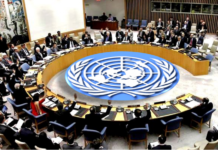












On Monday, February 24, the 27 European Union foreign ministers gathered in Brussels to discuss the escalating conflict in eastern Democratic Republic of Congo (DRC) and Rwanda’s role in supporting the M23 rebellion. While a first wave of sanctions was approved, including the suspension of political dialogue on security and defense with Rwanda, a second, more severe round was blocked by a surprising veto from Luxembourg.
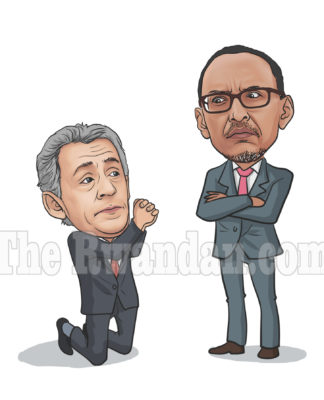
The second set of sanctions targeted a Rwandan entity and nine individuals responsible for violence in the Kivu provinces. European officials had expected a consensus, but Luxembourg’s Foreign Minister, Xavier Bettel, exercised his veto power, citing ongoing diplomatic efforts. Bettel argued that sanctions should be postponed to allow the upcoming February 28 joint ministerial meeting between the Southern African Development Community (SADC) and the East African Community (EAC) to proceed without additional strain.
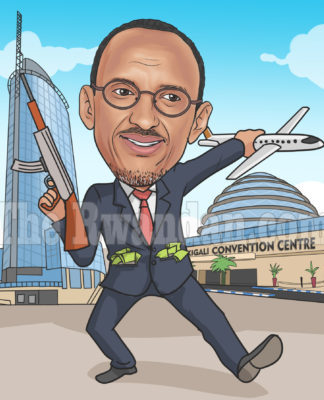
His decision was met with frustration from European diplomats who had advocated for immediate measures, including suspending the EU-Rwanda agreement on critical raw materials. The timing of Luxembourg’s intervention raised eyebrows, particularly given the country’s involvement in the Kigali Financial Centre project, a key initiative in Rwanda’s ambition to position itself as the “Singapore of Africa.” This move has led some analysts to question whether economic interests influenced Luxembourg’s stance more than diplomatic caution.
London’s Sudden Shift: Aid Suspension to Rwanda
While Europe hesitated, the United Kingdom took decisive action. On February 25, British Foreign Secretary David Lammy announced that the UK would suspend the majority of its financial aid to Rwanda until “significant progress” was made. London condemned the recent capture of Goma and Bukavu by M23 rebels, stating that these offensives, backed by Rwanda’s defense forces, represented a clear violation of DRC’s sovereignty.
“The hostilities must cease immediately,” the British government declared, emphasizing that only a political solution could end the crisis. The UK’s decision affects bilateral financial assistance, military training, and trade promotion with Rwanda, although humanitarian programs for the most vulnerable will continue. Kigali reacted angrily, calling the suspension “regrettable and unreasonable” and accusing the UK of choosing sides.
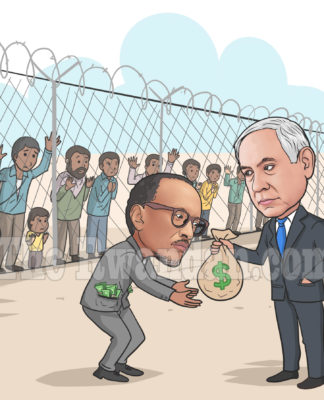
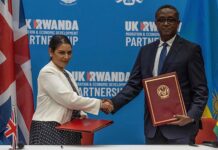
This marks a dramatic shift in relations between London and Kigali. Until recently, the UK maintained close ties with Rwanda, exemplified by the controversial migration deal under which asylum seekers were to be relocated to Rwanda. That agreement, for which the UK had already paid €280 million, has been put on indefinite hold by the current British administration. Lammy’s latest announcement signals that the diplomatic honeymoon between the two nations may be over.
The American Stance: Targeted Sanctions on M23 Financiers
On February 20, the U.S. Treasury Department imposed financial sanctions on James Kabarebe, Rwanda’s Minister of Regional Cooperation, and Lawrence Kanyuka, the spokesperson for M23 and the Alliance Fleuve Congo. Kabarebe, a former Rwandan general, was identified as a key figure in the support and coordination of M23’s military operations. The U.S. report also accused him of facilitating the extraction and exploitation of DRC’s natural resources.
Kanyuka, described as a key enabler of M23’s destabilizing activities, saw his assets frozen along with two of his companies based in London and Paris. Washington condemned the armed group’s recent territorial gains in eastern DRC, citing mass civilian casualties and large-scale displacements. The U.S. called for immediate negotiations to restore regional stability.
Rwanda Faces Belgian Pressure Amid Funding Cuts
Meanwhile, Belgium has intensified its diplomatic offensive against Kigali. Brussels has actively pushed for EU sanctions, arguing that Rwanda’s involvement in eastern DRC has undermined regional stability. The Belgian government has also accused Rwanda of attempting to sabotage its access to development funding.
In retaliation, on February 18, Kigali announced the suspension of all remaining bilateral aid programs with Belgium for the 2024-2029 period. “Rwanda will not be intimidated or blackmailed at the expense of its national security,” the Rwandan government declared.
Belgium’s Foreign Minister Maxime Prévot acknowledged the decision, stating that Brussels had already been reviewing its cooperation with Kigali due to Rwanda’s “violation of DRC’s territorial integrity.”
The DRC’s Appeal to the International Community
On February 24, Thérèse Kayikwamba Wagner, DRC’s Minister of Foreign Affairs, issued a strong call for international action. She urged the global community to extend and intensify sanctions against Rwanda and its proxy forces, impose an immediate embargo on illicit minerals exported via Rwanda, and suspend Rwanda’s participation in UN peacekeeping missions.
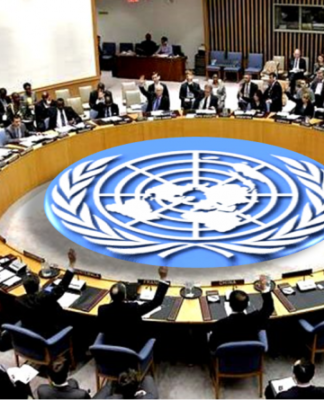
She emphasized that the recently adopted UN Resolution 2773, which condemns M23 and its Rwandan backers, must be enforced without ambiguity. The resolution, passed under Chapter VII of the UN Charter, is legally binding and requires compliance from all member states.
“This resolution provides a clear framework to guide regional and international efforts toward lasting peace in DRC,” Kayikwamba Wagner asserted. She dismissed claims that the resolution represented foreign interference, arguing instead that it reaffirmed the global community’s collective responsibility to uphold international law.
Despite Rwanda’s continued defiance, the DRC remains committed to diplomatic and regional efforts to restore stability. As international pressure mounts, Kagame’s government finds itself increasingly isolated, its economic survival now tied to illicit resource exploitation and foreign debt. The question remains: how long can Kigali sustain this strategy before the weight of sanctions and diplomatic isolation takes its toll?