














The Rwandan government has once again resorted to its well-worn strategy of using the plight of Congolese Tutsis as a political shield in response to mounting international pressure. Following the United Kingdom’s decision to suspend the majority of its financial aid to Rwanda due to Kigali’s ongoing military involvement in the eastern Democratic Republic of Congo (DRC), the Rwandan Ministry of Foreign Affairs issued a communiqué attempting to shift the narrative. The statement, released on February 25, 2025, portrays Rwanda as a victim of Western bias while accusing the DRC of committing atrocities against the Banyamulenge community, a claim Kigali has consistently used to justify its interference in Congolese affairs.
Rwanda’s reaction comes as the UK takes a firmer stance against Paul Kagame’s regime, which has long been accused of fueling the conflict in the eastern DRC through its proxy, the M23 rebel movement. London’s suspension of aid aligns with growing international condemnation of Rwanda’s actions, particularly after the M23 and Rwandan forces launched an aggressive offensive that resulted in the capture of Goma and Bukavu. In response, the UK’s Foreign Office reaffirmed its commitment to Congolese sovereignty, demanding an immediate cessation of hostilities and the withdrawal of Rwandan forces from Congolese territory. British Foreign Secretary David Lammy personally delivered this message to Kagame during a meeting in Kigali on February 22, following discussions with DRC President Félix Tshisekedi in Kinshasa the previous day.
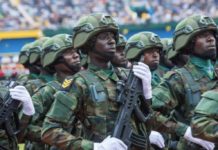
The UK’s move follows increasing evidence of direct Rwandan military involvement in the M23’s operations. Despite Kigali’s official denials, reports from independent observers and UN investigations have repeatedly highlighted the logistical and operational support that Rwanda provides to the rebel group. The M23, which claims to be fighting for the rights of Congolese Tutsis, operates as a de facto extension of the Rwandan military, furthering Kagame’s strategic goal of controlling resource-rich territories in eastern Congo. The recent takeover of key cities such as Goma and Bukavu underlines this objective, as these regions serve as crucial hubs for the illegal extraction and smuggling of Congolese minerals—an enterprise that has significantly benefited Kigali’s economy at the expense of regional stability.
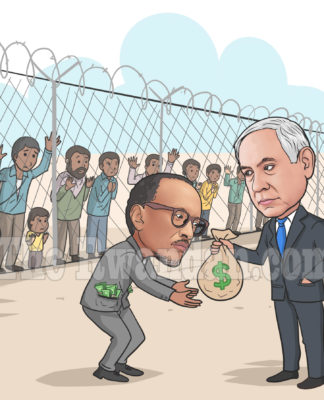
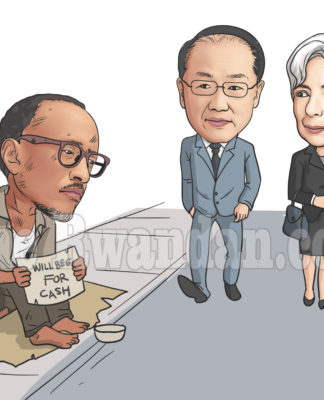
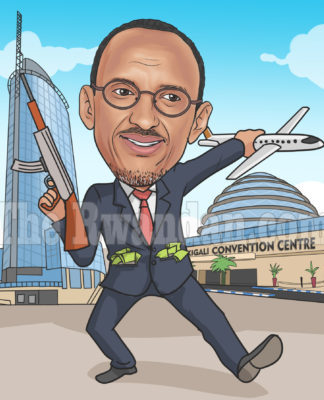
While Kagame portrays Rwanda as an economic success story, much of this so-called prosperity is built on a fragile foundation of foreign aid and illicit resource exploitation. Despite significant international funding, Rwanda remains heavily indebted, and its economic growth is largely dependent on external assistance. Kagame’s government has consistently allocated substantial resources to whitewashing its image through global lobbying efforts rather than addressing internal economic disparities. The suspension of UK aid is a direct blow to this financial strategy, as it signals a broader shift in the international community’s tolerance for Kagame’s authoritarianism and regional aggression.
The timing of London’s decision is also notable, coinciding with the arrival of the International Criminal Court’s (ICC) chief prosecutor in Kinshasa. This visit marks a critical step toward investigating war crimes committed in eastern DRC, including those perpetrated by the M23. The potential for legal consequences further isolates Rwanda diplomatically, making it increasingly difficult for Kagame to maintain his long-standing narrative of victimhood and deflection.
Despite these developments, Kagame’s regime remains defiant, insisting on so-called “security guarantees” before withdrawing from Congolese territory. This stance reflects Rwanda’s broader strategy of perpetuating instability in eastern DRC to maintain leverage over Kinshasa and continue profiting from the region’s vast mineral wealth. By framing its military interventions as protective measures for Congolese Tutsis, Kigali seeks to obscure the reality of its geopolitical ambitions: the effective annexation of eastern DRC through proxy warfare.
The UK’s shift in policy raises the prospect of further sanctions against Rwanda, with London stating that it will coordinate with international partners on potential additional measures. Given Kagame’s reliance on international aid to sustain his regime, sustained financial and diplomatic pressure could force a recalibration of Kigali’s aggressive regional policies. However, the effectiveness of these measures will ultimately depend on whether other Western nations follow suit, cutting off the financial and political support that has enabled Kagame to operate with impunity for decades.