













On February 25, 2025, James Kabarebe, former general of the Rwandan Defense Forces and current Rwandan Minister of Regional Cooperation, spoke at a meeting with Rwandan political parties. True to form, he attempted to absolve Kigali of any involvement in the war ravaging eastern DRC since the resurgence of the M23 in 2021. According to Kabarebe, the blame lies entirely with Congolese President Félix Tshisekedi, whom he accuses of preparing for war by imposing a state of siege in North Kivu and Ituri provinces in May 2021. He conveniently ignores the fact that the M23, ostensibly fighting for the rights of Congolese Tutsis, is actually a military tool used by Kigali to annex resource-rich territories in eastern DRC.
Kabarebe claims that M23 fighters were never on Rwandan soil but were instead stationed at the Bihanga military camp in Uganda. However, reports from the United Nations and multiple Western chancelleries have demonstrated that Kigali has been the primary military, logistical, and financial supporter of the M23, even deploying Rwandan troops alongside the rebels. He also ignores that when the Tshisekedi administration took office in 2018, it initially had strong ties with Kigali, even allowing Rwandan special forces to operate on Congolese soil in joint missions against armed groups. These operations led to the elimination of key figures in anti-Kagame armed groups, such as Sylvestre Mudacumura (FDLR), Wilson Irategeka (CNRD-FLN), and Jean Michel Afrika (RUD-Urunana). However, this collaboration ended when Kigali continued its expansionist ambitions through the M23.
Since November 2021, fighting between the M23 and the FARDC has escalated dramatically. Kabarebe attempts to propagate the idea that these rebels did not come from Rwanda but were simply positioned on the slopes of Mount Sabyinyo, at the border between DRC and Uganda. This assertion contradicts all independent investigations, which have highlighted Rwanda’s direct involvement in training and equipping the M23.
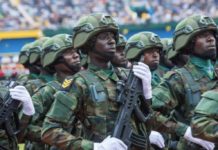
The US-sanctioned general denounces Kinshasa’s use of mercenaries while omitting the scale of Rwanda’s military support for the M23. Under the pretext of countering the FDLR threat, Kigali has managed to infiltrate the conflict and exploit the mineral resources of eastern DRC. The U.S. sanctions announced on February 20, 2025, target both James Kabarebe and Lawrence Kanyuka, the M23 spokesperson, as well as companies linked to their illicit activities. Washington openly accuses Kabarebe of playing a central role in the M23’s military organization and in the illegal extraction of Congolese minerals for the international market.
The M23 is far from being a mere movement advocating for the rights of Congolese Tutsis; it is primarily a military structure serving the interests of Kigali. The capture of Goma in January 2025 and the rapid M23 advance towards Bukavu have resulted in thousands of civilian deaths and displaced hundreds of thousands. Faced with this escalation, the United States, the European Union, and several international bodies have called for sanctions against Rwanda. However, Kigali, armed with a powerful communication apparatus funded by public money and international aid, continues to obscure its involvement, portraying Rwanda as an African success story while diverting attention from the situation in DRC.
Kabarebe also seeks to discredit the SADC military mission (SAMIDRC), deployed at Kinshasa’s request. He accuses South Africa, Tanzania, and Malawi of collaborating with the FDLR, even though these countries are solely focused on containing the M23’s expansion and maintaining regional stability. Contrary to the claims of the Rwandan general, these nations have intervened to support Congolese sovereignty against aggression orchestrated by Kigali.
Paul Kagame’s strategy relies on a double discourse: on one hand, he presents himself as a modern and visionary leader, while on the other, he finances armed groups to perpetuate chaos in DRC and seize its resources. Rwanda, often praised for its economic management, is largely dependent on international aid and increasing debt. This reliance forces Kigali to seek alternative economic avenues, notably through the looting of Congolese wealth. As long as this cycle of exploitation continues, stability in the Great Lakes region will remain an illusion.
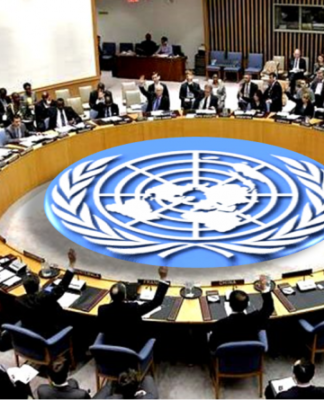
The international community, despite numerous warnings, remains divided. While U.S. and European sanctions are a step in the right direction, they remain insufficient to curb Kigali’s influence in DRC. Meanwhile, the M23 continues its advance, under the complicit gaze of those who claim to promote peace in Central Africa.