




















By Marc Matabaro
On November 14, 2024, Pauline Nduwamungu, a 66-year-old survivor of the 1994 Genocide, was murdered in Akabungo village, Rubago cell, Rukumberi Sector, Ngoma District, in Rwanda’s Eastern Province. Following her death, the Rwanda Investigation Bureau (RIB) stated that investigations were ongoing and suspects had been apprehended. However, RIB neither confirmed nor denied whether the murder was motivated by genocidal ideology. To date, RIB has not provided further updates on Nduwamungu’s case.
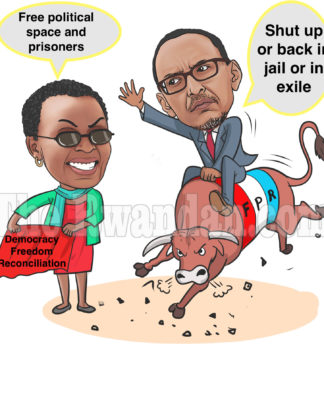
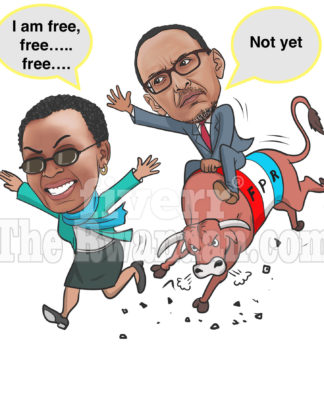
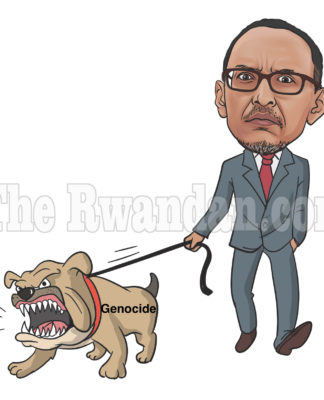
As RIB continued investigations, President Paul Kagame and the Minister of National Unity and Civic Engagement, Jean Damascène Bizimana, during a Unity Club event led by Rwanda’s First Lady Jeannette Nyiramongi Kagame on November 16, publicly declared that Nduwamungu had been killed by individuals released after being charged with genocide crimes or by their relatives. Without offering concrete evidence, President Kagame implied political activist Victoire Ingabire had a role in inciting violence against genocide survivors. This sparked a wave of targeted accusations on social media by pro-government individuals, who accused members of the Hutu ethnic group, particularly those opposing the government, of being complicit.
Robert Mugabe, a former bodyguard of Kagame and ex-intelligence officer, went as far as threatening extrajudicial actions against alleged perpetrators. On social media, he called for decisive action, hinting at the need for vigilante justice to eliminate suspected threats.
The accusations against Ingabire intensified on December 5, 2024, when Rwanda’s prosecution linked her to an alleged plot to overthrow the government. This claim was made during the trial of members of the DALFA-Umurinzi political party, which Ingabire leads. Prosecutors alleged that online training sessions with foreign facilitators were part of a subversive agenda orchestrated by Ingabire using the Serbian book Blueprint for Revolution, which encourages nonviolent resistance. Although not formally charged in the case, she was accused of masterminding the alleged plot.
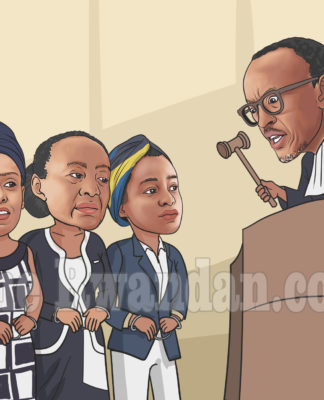
In a December 12 speech, while swearing in Domitilla Mukantaganzwa as President of the Supreme Court, Kagame reiterated his stance on addressing the killings of genocide survivors. He warned that if legal measures failed, alternative methods would be employed. Once again, he used the platform to target Victoire Ingabire, underscoring what many analysts view as a strategy to delegitimize her politically and internationally.
On December 18, 2024, police reported the killing of Kabera Samuel, who was accused of murdering Sibomana Emmanuel, another genocide survivor. Authorities claimed Kabera was shot while attempting to escape police custody during an investigation. This pattern of killings of suspects under police custody, widely criticized by international human rights organizations, has been described as an informal death penalty.
Kabera’s death was celebrated by pro-Kagame supporters online, who further escalated attacks on Ingabire. On the platform X (formerly Twitter), Sadate Munyakazi, a pro-government voice, accused her of being a central figure in undermining national security. Another commentator, Mutabazi Kabarira Maurice, proposed reinstating the death penalty, suggesting that Ingabire be among its first recipients.
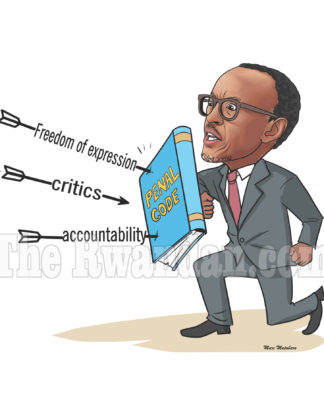
The events have led political analysts to conclude that the Rwandan government is using the killings of genocide survivors, irrespective of their actual motives, as a pretext to target opposition voices, particularly Hutu politicians like Ingabire. Kagame’s frequent public criticism of Ingabire is seen as part of a broader effort to silence her, given her rising international recognition. On November 30, 2024, Ingabire received the Liberal International Freedom Prize during the 64th Liberal International Congress in Santiago, Chile, further enhancing her global profile.
The killings of genocide survivors and the subsequent targeting of Ingabire reveal a deepening political divide in Rwanda. While the government portrays itself as defending survivors, critics argue it is exploiting their deaths to silence dissent and consolidate power, especially against a backdrop of increasing international scrutiny.