















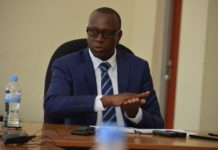


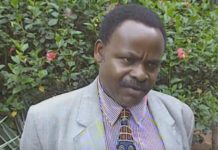

On September 1, 2024, David Himbara, a former adviser to President Paul Kagame, made a poignant remark on his X account regarding the recent event at Amahoro Stadium. He criticized the “coronation” of Kagame, pointing out the extravagant cost of $165 million for the stadium’s renovations. Himbara’s statement sheds light on the broader issue of Rwanda’s escalating external debt, which has been on a disturbing upward trajectory over the past decade.
According to the World Bank, Rwanda’s external debt has increased significantly, rising from $7.6 billion in 2012 to $9.3 billion by 2021. This sharp increase in debt is particularly concerning when compared to the growth in the country’s Gross National Income (GNI). During the same period, Rwanda’s GNI grew from $7.5 billion to $10.8 billion. This parallel growth highlights the unsustainable nature of Rwanda’s economic policies under President Kagame’s leadership.
Himbara’s criticism also points to the alarming debt-to-export ratio, which soared from 164.6% in 2012 to an astounding 437.3% in 2021. This statistic indicates that Rwanda’s ability to pay off its external debt through exports has been severely compromised. Furthermore, the external debt-to-GNI ratio, which stood at 24% in 2012, has surged to 86% by 2021. Such figures paint a troubling picture of the country’s financial stability and raise serious concerns about the long-term sustainability of its economic policies.
President Kagame’s administration has often been lauded for its rapid economic growth and development initiatives. However, the statistics highlighted by Himbara reveal a more complex and troubling reality. While infrastructure projects like the renovation of Amahoro Stadium may contribute to national pride and international prestige, they come at a significant financial cost. The increasing debt burden, coupled with the soaring debt ratios, suggests that Rwanda’s economic growth might be built on shaky foundations.
The current situation raises critical questions about the priorities of Kagame’s government. Is the focus on high-profile infrastructure projects overshadowing the need for sustainable economic policies? The rapid increase in debt levels, without a corresponding rise in export capacity or income, points to potential fiscal mismanagement. If the current trajectory continues, Rwanda could face severe economic challenges in the near future.
Himbara’s call to “pray for Rwanda” underscores the gravity of the situation. The country’s mounting debt, if not addressed, could undermine the gains made over the past two decades. It is crucial for the Rwandan government to reassess its economic strategies and prioritize policies that ensure long-term financial stability. The time for critical reflection is now, before the debt crisis spirals out of control and jeopardizes Rwanda’s future.
For further details on Rwanda’s debt situation, the World Bank provides comprehensive data and analysis on the country’s financial health here.