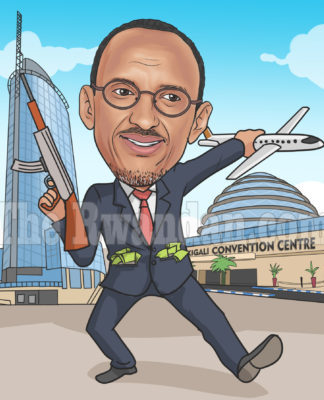

















On June 2023, the Auditor General of Rwanda released a report revealing major challenges in the country’s healthcare and education systems. The findings highlight serious issues that question the government’s priorities, particularly under the leadership of President Paul Kagame and the ruling Rwandan Patriotic Front (RPF). These challenges, if left unaddressed, could have lasting consequences for the lives of ordinary Rwandans.
Healthcare Sector: A System in Crisis
The report highlights the troubling state of the healthcare system, revealing that 134 health posts across Rwanda remain idle due to the absence of nurses. This figure is alarming, especially in a country where access to basic healthcare is already limited in rural areas. Further compounding the issue is the fact that 126 health posts are only partially functional, significantly limiting their ability to provide critical healthcare services to Rwandans.
One of the most concerning findings is the inefficiency in restocking essential medical supplies. The report shows that the restocking process takes an average of 282 days, an untenable delay in a system where immediate access to medications can be a matter of life or death. Additionally, 97 health posts lack clean water and sanitation infrastructure, conditions that create a hostile environment for both patients and healthcare workers.
These shortcomings raise important questions about the government’s priorities in investing in the healthcare sector. Instead of directing resources toward the construction of stadiums and other infrastructure projects, as emphasized by critics like David Himbara, a former adviser to President Kagame, there is a growing call for the government to prioritize the well-being of Rwandans. Himbara, in a recent post on his X account, stressed this sentiment: “Please put the stadiums aside – invest in Rwandan lives.”
Education Sector: Overcrowded Classrooms and Textbook Shortages
The Auditor General’s report also uncovers significant problems in the education sector. A total of 394 schools are severely overcrowded, with pupil numbers exceeding the recommended limit of 46 students per class by as many as 10 to 98 students. This overcrowding directly impacts the quality of education, making it difficult for teachers to provide individualized attention and diminishing the learning experience for students.
Another critical issue is the severe shortage of textbooks. The report states that in some cases, 5 to 48 pupils are forced to share a single textbook, a situation that severely hampers learning outcomes. Even more troubling is the extended delivery period for textbooks, which ranges from 286 to 971 days. This inefficiency only exacerbates the resource scarcity in Rwandan schools, leaving many students without the materials they need to succeed.
Broader Implications for Rwanda’s Development
These findings present a sobering view of the current state of Rwanda’s development, particularly in sectors that are crucial for the country’s future. While the Kagame administration often receives praise for its efforts in infrastructure development, such as the construction of new stadiums and other high-profile projects, the basic needs of the population seem to be neglected. The 2023 Auditor General’s report suggests that the government’s focus on such projects has come at the expense of investments in healthcare and education, two sectors that are fundamental to the country’s long-term growth and stability.
This report should serve as a wake-up call to the Kagame government. Immediate and sustained action is needed to address these deficiencies. Investments in healthcare and education are not just matters of social policy but are crucial for Rwanda’s overall development and the well-being of its citizens.
For more detailed insights, you can access the full report here.