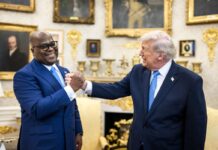














The United States has once again called for an end to the ongoing conflict in eastern Democratic Republic of Congo (DRC), where rebel forces have recently captured several provinces and cities. In a press briefing held on Thursday, Tammy Bruce, the spokesperson for the U.S. State Department, reiterated the stance expressed by Marco Rubio, the U.S. Secretary of State, following his recent discussions with Rwandan President Paul Kagame and DRC President Felix Tshisekedi.
Tammy Bruce declared, “We strongly support the Congolese people and the sovereignty of their country, the Democratic Republic of Congo. I can say that in his discussions with the two leaders, Marco Rubio called for an immediate ceasefire, respect for human rights, and accountability for those violating them. He urged both leaders to uphold the sovereignty and borders of their nations.”
The U.S. spokesperson emphasized that the United States supports peace efforts led by Angolan President Joao Lourenco, which last year resulted in a ceasefire agreement, as well as the call by Kenya for dialogue and an end to the conflict.
“We expect these leaders to return to the path of peace, as facilitated by Angola and Kenya, and to take decisive steps to end the war,” Bruce stated. She added that the U.S. will continue to support peace initiatives between the two countries.
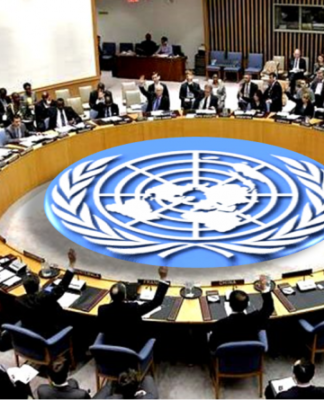
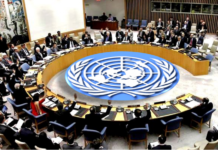
The African Union (AU), the United Nations Human Rights Council, and the United States have all condemned the violence in eastern Congo, particularly the attacks carried out by the M23 rebel group, which seeks to overthrow the Congolese government. Both the UN and the U.S. accuse Rwanda of supporting M23 rebels and of deploying troops in the DRC—an allegation that Rwanda denies.
At the AU summit in Addis Ababa, several African leaders expressed concern over the U.S. decision to suspend aid for 90 days and the potential impact on humanitarian efforts in Africa, including food and medical shortages.
Defending this decision, Tammy Bruce stated that the suspension was intended to allow the Trump administration to review how aid is being utilized by the recipients. She clarified that the measure was not an end to U.S. aid but rather a way to ensure that assistance is used effectively.
“This decision does not mean that we will stop providing aid. Its purpose is to assess how we will continue to deliver aid in the future. It is about determining whether the assistance is being used properly or not,” Bruce explained.
She also noted that the U.S. government has authorized the continuation of humanitarian programs aimed at helping the Congolese population. Furthermore, Bruce reminded that there are channels through which organizations can contact the U.S. State Department regarding the continuation of specific aid programs.