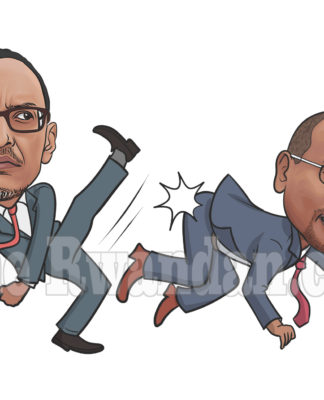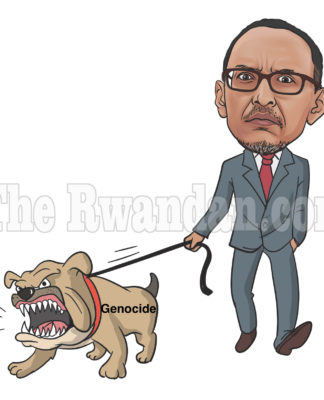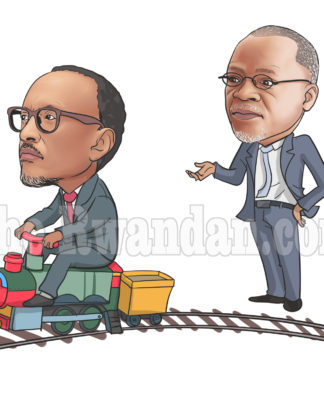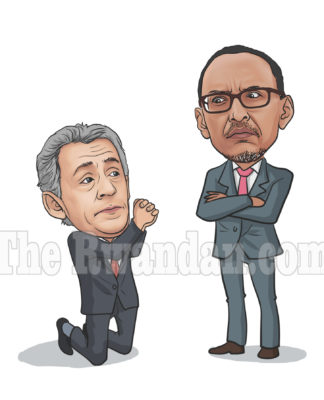




















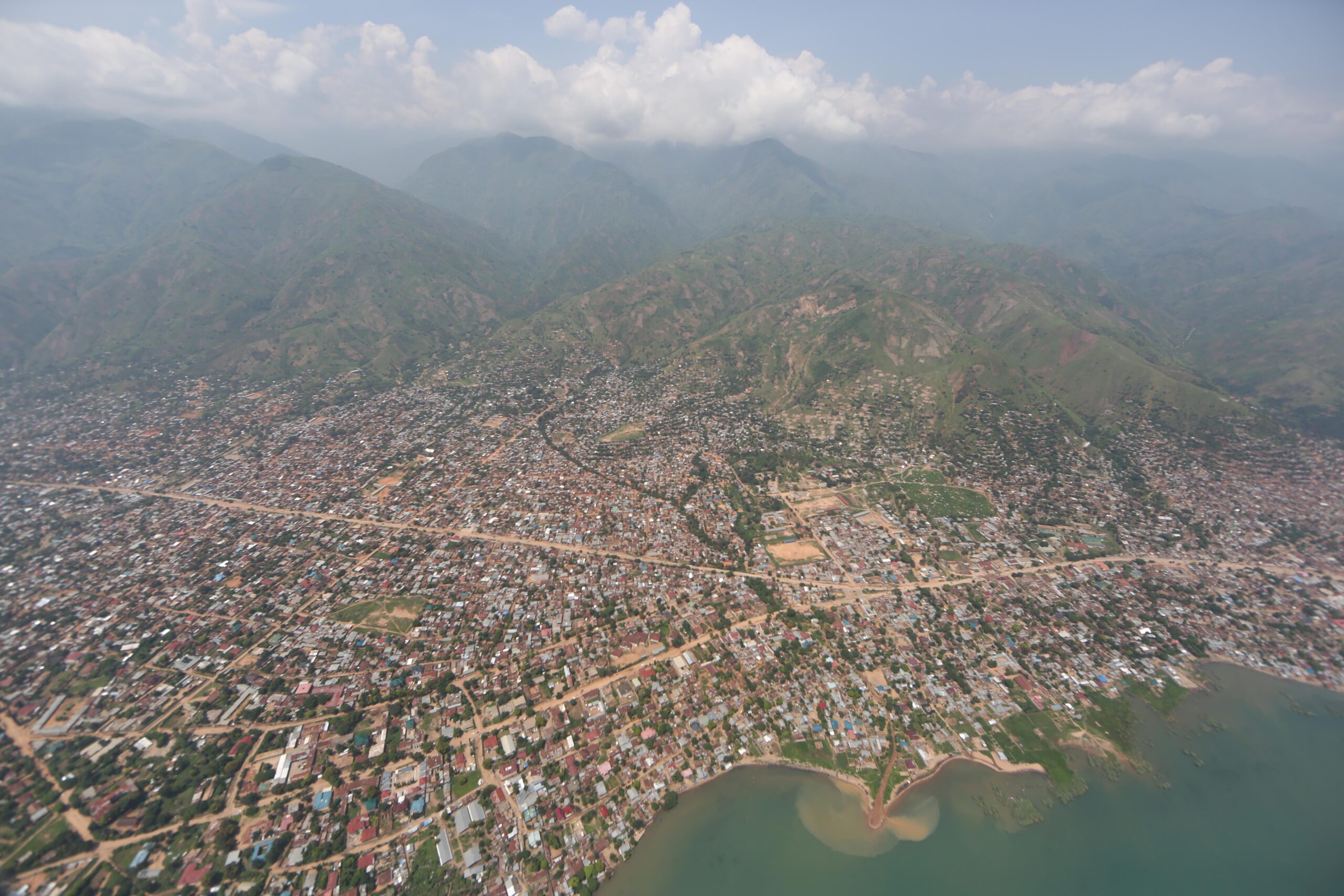
This investigative analysis explains how the fall of Uvira, a sudden and seemingly chaotic battlefield development, was neither accidental nor an American ambush in the usual sense. It was the precise strategic miscalculation that the Trump administration had been waiting for. While Washington publicly handled Kigali with restraint in order to secure a peace agreement, it was quietly preparing a decisive shift, an “after-deal” posture designed to take effect once the agreement was formally signed. That turning point was Uvira. By pushing its “fight and talk” strategy too far, Rwanda created the political conditions that allowed the United States to abandon its carefully balanced mediation role and openly side with the party under attack. The collapse on the ground provided the clarity Washington needed, convincing regional actors that the agreement signed during active hostilities was not a temporary arrangement, but the foundation of a new order enforced by American power.
A double gamble conceived in Kigali
The fall of Uvira was the outcome of a complex but ultimately flawed strategy crafted in Kigali. It rested on two mutually reinforcing tracks: diplomatic pressure and military escalation. The first aimed to shape the interpretation of the Washington peace deal by maintaining leverage through continued fighting. The second sought to weaken Kinshasa by forcing Burundi, its key regional ally, out of eastern Congo, thereby reshaping the balance at the Doha negotiations.
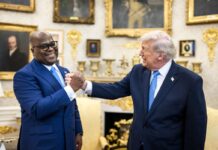
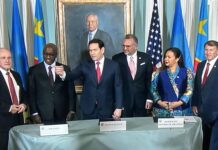
On the diplomatic front, Kigali initially attempted to signal its distance from the Washington process. President Paul Kagame reportedly considered avoiding the signing ceremony, planning instead to send a senior representative. This was not a procedural detail but a political message. It triggered an immediate response from Doha. The Emir of Qatar, whose role in the mediation had become central, travelled personally to Kigali to convey the seriousness of the situation. The warning was explicit: refusing to sign in person would have consequences.
This pressure culminated in a tightly choreographed sequence of visits. On 20 and 21 November 2025, Sheikh Tamim bin Hamad Al Thani conducted shuttle diplomacy between Kigali and Kinshasa. Publicly, the visit was framed as an exercise in goodwill and economic cooperation. Privately, it served a far more urgent purpose.
According to sources close to the Rwandan leadership, the Emir’s task was to ensure Kagame’s personal presence in Washington. Kagame had intended to delegate the signature, consistent with his public scepticism towards the agreement. As reported by Al Jazeera, he had warned that if the process proved deceptive, Rwanda would respond as it always had. That posture, combined with his desire to show disdain for what he viewed as a hollow exercise, made absence an act of calculated defiance.
There was also a more personal concern. Kagame was reportedly uneasy about a potential public confrontation with Donald Trump. Recent Oval Office encounters with foreign leaders had shown how quickly such meetings could turn hostile. The Emir sought to reassure him, citing the tense meeting with South Africa’s President Cyril Ramaphosa in May and the uncomfortable exchange with President Zelensky earlier in the year. At the same time, pressure was applied. Doha made clear that Kagame’s refusal to sign in person would jeopardise the continuation of the talks. Reassurance and leverage were combined, and Kigali ultimately conceded.
From Washington’s perspective, Kagame’s signature mattered deeply. For Trump, a delegated signature would have undermined the symbolism of the moment. More importantly, US officials understood the legal and political implications. A personal signature bound Kagame directly to the agreement. If questions of accountability were ever raised, that document would speak for itself.
Turning to the battlefield
While this diplomatic effort unfolded, Kigali activated the second track of its strategy. The primary target was not the Congolese army, but the Burundian forces supporting it. Through the M23, with direct backing from the Rwandan Defence Force, the plan was to deliver a sharp and humiliating blow to the Burundian contingent. The calculation was straightforward. Heavy losses and public humiliation would undermine morale, fracture command structures, and force Bujumbura to pull its troops out of the DRC.
The expected consequences were twofold. Internally, Burundi would face political and military tensions. Regionally, Kinshasa would feel isolated and exposed. Deprived of its ally, the Congolese government would enter the Doha talks from a position of weakness, allowing Rwanda to impose terms favourable to the M23 and consolidate its influence on the ground.
The offensive began on 1 December, only days before the Washington signing. It shattered a stalemate that had held for more than seven months. Its scale and visibility were unprecedented. For the first time, kamikaze drones and air defence systems were openly deployed in the Bugarama area on Rwandan territory. This was accompanied by a controlled media narrative, signalling a deliberate move away from deniability and towards open mobilisation.
Burundian security sources noted troubling irregularities. Some attackers spoke neither Kiswahili nor Kinyarwanda. Rumours quickly circulated of involvement by other regional actors, including Kenya and Uganda. Whether true or not, these claims reflected the perception that Kigali was attempting a decisive blow before diplomacy could constrain it. The operational objective was clear: cut the RN5 supply route and trap Burundian, Congolese and Wazalendo forces.
Burundi’s calculated restraint
In Bujumbura, the offensive was seen as a direct threat. Yet within the security establishment, there was little belief that Rwanda would risk a full-scale war against Burundi. Troop deployments along the border were defensive, and public accusations were part of a broader effort to alert regional and international audiences to the nature of the threat.
This restraint is rooted in a clear assessment of Rwanda’s political system. Power is concentrated in the hands of one man. Unlike Burundi, where institutional approval is required for war, Rwanda can act swiftly on the decision of a small inner circle. This unpredictability is central to Kigali’s regional posture.
Sources also describe the RDF as containing elite units operating outside formal structures, capable of high-risk missions. Some fighters are allegedly recruited from Burundian refugees or deserters, adding a deeply destabilising element to the conflict.
Despite the rhetoric, intelligence channels remain open. Daily contact continues between security services, though without progress. It is a relationship defined by communication without trust.
Uvira as a deliberate turning point
From this perspective, the losses of Goma, Bukavu and Uvira take on a different meaning. Goma is widely believed to have been sacrificed for tactical reasons. Bukavu was officially abandoned to avoid civilian casualties, an explanation that failed to convince many officers.
In Uvira, allied forces were reportedly ordered to withdraw without engaging. The decision caused confusion and unease before being explained as part of a wider plan. Over time, Uvira came to be seen as a calculated move designed to clarify responsibility for violating the Washington agreement.
A victory that trapped its author
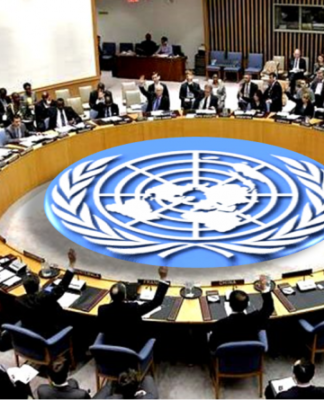
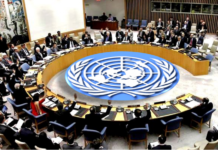
At the UN Security Council sessions in mid-December, the United States seized on Uvira as clear evidence of Rwanda’s breach of the peace deal. The resolution adopted on 19 December marked a decisive shift. Washington’s “after-deal” posture was no longer theoretical.
On the ground, the situation tells a different story from official claims. M23 may have entered Uvira, but it did not secure it. The city became an exposed salient, surrounded by hostile forces controlling the high ground, river crossings and supply lines. Local sources describe a fragile presence, unable to pacify the population or operate freely. Public displays of support failed. Militarily, control remained illusory.
The irony is stark. Kigali now presents withdrawal from Uvira as a gesture of goodwill, while facing accusations of misrepresenting events on the ground. Like the failed Kitona operation, Uvira stands as a warning against advancing without strategic depth.
Uvira was not a decisive battle. It was a political and military manoeuvre. And when the dust settled, it was not Kinshasa or Bujumbura that found themselves cornered. It was Rwanda and the M23.