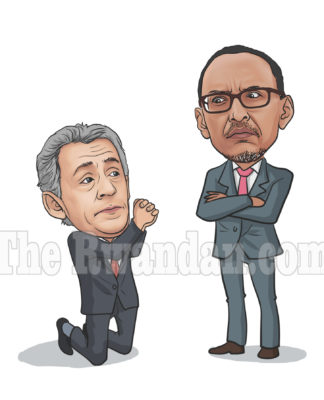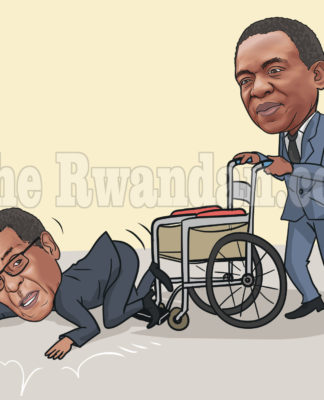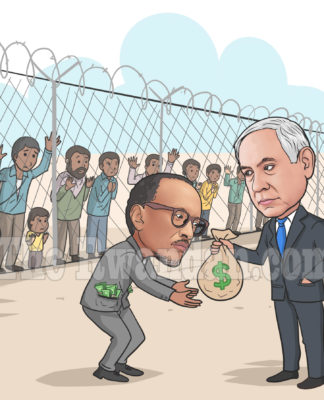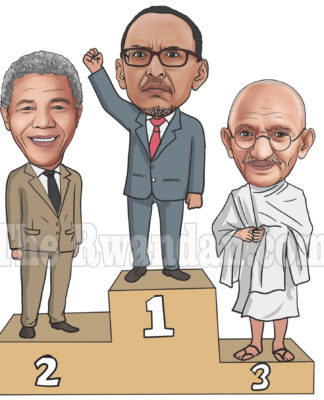









Tensions between Bujumbura and Kigali are on the rise once again. Burundian President Évariste Ndayishimiye has openly accused Rwanda of preparing an attack on Burundi through the Democratic Republic of Congo (DRC), using the armed group Red Tabara. These serious and direct accusations come as Burundi is militarily involved alongside Kinshasa in the fight against the M23 rebellion in eastern Congo — a group the United Nations and several Western countries accuse Rwanda of supporting.
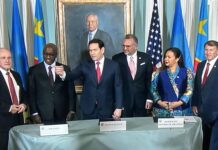
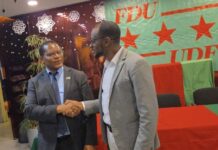
On March 25, 2025, in Bujumbura, President Ndayishimiye received Congolese Minister Thérèse Kayikwamba, who delivered a personal message from President Félix Tshisekedi. The visit underscored the growing alliance between Burundi and the DRC in response to the M23 threat. But in an interview with the BBC, President Ndayishimiye escalated regional tensions by accusing Rwanda of planning an attack on Burundi via Congolese territory, using Red Tabara as a proxy.
“We know Rwanda is trying to attack us through Congo, using Red Tabara. But if their goal is to take Bujumbura through the DRC, they should know that Kigali is not far for us through Kirundo,” he said, claiming to have credible intelligence on Rwanda’s alleged military intentions and warning that any attack would be met with direct and firm retaliation.
The Rwandan government responded quickly. Olivier Nduhungirehe, Rwanda’s Minister of Foreign Affairs, called the Burundian president’s remarks “unfortunate,” noting that the two countries’ military and intelligence services had been in talks and had even agreed on the need for both military and verbal de-escalation. “Nonetheless, Rwanda will continue its commitment to peace with Burundi and in the Great Lakes region, while hoping for more calm and serenity in official statements from the other side of the Akanyaru,” he said.
Government spokesperson Yolande Makolo also expressed surprise at Ndayishimiye’s remarks, pointing out that recent talks had focused on strengthening cooperation to secure the shared border.
Burundi accuses Rwanda of supporting and sheltering the armed group Red Tabara, which has carried out multiple deadly attacks on Burundian soil from eastern DRC. Rwanda firmly denies any links to the group. “They want to use Red Tabara to attack us, just like they are doing in the DRC with M23. But Burundians are ready,” said President Ndayishimiye. He firmly rejects any possibility of dialogue with Red Tabara, which he labels a criminal group. “Red Tabara belongs before the courts. We will never negotiate with killers,” he declared.
At the same time, Ndayishimiye dismissed accusations from Kigali suggesting Bujumbura may be complicit with the FDLR (Democratic Forces for the Liberation of Rwanda), an anti-Rwandan armed group active in eastern Congo. “We’ve already handed over several criminals to Rwanda. When President Kagame asked for help tracking FDLR elements, I told him our armies must cooperate. But to this day, they haven’t shared any information with us,” he said. He accused Rwanda of picking fights with all its neighbors and playing a destabilizing role in the region. “Rwanda doesn’t seem to know peace unless it’s in conflict with someone. It’s already fallen out with Uganda and Tanzania, it’s at war in the DRC, and now it’s preparing to attack us,” he added.
Ndayishimiye said he had attempted to revive bilateral dialogue with Kagame, even sending envoys to Kigali to follow up on agreements made since 2020. But according to him, Rwanda never followed through. “We signed agreements. But when it came time to implement them, Rwanda did nothing,” he said. Following attacks by Red Tabara in late 2024, Burundi closed all its borders with Rwanda. Distrust has returned, and diplomatic efforts appear to be stalled.
Burundi has acknowledged the presence of its troops in eastern DRC but has not disclosed their numbers. Ndayishimiye recalled that it was during his presidency of the East African Community (EAC) that the decision was made to send a regional force to help stabilize eastern Congo. However, he claims the mission failed due to certain member states not respecting the agreed rules. “We were positioned in South Kivu and responded every time a group emerged. But in North Kivu, nothing was done. M23 resumed fighting, and the other forces did nothing,” he said.
After the regional force’s withdrawal, Burundi signed a bilateral agreement with the DRC to maintain its military presence. Still, M23’s continued military gains have raised questions. According to Ndayishimiye, Burundi is not to blame. “We came to support. The Congolese army holds the primary responsibility. We only sent a small contingent, as we need to secure our own country and fulfill other missions,” he explained.
President Ndayishimiye is calling for a political resolution to the eastern DRC crisis. He said he advised President Tshisekedi to initiate direct negotiations with all armed actors involved in the conflict. In his view, dialogue must come first, and war should be the last resort. “Why wait for thousands to die before sitting at the negotiating table? That makes no sense. We should talk first,” he insisted.
He also pointed to deeper causes behind the conflict — namely, the unequal distribution of natural wealth. “As long as a few people continue to control all the country’s resources while the population lives in poverty, there will be revolts and rebellions,” he concluded.
As mutual accusations intensify and M23 maintains military pressure in eastern Congo, the Great Lakes region stands at a crossroads. Calls for dialogue face growing distrust, and the risk of a broader confrontation can no longer be ruled out.