












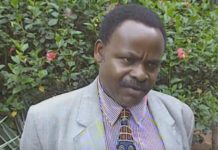

Kampala/Bunia – Thomas Lubanga Dyilo, the first person ever convicted by the International Criminal Court (ICC), has re-emerged on the political and military scene in eastern Congo, sparking alarm among observers and raising fresh concerns about regional destabilization in the Ituri province.
On 24 March 2025, a press release from the newly formed Convention for the Popular Revolution (CRP) was issued from Bérunda in Ituri, calling for radical change in the governance of the Democratic Republic of Congo (DRC). The CRP denounces endemic corruption, tribalism, militarism, and what it calls the criminal exploitation of mineral resources under the current regime. It also condemns what it describes as “four years of disgraceful complicity” by military authorities during the state of siege in Ituri.
While the CRP claims to be a popular movement for responsible governance, multiple sources, including a viral post on social media, have identified Thomas Lubanga as the figure behind this new rebellion. This marks a dramatic return for a man widely associated with some of the worst atrocities committed during the Ituri conflict (1999–2007), a period when he led the Union of Congolese Patriots (UPC) and its armed wing, the Patriotic Forces for the Liberation of Congo (FPLC).
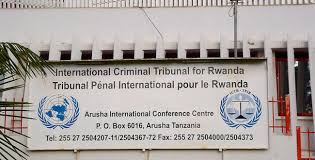
Lubanga, a former child soldier recruiter, warlord, and commander of a largely Hema militia, was arrested in 2006 under an ICC warrant for war crimes. In 2012, he was convicted for the conscription, enlistment, and use of child soldiers under the age of 15 and sentenced to 14 years in prison. He was released in 2020 after serving two-thirds of his sentence.
Now, just five years after his release, Lubanga is once again implicated in the support and mobilization of armed groups in Ituri. In January 2025, a UN Panel of Experts report accused him of backing the Zaire militia and March 23 Movement (M23)—the latter currently involved in a violent standoff with Congolese forces in North Kivu. The timing of Lubanga’s re-emergence is significant: it coincides with Uganda’s growing military and political influence in northeastern DRC, under the pretext of joint operations against ADF and CODECO insurgents.
According to regional observers, Lubanga maintains close ties with Ugandan security circles, dating back to his time in the pro-Uganda RCD-ML. Kampala’s recent military activities in Ituri, including high-profile UPDF offensives in Fataki, and the rhetoric of General Muhoozi Kainerugaba, have fueled speculation that Uganda is seeking to install or back friendly actors to secure its interests in Congo’s gold-rich border zones.
Muhoozi, commander of the UPDF and son of Ugandan President Yoweri Museveni, has recently described CODECO as “the army of the Devil” and vowed to kill “10,000 of them” if needed. The death of Col. David Byaruhanga, commander of the UPDF 409 Brigade in Arua, during recent fighting with CODECO militants, further escalated tensions and underscored Uganda’s deepening military involvement in the region.
Meanwhile, the CRP’s discourse—denouncing Kinshasa’s “kleptocracy,” its failure to protect civilians, and accusing the Congolese military of complicity in massacres—echoes the kind of ideological justification historically used by rebel movements to legitimize armed rebellion.
The reappearance of Thomas Lubanga, with a revolutionary platform and possible backing from regional powers, presents a serious threat to stability in Ituri. For many Congolese, the memory of Lubanga’s crimes—massacres, torture, rape, the destruction of villages, and the use of child soldiers—remains vivid. Between 2002 and 2003 alone, the UPC was accused of killing hundreds of civilians in Mongbwalu and forcibly recruiting thousands of children as fighters.
His return to prominence, under the banner of the CRP, signals a potential return to the brutal cycles of violence that plagued Ituri for over a decade. Combined with the assertiveness of Uganda and the ongoing M23 insurgency, it adds a dangerous layer of complexity to an already volatile eastern Congo.