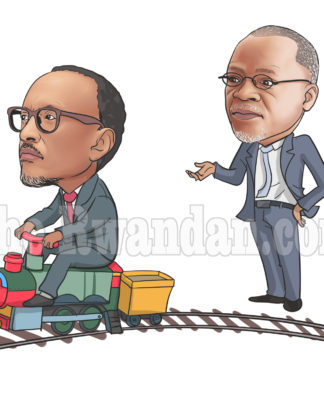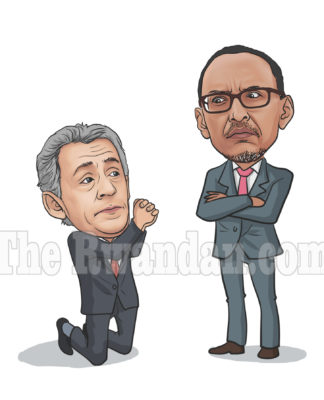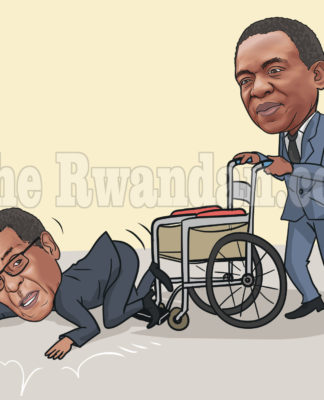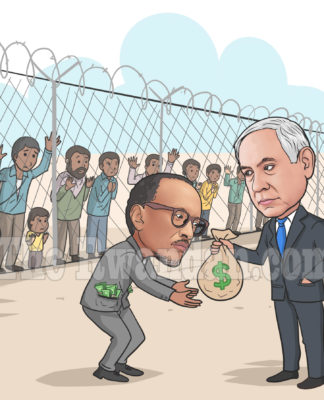














The latest mid-term report by the United Nations Group of Experts on the Democratic Republic of the Congo paints a stark picture: despite peace agreements signed in 2025, security conditions in the eastern part of the country have sharply deteriorated. At the centre of this escalation lies the decisive military support provided by the Rwandan army to the Alliance Fleuve Congo / March 23 Movement (AFC/M23), a factor that has enabled the group’s territorial expansion, military resilience and systematic violations of international humanitarian law.
A peace process undermined by continued warfare
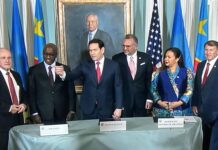
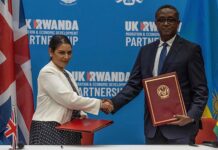
Signed in Washington on 27 June 2025, the peace agreement between the Democratic Republic of the Congo and Rwanda committed both states to respect each other’s sovereignty, refrain from military incursions and end support to armed groups. In practice, the UN experts conclude that these commitments have been repeatedly violated.
While political negotiations continued in Washington and later in Doha, military operations never ceased. Rather than withdrawing or entering cantonment, the M23 intensified its offensives in North Kivu and South Kivu, operating in close and continuous coordination with the Rwandan army. This parallel military campaign hollowed out ceasefire arrangements and severely weakened the credibility of the peace process from its earliest stages.
A large-scale and structured Rwandan military presence
According to conservative estimates by the Group of Experts, between 6,000 and 7,000 Rwandan army personnel remained deployed on Congolese territory by the end of 2025. These forces, organised into brigades and special units, were directly involved in combat operations, led offensives against the FDLR and provided tactical command and control to M23 units.
This support went far beyond logistical assistance. The report documents joint operations, coordinated redeployments across multiple fronts and the use by the Rwandan army of advanced surveillance, jamming and intelligence technologies. Without this backing, the experts conclude, the M23 would not have been able to seize, hold and administer vast areas around Goma, Masisi, Rutshuru, Walikale and strategic zones in South Kivu.
From rebel movement to de facto authority
Beyond the battlefield, the report highlights a significant shift in the nature of the M23. In areas under its control, the group has established parallel state-like structures, including civil administrations, courts, tax systems, internal security forces and land management mechanisms.
The M23 collects revenues, regulates movement, issues administrative documents and exercises effective control over populations. Its leaders now openly articulate a long-term political project based on autonomy or federalism in eastern DR Congo. The UN experts consider this strategy fundamentally incompatible with the commitments made in Doha and with the existing international sanctions regime.
Systematic violence against civilians
One of the most alarming findings of the report concerns widespread abuses against civilians attributed to the M23 and its allies. The Group of Experts documents systematic forced recruitment, including of minors, summary executions, arbitrary detention, torture and conflict-related sexual violence.
In the Bwito and Bwisha chiefdoms, joint operations by the M23 and the Rwandan army against the FDLR resulted in large-scale killings of civilians, predominantly from the Hutu community. Villages were burned, populations forcibly displaced and access to farmland deliberately denied, triggering acute food insecurity. The United Nations estimates that several hundred civilians have been killed in these areas since April 2025, acts that may amount to war crimes or crimes against humanity.
Control of mineral resources as a driver of the conflict
The report also draws a direct link between the M23’s territorial expansion and its takeover of strategic mining areas. In South Kivu, the group now controls nearly half of cassiterite and coltan production and more than two-thirds of wolframite output.
The capture of key hubs such as Nzibira and the industrial gold mine of Twangiza significantly strengthened the group’s financial base while deepening tensions with Congolese authorities. Once again, the role of the Rwandan army is described as central, both in securing these zones and in enabling the M23 to retain long-term control.
A major challenge for the international community
Overall, the UN experts describe a peace process undermined from within by repeated violations, continued foreign military involvement and the steady transformation of an armed group into a parallel political authority.
For the United Nations, responsibility for Rwanda’s military support to the M23 is now supported by consistent and converging evidence. As long as this dynamic continues, the report warns, peace agreements will remain fragile, violence will persist and civilians in eastern DR Congo will continue to bear the heaviest cost.