















The publication of the United Nations Group of Experts’ mid-term report for 2025–2026 on the Democratic Republic of the Congo has prompted fresh reactions from civil society actors and members of the diaspora. In a statement released on 7 January 2026, All For Rwanda, an international movement working to support and protect Rwandan refugees and to promote durable solutions for a dignified return, argues that the report confirms long-standing concerns about the humanitarian situation in eastern DRC.
According to the organisation, the experts’ findings highlight a reality that is too often sidelined by security-driven approaches to the conflict. Civilian populations, notably Rwandan Hutu refugees and Congolese Hutu communities, continue to face repeated violence, forced displacement and the destruction of their livelihoods, despite having no direct involvement in the armed dynamics shaping the region. All For Rwanda points in particular to the lack of a clear distinction on the ground between military objectives and civilian populations, a situation that has left long-established communities in a state of acute vulnerability.
The statement draws attention to one of the more sensitive conclusions of the UN report: the deliberate or systematic targeting of civilian populations associated, rightly or wrongly, with security issues may, under international humanitarian law, amount to war crimes or even crimes against humanity. For All For Rwanda, these findings call for a response that is firmly rooted in legal principles and centred on the protection of civilians, rather than one driven solely by military considerations.
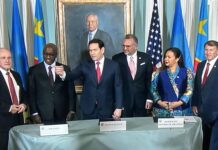
At the same time, the movement acknowledges recent diplomatic developments, notably the signing of the Washington Agreement, which it describes as a significant step towards containing military escalation between the DRC and Rwanda. The role played by the United States is recognised as decisive in reopening political space and reviving dialogue. However, All For Rwanda maintains that this framework remains incomplete if it fails to address more explicitly the situation of Rwandan civilian refugees and affected Congolese communities.
The organisation therefore calls for a pragmatic reassessment of existing mechanisms, stressing the limits of an approach focused exclusively on the military neutralisation of the FDLR and affiliated armed groups. In its view, no lasting stabilisation can be achieved without a distinct and structured treatment of the issue of Rwandan civilian refugees, grounded in international refugee law, the strict respect of the principle of non-refoulement, and credible guarantees for voluntary, safe and dignified return.
Among its recommendations, All For Rwanda urges the formal integration of the humanitarian dimension into the monitoring of the Washington Agreement, the effective application of UN sanctions where the facts so warrant, and the establishment of a structured dialogue with representatives of the refugees themselves. The movement states that it stands ready to contribute, in a constructive manner, to ongoing efforts aimed at peace and stability.
Whether these concerns will be fully taken on board by state and international actors involved in implementing the agreement remains an open question. What the UN Group of Experts’ report now provides is a solid factual basis. The central challenge lies in translating these findings into concrete political decisions capable of reconciling security imperatives with justice and the protection of civilians in a region shaped by decades of conflict.