









Despite the M23’s last-minute announcement to withdraw from the Luanda peace talks, the Angolan presidency confirmed that negotiations will proceed as planned. The Democratic Republic of Congo’s delegation has already arrived in Luanda, and according to Angolan officials, the M23 delegation is still expected to land today, with all conditions set for talks to begin on March 18.
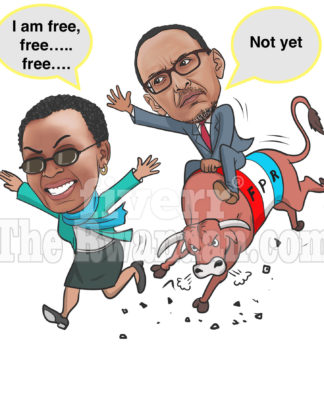
This contradiction further exposes the reality behind M23’s actions—the group does not act independently, but follows orders from Kigali. The decision to suddenly pull out was dictated by Rwandan President Paul Kagame, who seeks to use the peace process as leverage to pressure the international community into easing or delaying sanctions against his regime.
The European Union recently sanctioned key figures linked to M23 and Rwanda’s military operations in the DRC, including Bertrand Bisimwa, M23’s political leader; Major General Ruki Karusisi, former commander of Rwanda’s Special Forces; Désire Rukomera, responsible for M23 recruitment and propaganda; Colonel John Imani Nzenze, M23’s intelligence officer; Major General Eugène Nkubito and Brigadier General Pascal Muhizi, both senior Rwandan military officials accused of reinforcing M23’s military actions; Jean-Bosco Nzabonimpa, M23’s finance head; Francis Kamanzi, CEO of Rwanda Mines, Petroleum and Gas Board, linked to illegal mineral exploitation; and Joseph Musanga Bahati Erasto, M23’s self-declared governor of North Kivu. Additionally, the Gasabo Gold Refinery, a Kigali-based company accused of trafficking gold from conflict zones, was also blacklisted.
These sanctions, which include asset freezes and travel bans, further isolate M23 and its Rwandan backers. Corneille Nangaa and Bertrand Bisimwa have condemned the EU’s move, claiming it undermines peace efforts. However, the reality remains clear—Kagame is holding the negotiations hostage in a bid to force the West to reconsider its measures against Rwanda.
Despite these maneuvers, Angola is pushing forward with the peace process. The DRC government, which had initially resisted direct talks with M23, has not yet commented on the situation. However, with both delegations now expected in Luanda, it remains to be seen whether M23 will follow through with its withdrawal or reverse course under diplomatic pressure.
As tensions escalate in Eastern DRC, the international community faces a critical decision—either maintain pressure on Kigali despite the risks or ease sanctions in hopes of keeping the negotiations alive, a move that could define the next chapter of the ongoing conflict.