


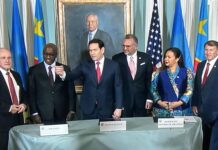

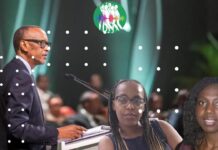





KIGALI, July 4, 2025 — Speaking to the press for the first time in weeks, Rwandan President Paul Kagame used the 31st anniversary of the Rwandan Patriotic Front’s (RPF) rise to power to deliver a calculated message: his government will comply with the recently signed peace agreement with the Democratic Republic of Congo (DRC) — but only on certain conditions.
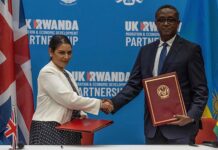
Kagame stated that Rwanda was ready to honour its commitments under the US-brokered deal, signed in Washington last week, but made it clear that some provisions hinge on the actions of the Congolese side. “We will do what we agreed to do, but some things depend on what the other side does. If they don’t fulfil their part, that obviously affects what we can do,” he said.
This demand mainly concerns the disarmament of the Democratic Forces for the Liberation of Rwanda (FDLR), a militia composed largely of Rwandan Hutu fighters based in eastern Congo. A day earlier, DRC’s Foreign Minister Thérèse Kayikwamba Wagner said Kinshasa would begin by “sensitising the Rwandan FDLR fighters” to consider voluntary repatriation, with reintegration through Rwanda’s demobilisation structures. Kagame did not respond directly to this, choosing instead to repeat that the FDLR must be “eliminated” for any durable peace to be possible.
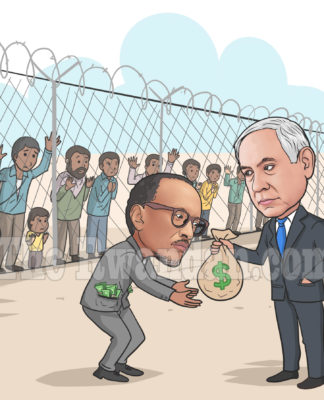
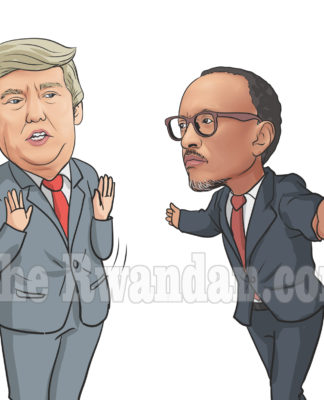
Responding to criticism that the deal serves American economic interests, Kagame defended former US President Donald Trump’s involvement, arguing that at least he paid attention to the region, unlike other leaders more focused on the Middle East or Ukraine. “This agreement is not just about economics. It’s about security and politics too — and all these things go together,” he said.
However, Kagame avoided commenting on the more damning allegation — that Rwanda is actively supporting the M23 rebel group operating in eastern DRC. Rather than deny it, he deflected attention to UN reports, accusing the UN Group of Experts of being biased and overlooking Congolese support for the FDLR. “You’ll always read about ‘Rwanda-backed M23’, but never ‘DRC-backed FDLR’. The narrative is always shaped to suit their interests,” he said.
In a pointed moment during the press conference, Kagame also questioned the legitimacy of Congolese President Félix Tshisekedi, claiming he was handed power rather than elected. “He was just called into an office and given power,” Kagame said, alluding to the widely criticised 2019 political transition brokered between Tshisekedi and former president Joseph Kabila. “Kabila thought he was making a good deal,” he added. He further dismissed the 2023 elections, saying: “There were supposedly elections… but in reality, there were none. It was just the continuation of a power that had already been handed to a man, who’s still holding on to it.”
These remarks signal that despite the formal handshake in Washington, Kagame’s mistrust of Kinshasa remains intact. His portrayal of DRC’s leadership as illegitimate raises fresh questions about the sincerity and durability of the peace process.
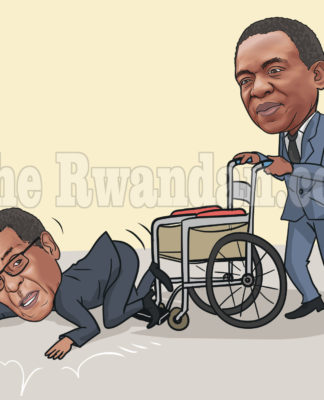
Kagame also used the press conference to ridicule recent rumours surrounding his health. His prolonged public absence from June 6 to June 24, coupled with the unusual silence of the presidency’s official social media accounts, had fuelled speculation — including among exiled Rwandan dissidents — that he might be seriously ill or even dead. “Some of my health problems probably come from having to manage people like you,” Kagame joked. “What’s the issue? That I’m human?” he added, showing no obvious signs of ill health.
He continued with a macabre analogy: “You might be happy that someone is in a coffin being buried. But then a kilometre down the road, it’s you following behind. But let me assure you — I’m the one sitting here talking to you, not someone else.”
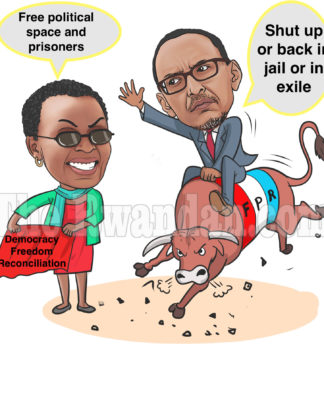
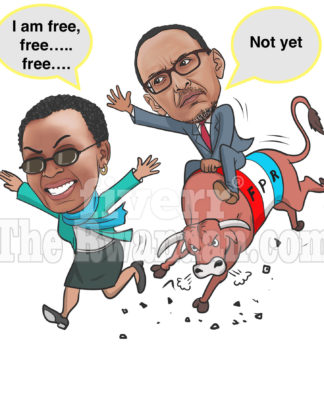
Yet while Kagame addressed these rumours head-on, he said nothing about more pressing issues facing the country. There was no mention of opposition leader Victoire Ingabire’s continued detention, the rising cost of living, the collapse of the Rwandan franc, or the growing discontent among ordinary citizens. Journalists, for their part, mostly avoided difficult questions. One even asked Kagame what football position he would have played, had he pursued a sports career.
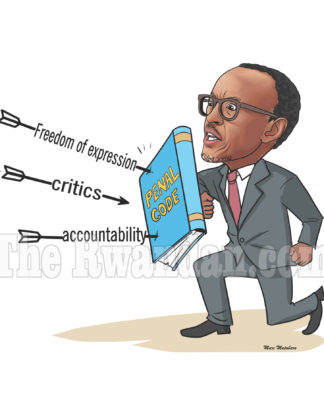
This lack of serious questioning highlights the broader political climate in Rwanda — a country where media and civil society operate under intense state control. Press conferences are heavily choreographed affairs, and criticism of Kagame’s regime is rarely tolerated.
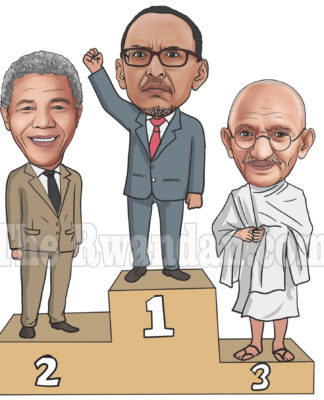
Kagame also took the opportunity to praise the achievements of the RPF over the past 31 years. He celebrated what he called “extraordinary progress” since 1994, though he admitted he expected no miracles in the next decade. “What has been sown today will bear fruit tomorrow,” he said, without elaborating.
The day ended with a cocktail reception at the Kigali Convention Center, hosted by Kagame and First Lady Jeannette Kagame, under the banner of “Kwibohora31”. But as dignitaries toasted the so-called liberation of Rwanda, there was no mention of how power was seized by force in 1994, nor any reflection on the absence of political transition since.
While the Washington agreement may offer the appearance of diplomatic progress, tensions remain high. The planned withdrawal of Rwandan troops from eastern Congo within 90 days is far from guaranteed. Both Kinshasa and the M23 have announced their intention to return to Qatar for new rounds of talks. In this fragile equation, Rwanda’s role remains central — and deeply contested. Behind the promises of peace lie decades of unresolved conflict, authoritarian consolidation, and a regional struggle for control and resources that shows little sign of ending.









 rise to power to deliver a calculated message: his government will comply with the recently signed peace agreement with the Democratic Republic of Congo (DRC) — but only on certain conditions.)