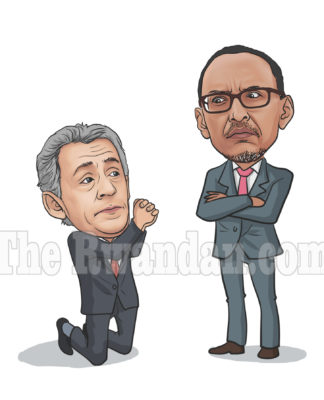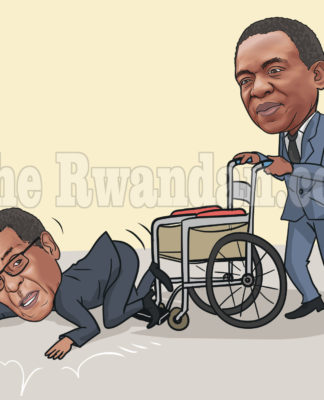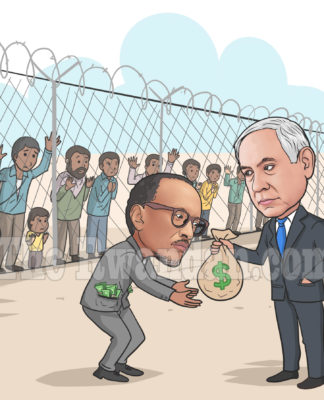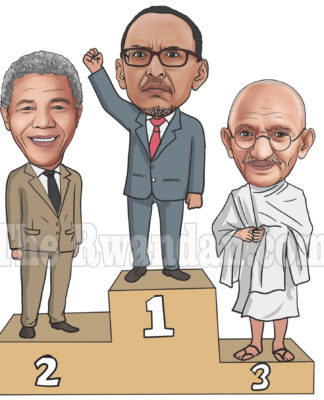










On February 18, 2025, the Rwandan government announced the suspension of its development cooperation with Belgium. Kigali accused Belgium of leading an aggressive campaign to obstruct Rwanda’s access to international funding, including through multilateral institutions. This decision comes amid escalating tensions over the conflict in eastern Democratic Republic of Congo, where the Rwandan army and the M23 rebels are at the center of the crisis.
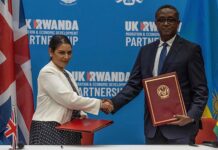
In February 2024, Rwanda and Belgium signed a €95 million cooperation agreement for 2024-2029, aimed at funding key sectors such as health, urban development, and agriculture. This funding was part of a broader international aid package, with Rwanda receiving $1.3 billion in annual international aid, a substantial portion of its $4 billion national budget. By suspending this cooperation, Kigali demonstrates its determination to resist diplomatic pressure, even at the risk of losing crucial financial support.
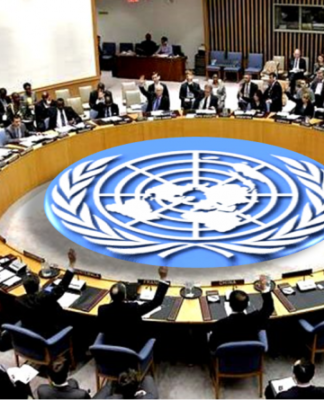
Belgium justified its stance by citing Rwanda’s role in supporting the M23 rebels, who have been accused of widespread atrocities, including mass killings and summary executions of civilians, among them children. Belgian Foreign Minister Maxime Prévot reaffirmed Belgium’s call for sanctions against Kigali, condemning Rwanda’s direct involvement in the destabilization of the DRC. He urged the European Union and the international community to take decisive action, including suspending the mineral trade agreement with Rwanda.
Meanwhile, on the battlefield, the M23, backed by the Rwandan army, has intensified its military operations, capturing Kamanyola. The United Nations has documented a series of war crimes, including executions of minors and sexual violence committed by M23 forces. The situation deteriorated further with reports of a Burundian troop withdrawal, which had been supporting the Congolese army. However, the spokesperson for the Burundian army, General Gaspard Baratuza, rejected these claims, stating: “Contrary to the statements spread by Reuters and repeated by other social media, Burundian military forces deployed in the DRC continue to carry out their missions in their areas of responsibility. No one should give importance to fake news being spread here and there.”
Despite this statement, the reality on the ground suggests that the Congolese army has been weakened, allowing the M23 to push toward Uvira and Kalemie, two key cities in the region.
Fighting continues in Lubero territory, north of Goma, where the Congolese army and the Wazalendo militias are resisting the M23 advance. Clashes have been reported in Kanyambi and parts of Ndoluma, forcing civilians to flee for safety. In Kamanyola, an important town in South Kivu, M23 forces consolidated their control after intense fighting against Burundian troops. According to multiple sources, 80% of the town’s population has fled, fearing reprisals from the rebels. Kamanyola’s strategic location, on National Road 5 near the Rwandan border, makes it a significant gain for the M23, which took the town just three days after capturing Bukavu.
The humanitarian situation is worsening across eastern DRC. In Goma, residents describe life under M23 rule as a prison under the open sky. People are struggling to access their bank accounts, and food shortages are becoming critical. Many have fled to Burundi, but some have drowned attempting to cross the Ruzizi River. The UN warns of an unfolding humanitarian catastrophe, as thousands of displaced civilians find themselves trapped between war zones. In Goma, the M23 has launched a digital census of all inhabitants, raising concerns about surveillance and potential reprisals against suspected opponents of the occupation.
Diplomatic pressure on Rwanda is mounting. The United Kingdom summoned the Rwandan High Commissioner to condemn the military incursions into Congolese territory and demand the immediate withdrawal of Rwandan troops. The Angolan government also expressed concerns, with President Félix Tshisekedi meeting his Angolan counterpart João Lourenço to discuss the deteriorating security situation. Despite growing international condemnation, Kigali denies all accusations, claiming it is protecting itself from Hutu FDLR militias allied with the Congolese army.
The failure of African and international diplomatic mechanisms to resolve the crisis is becoming more evident. The M23, now the dominant force in eastern DRC, enjoys continuous Rwandan military and logistical support, as reported by multiple UN investigations. Despite peace talks under the leadership of the African Union, the Southern African Development Community, and the East African Community, Rwanda continues to prioritize military force over dialogue.
Kigali’s decision to suspend cooperation with Belgium highlights its unwillingness to bow to international pressure, even as its actions in the DRC draw increased scrutiny. However, Rwanda’s stance does not change the realities on the ground: the DRC is losing control over key territories, and the international response remains weak and ineffective.
As the M23 advances through Kamanyola, Goma, and Bukavu, civilians continue to suffer the consequences. Reports of executions, forced displacements, and looting are multiplying, turning eastern Congo into a full-scale humanitarian disaster. While diplomatic measures and economic sanctions against Rwanda are being discussed, the situation on the ground keeps worsening, with the potential for a prolonged and destabilizing conflict across the region.