


















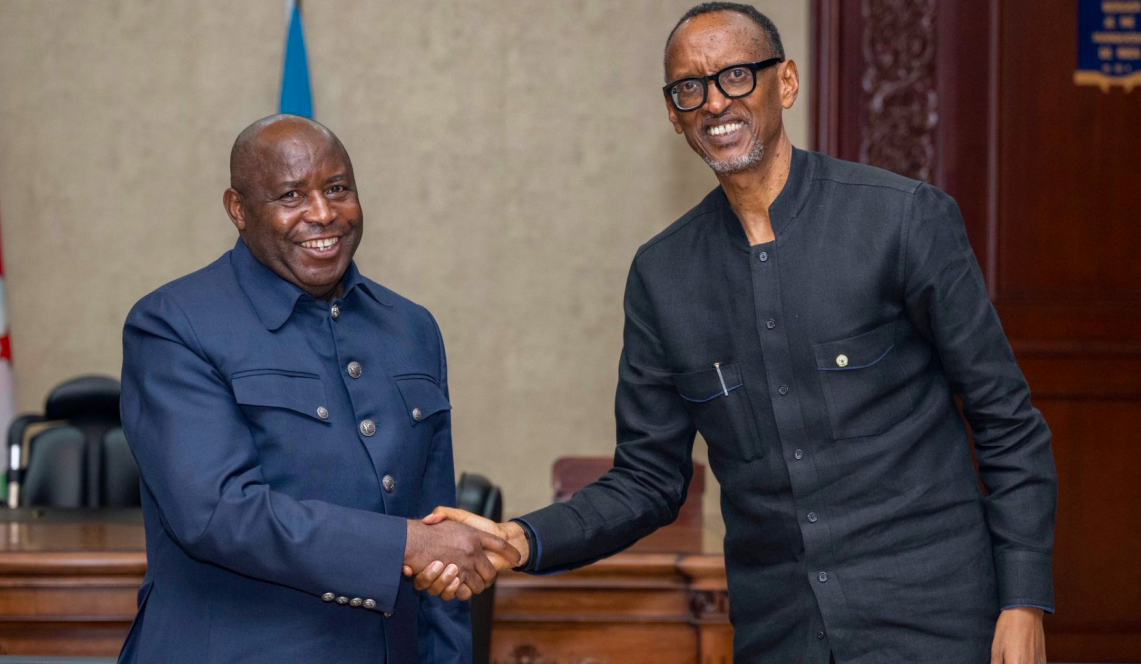
Rwandan Foreign Minister Olivier Nduhungirehe recently stated that Rwanda and Burundi are on the path to resolving tensions and reaching an understanding. This statement follows years of strained relations, which worsened in January 2024, when Burundian President Évariste Ndayishimiye accused Rwanda of planning to attack Burundi.
Nduhungirehe made this announcement on social media platform X, noting that ongoing discussions between officials from both countries are aimed at restoring diplomatic ties. His remarks were also linked to efforts to find a political solution to the ongoing crisis in eastern Democratic Republic of Congo (DRC), where Rwanda and Burundi have been indirectly engaged through armed groups and military operations.
The Rwanda-Burundi dispute dates back nearly a decade, with tensions escalating after Burundi deployed its troops to the DRC at Kinshasa’s request to support the Congolese Armed Forces (FARDC) against the M23 rebellion. Rwanda strongly opposed this deployment, accusing FARDC of collaborating with the Democratic Forces for the Liberation of Rwanda (FDLR). Conversely, Burundian officials have repeatedly accused Rwanda of supporting RED-Tabara, a Burundian rebel group that has launched attacks against President Ndayishimiye’s government. The United Nations and Kinshasa have also alleged that Rwanda backs both RED-Tabara and M23, further complicating regional security dynamics. Despite no formal declaration of war, the two neighbors appear to be engaged in a proxy conflict in eastern DRC, where their respective allies and forces are fighting on opposing sides.
In an attempt to restore ties, several secret meetings have reportedly taken place between the military intelligence chiefs of both nations. However, neither the Rwandan nor Burundian military has officially confirmed these discussions. The recent diplomatic efforts signal a potential shift, but past attempts at reconciliation have repeatedly failed.
Tensions between the two countries have been ongoing since 2015, when an attempted coup against then-Burundian President Pierre Nkurunziza failed. Bujumbura accused Kigali of harboring and supporting the coup plotters, a claim Rwanda has consistently denied. As a result, Burundi closed its land borders with Rwanda between 2015 and 2022, citing security concerns. Burundians could only cross into Rwanda with written authorization from their government, severely restricting trade and movement. However, RwandAir flights to Bujumbura continued, leading critics to argue that the border closure primarily affected low-income citizens rather than wealthier travelers.
In 2022, diplomatic discussions resumed, and relations seemed to be improving. However, in early 2024, Burundi once again shut its land borders with Rwanda after reconciliation efforts collapsed.
Tensions peaked in 2023 following a series of grenade attacks in Bujumbura’s main market and the Ngagara neighborhood, which left 38 people injured. Burundian authorities blamed Rwanda, claiming that the attackers were trained and financed by Kigali. Rwanda denied any involvement, stating:
“Burundi has an issue with Rwanda, but Rwanda has no issue with Burundi.”
However, relations further deteriorated when Burundian troops, operating under the East African Community (EAC) regional force, engaged in combat in North Kivu alongside FARDC, while other EAC troops were withdrawn by Kinshasa. This move reinforced Kigali’s perception that Burundi was aligning itself against Rwanda in the regional conflict.
The Rwanda-Burundi tensions have severely impacted trade and daily life for citizens on both sides. Despite deep cultural, linguistic, and familial ties, the border closures and hostilities have disrupted cross-border commerce and livelihoods. Beyond recent political disputes, the 2015 coup attempt remains a key unresolved issue in bilateral relations. The leader of the failed coup, General Godefroid Niyombare, remains in Rwanda, and Burundian officials have repeatedly demanded his extradition.
Rwanda has never denied sheltering some of the 2015 coup plotters, but negotiations on their possible extradition have failed. In 2023, President Ndayishimiye told the BBC:
“As long as they haven’t returned them, the problem will not be resolved.”
While diplomatic efforts are ongoing, Rwandan government-linked influencers have intensified their online attacks against President Ndayishimiye. The social media campaign escalated after Burundi sent troops to eastern DRC, and observers believe these influencers follow directives from Rwandan intelligence services.
As Foreign Minister Nduhungirehe expresses optimism about resolving tensions, many questions remain unanswered—particularly regarding the extradition of coup plotters, military alliances in the DRC, and accusations of rebel support.
While Rwanda and Burundi appear to be making diplomatic progress, their historical grievances, security disputes, and proxy conflicts in the DRC continue to fuel distrust. Previous reconciliation efforts have failed multiple times, and it remains to be seen whether the current negotiations will lead to a lasting resolution.