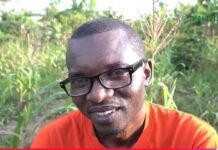


















On the occasion of the International Day in Support of Victims of Torture, the testimony of Emmanuel Ndagijimana brings renewed attention to the persistence of torture practices inside Rwandan prisons, despite the government’s official commitments to combat such abuse.
Now 38 years old, Ndagijimana bears both physical and psychological scars from the torture he says he endured in 2020 while incarcerated at Rubavu Prison, located in Nyakiriba, western Rwanda. He had been arrested on suspicion of purchasing stolen goods, and after a brief stay at a local police station, was transferred to Rubavu prison. That’s where his ordeal began.
According to Ndagijimana, prison officials linked him to an alleged escape plan involving two other detainees who had previously escaped police custody. He claims he was interrogated and tortured in what inmates called “Jordan,” a large metallic water basin. “They soaked me in water before beating me with electric wires. When the prison chief got tired, he ordered other prisoners to continue beating me,” Ndagijimana recalls.
Among the torture techniques he describes is the “chair” method, where his head was placed under the seat of a chair while his limbs were restrained, rendering him defenceless. He also recounts a method known as gutendeka, where four individuals would lift his arms and legs while two others beat him simultaneously from opposite sides with sticks. The beatings left him severely injured and later hidden in solitary confinement, likely to conceal his condition.
One of the individuals accused of overseeing this torture, Augustin Uwayezu, then director of Rubavu Prison, was later convicted and sentenced to eight years in prison. Several other guards were also investigated and tried. While Ndagijimana acknowledges this as a step toward justice, he says it’s far from enough. “Yes, they were punished, and that matters. But I can no longer work. I can’t provide for my family. I need reparations.”
His injuries resulted in a 65% disability. He suffers chronic pain and recurring trauma. “I was a karate athlete and coach before this. Now, I can’t do any job that requires strength. Most nights I have nightmares. My wife often tells me I scream in my sleep, shouting that I’m being beaten again,” he says.
He has not yet been able to afford treatment from a mental health specialist. “Justice only went halfway. I’m grateful for the investigations, but what about compensation for what I went through? My family is struggling.”
Dr. Théoneste Niyitegeka, a former prisoner who spent 15 years in various Rwandan prisons, founded Stop Torture Now to support torture survivors. He says the abuse inside Rwanda’s prisons is widespread. “We see beatings, injuries, solitary confinement for months or years. I experienced it myself. I have the scars. But the courts never accepted my complaint.”
He calls for structural reform: “Detainees can’t report abuse because they need the prison director’s signature to file a complaint—often the same person responsible for the torture. This system silences victims.”
The Rwandan Correctional Service regularly denies reports of torture. In 2023, a spokesperson told Imvaho Nshya newspaper that any abuse would be the individual’s responsibility, not institutional policy. “No officer is instructed to torture or kill people,” he said.
In 2015, Rwanda submitted its voluntary acceptance of the UN Convention against Torture, and the Ministry of Justice frequently reiterates its commitment to fighting torture, especially in prisons. A national prevention mechanism under the National Human Rights Commission is tasked with monitoring compliance.
But for survivors like Ndagijimana, official pledges mean little without accountability and support. The United Nations says torture survivors need urgent, specialised medical care to recover from the damage caused. Ndagijimana received none of it. He was hidden after his injuries and only taken to hospital once it was too late. “They delayed treatment for so long that I ended up needing surgery. The damage was permanent.”
He’s now living with a deteriorated hip muscle and a life of limitations. “You can’t call this justice when I’m left like this,” he says.
Dr. Niyitegeka stresses that prison sentences must be executed within the rule of law, not through physical and mental abuse. “No judge ever orders that a person be imprisoned and tortured. Prisons should not be places of cruelty.”
He recalls a particularly harrowing memory from his time in detention: “At Muhanga prison, there was a section called ‘Inyenzi’—used for Tutsi political prisoners in the past—where people were held in isolation for years. Tiny cells, one metre by two, only allowed out 40 minutes a day. It broke people.”
Today, Stop Torture Now continues to document such abuses and support survivors. But change, says Ndagijimana, must start with acknowledging the suffering of victims. “Let them compensate those they hurt. Let them show that torture has no place here anymore.”