














 On August 16, 2024, following the presidential election held on July 15, 2024, in which President Paul Kagame secured more than 99% of the votes, the Office of the Prime Minister of Rwanda announced a new government. The election results also saw Kagame’s party, the Rwandan Patriotic Front (RPF), and its allied parties winning a significant majority in the parliamentary elections. The newly appointed government consists of 21 ministers and nine state secretaries, with a large number of ministers from the previous government retaining their positions. However, notable changes included the replacement of three ministers: the Minister of Sports, the Minister of Trade and Industry, and the Minister of Public Service and Labor.
Key Appointments and Reshuffles in the New Government
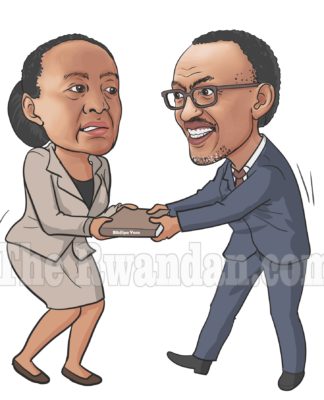
Among the new appointees is Christine Nkulikiyinka, who was appointed as the Minister of Public Service and Labor. Nkulikiyinka was born in 1965 in Kigali, where she grew up and completed her early education. She pursued studies in the German language in Germany in 1985 before continuing her education in Business Management at Ludwigshafen University of Applied Sciences. She is fluent in French, English, German, and Kinyarwanda. Nkulikiyinka’s career includes significant diplomatic experience, having served at the Rwandan Embassy in Germany from 1991 to 2005 and later as Rwanda’s Ambassador to Germany from 2009 to 2015. She also represented Rwanda in several other European countries during her tenure. In 2022, she became the Director General of the Rwanda Cooperation Initiative, which focuses on sharing Rwanda’s development solutions with other nations.
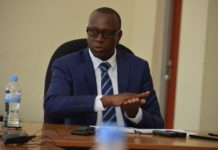
Another new face in the government is Prudence Sebahizi, appointed as the Minister of Trade and Industry. Sebahizi has an extensive background in economics and development studies, with a Master’s degree in International Development Strategy from Seoul National University in South Korea. Before his recent appointment, Sebahizi served as a Director at the African Continental Free Trade Area (AfCFTA) Secretariat in Ghana, a position he held since 2022. His previous roles include serving as a Technical Advisor and Director of the Trade and Industry Department at the African Union Commission in Addis Ababa, Ethiopia, from 2015 to 2022.
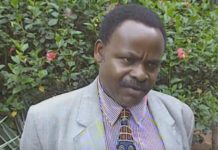
Richard Nyirishema, who has been deeply involved in Rwandan sports, was appointed as the new Minister of Sports. Nyirishema has been a prominent figure in Rwandan basketball, serving as Vice President of the Rwandan Basketball Federation (FERWABA) for 12 years, where he was responsible for competitions and the national team. Before his ministerial appointment, Nyirishema worked on various international projects, including as a consultant for USAID’s Water for People initiative.
Composition of the New Government
The new cabinet features a mix of continuity and change, with many ministers from the previous government retaining their positions. However, there were a few notable absences, including two state secretaries: Solina Nyirahabimana, the former State Secretary for Constitutional and Legal Affairs, and Dr. Claudine Uwera, the former State Secretary in the Ministry of Environment.
Here is a list of the key figures in the new government:
- Judith Uwizeye – Minister in the Presidency
- Inès Mpambara – Minister in the Prime Minister’s Office
- Yusuf Murangwa – Minister of Finance and Economic Planning
- Amb. Olivier Nduhungirehe – Minister of Foreign Affairs and International Cooperation
- Dr. Emmanuel Ugirashebuja – Minister of Justice/Attorney General
- Juvenal Marizamunda – Minister of Defense
- Consolée Uwimana – Minister of Gender and Family Promotion
- Dr. Vincent Biruta – Minister of National Security
- Jean Claude Musabyimana – Minister of Local Government
- Dr. Jimmy Gasore – Minister of Infrastructure
- Paula Ingabire – Minister of ICT and Innovation
- Gaspard Twagirayezu – Minister of Education
- Dr. Jean-Damascène Bizimana – Minister of National Unity and Civic Engagement
- Dr. Ildephonse Musafiri – Minister of Agriculture and Animal Resources
- Dr. Sabin Nsanzimana – Minister of Health
- Amb. Christine Nkulikiyinka – Minister of Public Service and Labor
- Prudence Sebahizi – Minister of Trade and Industry
- Dr. Valentine Uwamariya – Minister of Environment
- Maj Gen (Rtd) Albert Murasira – Minister of Emergency Management
- Richard Nyirishema – Minister of Sports
- Dr. Jean Nepo Abdallah Utumatwishima – Minister of Youth and Culture
In addition to the ministers, the government includes nine state secretaries, among them:
- Gen (Rtd) James Kabarebe – State Secretary in the Ministry of Foreign Affairs, responsible for Regional Cooperation
- Richard Tusabe – State Secretary in the Ministry of Finance and Economic Planning, responsible for State Finance
- Mutesi Linda Rusagara – State Secretary for State Investments in the Ministry of Finance and Economic Planning
- Eric Rwigamba – State Secretary in the Ministry of Agriculture and Animal Resources
- Marie Solange Kayisire – State Secretary in the Ministry of Local Government
- Claudette Irere – State Secretary in the Ministry of Education
- Dr. Yvan Butera – State Secretary in the Ministry of Health
- Olivier Kabera – State Secretary in the Ministry of Infrastructure
- Sandrine Umutoni – State Secretary in the Ministry of Youth and Culture
Analysis of the New Government’s Composition and Challenges
The formation of this new government reflects a continuation of President Kagame’s long-standing approach to governance, characterized by a strong emphasis on loyalty and stability within the cabinet. The fact that most ministers from the previous government have been retained, with only a few changes, indicates a preference for continuity rather than substantial reform. This approach has been a hallmark of Kagame’s rule, where loyalty to the president and the RPF appears to be the primary criterion for appointment.
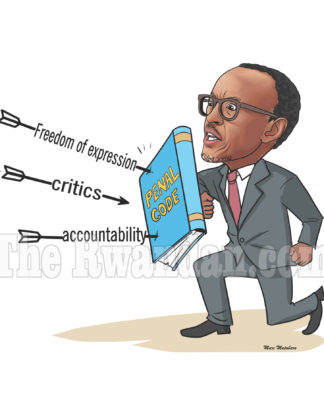
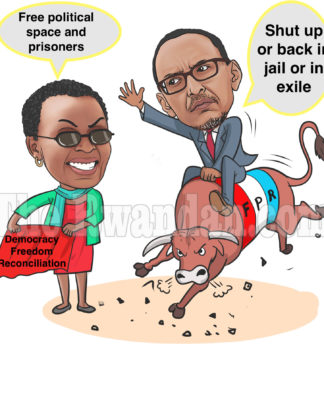
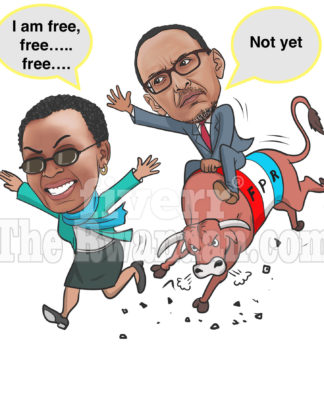
One of the most striking aspects of this government is the absence of opposition figures or individuals who are critical of the ruling party. This exclusion reflects the broader political climate in Rwanda, where dissent is not tolerated, and the political space is tightly controlled. The recent presidential and parliamentary elections, where Kagame secured an overwhelming majority, were marked by the exclusion of key opposition figures such as Victoire Ingabire, Bernard Ntaganda, and Diane Rwigara, who were prevented from running. This resulted in an electoral contest that lacked genuine competition, raising questions about the legitimacy of the election process.
In the parliamentary elections, the voting system has also come under scrutiny. Rwanda’s system of voting for party lists rather than individual candidates at the national level means that MPs are more beholden to their parties than to their constituents. This system has the effect of disconnecting representatives from the electorate, as citizens vote for party lists rather than individual candidates. Consequently, many Rwandans do not feel a direct connection to their MPs, as they do not have the opportunity to vote for them individually. This disconnect is exacerbated by the fact that most MPs reside in Kigali, far removed from the everyday struggles of rural citizens.
The new government faces significant challenges, particularly in addressing the persistent economic issues that continue to affect Rwanda. High unemployment rates, especially among the youth, and widespread poverty remain critical issues that the government must tackle. Additionally, there is growing concern about social inequality, with a significant gap between the wealthy elite and the broader population. The government’s ability to address these challenges will be crucial in determining whether it can maintain stability and prevent social unrest.
Another major challenge facing the new government is the deteriorating relationship between Rwanda and its neighbors, particularly Burundi and the Democratic Republic of the Congo (DRC). Tensions with the DRC have been especially high, with accusations that Rwanda has been sending thousands of troops into the DRC. These accusations have been backed by reports from United Nations experts. In recent speeches, President Kagame has repeatedly referenced the situation in the DRC, indicating that it is a significant concern for his administration. There are fears that these tensions could escalate into a broader regional conflict, which would have devastating consequences for the entire Great Lakes region.
The potential for a regional conflict is particularly alarming given Rwanda’s history of involvement in conflicts in neighboring countries. The Rwandan government’s actions in the DRC have been a source of international concern, and there are growing calls for accountability and restraint.
The Path Forward for Rwanda
As Rwanda moves forward under the leadership of this new government, the challenges it faces are immense. The continuity in government appointments suggests that there will be little deviation from the policies and approaches that have characterized Kagame’s rule for over two decades. While this may ensure stability in the short term, the long-term sustainability of this approach is questionable.
The exclusion of opposition figures and the lack of genuine political competition undermine the democratic process and could lead to increased domestic and international criticism. Moreover, the government’s ability to address pressing economic and social issues will be crucial in maintaining public support.