
















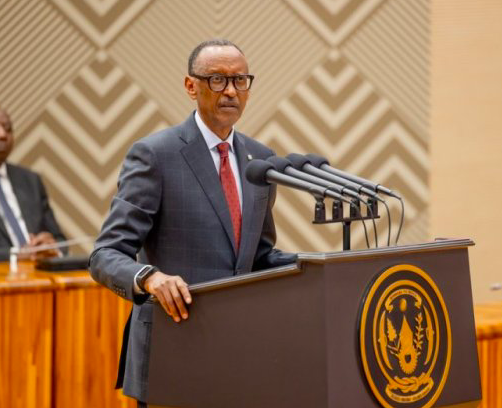
On August 14, 2024, after swearing in new members of parliament, President Paul Kagame of Rwanda made remarks that reignited the ongoing debate about the closure of nearly 8,000 churches across the country. These closures were executed following inspections that deemed many of these establishments non-compliant with legal standards. In his address, Kagame did not mince words, sharply criticizing the proliferation of churches and questioning their legitimacy and purpose.
President Kagame began by challenging the origins of these churches, asking, “What is the purpose of these churches? Before questioning their closure, we must first ask how they came to be established in the first place.” His statement reflects a broader concern about the role of religion in Rwanda, particularly the rapid growth of churches, which Kagame attributes to broader African issues, referring to them as part of “the problems of being African.”
Kagame expressed frustration over the diversion of resources and energy that could be used to address the nation’s pressing problems, such as hunger and economic development, towards religious practices that he views as economically draining. He asked pointedly, “Shouldn’t we be using our energy to solve the daily problems that give us security and improve our economy, rather than pouring it into things that are draining our resources?”
The President also recalled past discussions with Rwandans, where he had previously warned against investing in activities that do not contribute to personal or national development. His frustration was evident as he questioned the motives of Rwandans, including members of parliament, who engage in religious activities while holding public office. Kagame specifically criticized those who serve as both pastors and politicians, accusing them of exploiting their followers financially.
Kagame’s critique extended to the intentions behind some of these religious institutions, suggesting that many were established to exploit Rwandans financially rather than to serve their spiritual needs. He was particularly harsh on religious leaders who claim divine encounters or visions, dismissing them as delusional or fraudulent. “When someone tells me they’ve spoken to God, I first ask if they’re insane,” Kagame remarked, emphasizing his skepticism.
The President did not shy away from drawing parallels between the situation in Rwanda and tragic events in other countries, such as Kenya, where religious leaders have led their followers into fatal situations by prohibiting them from eating. He posed a rhetorical question to the parliamentarians, asking if this was the path they wanted for Rwanda.
Despite the President’s strong stance, it is essential to recognize the role that the Rwandan government and its intelligence services have played in the rise of these numerous churches. After the 1994 genocide, there was a strategic move to weaken established religions like the Catholic Church, which had suffered significant losses, including the massacre of bishops in Gakurazo. The government encouraged the formation of new, smaller churches, often led by individuals with ties to the ruling party, the Rwandan Patriotic Front (RPF), and returning refugees. This proliferation served as a means of social control, with church leaders acting as intermediaries between the government and the population, potentially distracting citizens from pressing national issues.
Kagame’s recent statements, while critical, overlook the government’s complicity in the very phenomenon he now decries. The explosion of churches, though presented as a spontaneous and problematic development, was at least partially orchestrated by the state as a tool for political and social control.