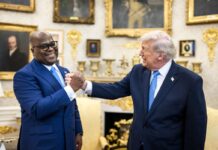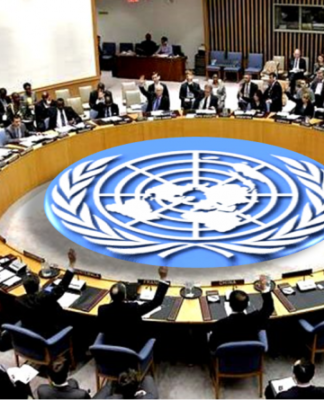





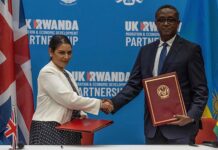











Barely five days after the Democratic Republic of Congo and Rwanda signed a peace agreement in Washington on 27 June 2025, a confidential report by a UN panel of experts, leaked to Belgian newspaper De Standaard, paints a starkly different picture of Rwanda’s intentions in eastern Congo. According to the report, Kigali is continuing to support the M23 rebel group in building a parallel administration in the occupied provinces, with the ultimate goal of seizing long-term control of the region’s mineral wealth.
The UN experts, led by Belgian jurist Mélanie De Groof, write: “Sources within the Rwandan army and government have confirmed that Kigali’s ultimate objective is to control Congolese territory and natural resources.” This claim directly contradicts the commitments made by Rwanda just days earlier in the Washington agreement, which included pledges to halt fighting, withdraw troops, and allow joint regional monitoring of the ceasefire.
On the ground, however, the reality is very different. In Goma and Bukavu, the M23 – heavily backed by Rwandan military forces – has consolidated power. Key posts such as provincial governors and mayors have been handed to M23 loyalists. Police forces, customs offices, migration services, and mining administrations are now under rebel control. The report accuses Rwanda and M23 of aggressively building a parallel state structure.
UN investigators also document Rwanda’s direct military role in the latest offensives. “A week before the attack on Goma, Rwandan officials confidentially told the UN group that President Paul Kagame had decided to take immediate control of Goma and Bukavu,” the report says. Using drones, testimonies, and verified images, the experts describe “systematic and large-scale incursions” by Rwandan troops into Congolese territory, including the use of high-tech weaponry and direct combat involvement by the Rwandan Defence Forces (RDF).
Control over strategic mining areas is at the heart of this operation. Around Rubaya, which holds key deposits of coltan and tin, the M23 and Rwanda have secured mining sites. The fall of Bukavu in February added more mineral-rich territory to their grasp. These resources are a crucial pillar of Kigali’s strategy, according to the experts.
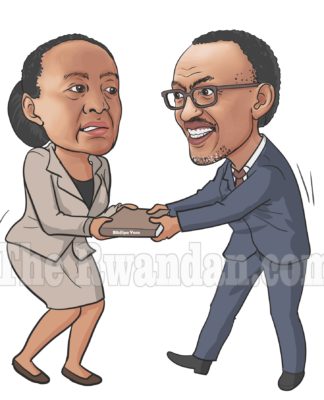
In Rwanda, the peace deal has caused unease among some regime insiders. Days before the UN report was leaked, Rwandan senator and constitutional lawyer Evode Uwizeyimana, a staunch pro-Kagame figure, appeared on national television (RBA) to criticise the Washington deal. Like many Kagame loyalists, he dismissed the agreement as “a mess” filled with “contradictions and vague obligations.” But in his effort to discredit the accord, Uwizeyimana inadvertently exposed deeper contradictions in the government’s position.
“If Rwanda signed a ceasefire agreement, when did we officially go to war in the DRC?” he asked. He then questioned how Rwandan forces could be asked to withdraw from Congo when their deployment had never been approved by the Rwandan Parliament. “Who authorised this?” he blurted out, before quickly backpedalling.
His remarks revealed what many already suspected: Rwanda’s military intervention in eastern Congo has been conducted without public oversight, and perhaps without legal backing from Rwanda’s own institutions. In trying to attack the agreement, Uwizeyimana’s comments opened a window into the informal and opaque nature of Rwanda’s regional policy.
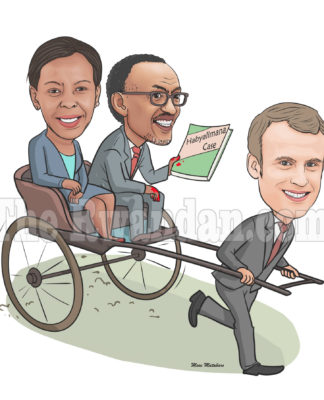
Meanwhile, Kagame’s supporters on social media continue to celebrate M23 victories, framing them as a justified reclaiming of historically “lost Rwandan territory.” The presence of “our boys” on Congolese soil is no longer a rumour but an open secret, even as the official line denies any involvement.
Regional analysts suggest that Kagame agreed to the Washington deal not out of genuine willingness to de-escalate, but to buy time. With Trump still in office but facing increasing scrutiny, Kigali may be counting on a less engaged future Democratic administration in Washington. In such a scenario, US companies eager to secure access to Congolese minerals could end up working with Kigali-backed M23 structures – bypassing Kinshasa entirely.
As of 2 July 2025, the reality on the ground continues to diverge from the official peace narrative. Civilians are still fleeing, armed clashes persist, and Rwanda’s ambitions in eastern Congo – long suspected – are now documented in black and white by the United Nations.